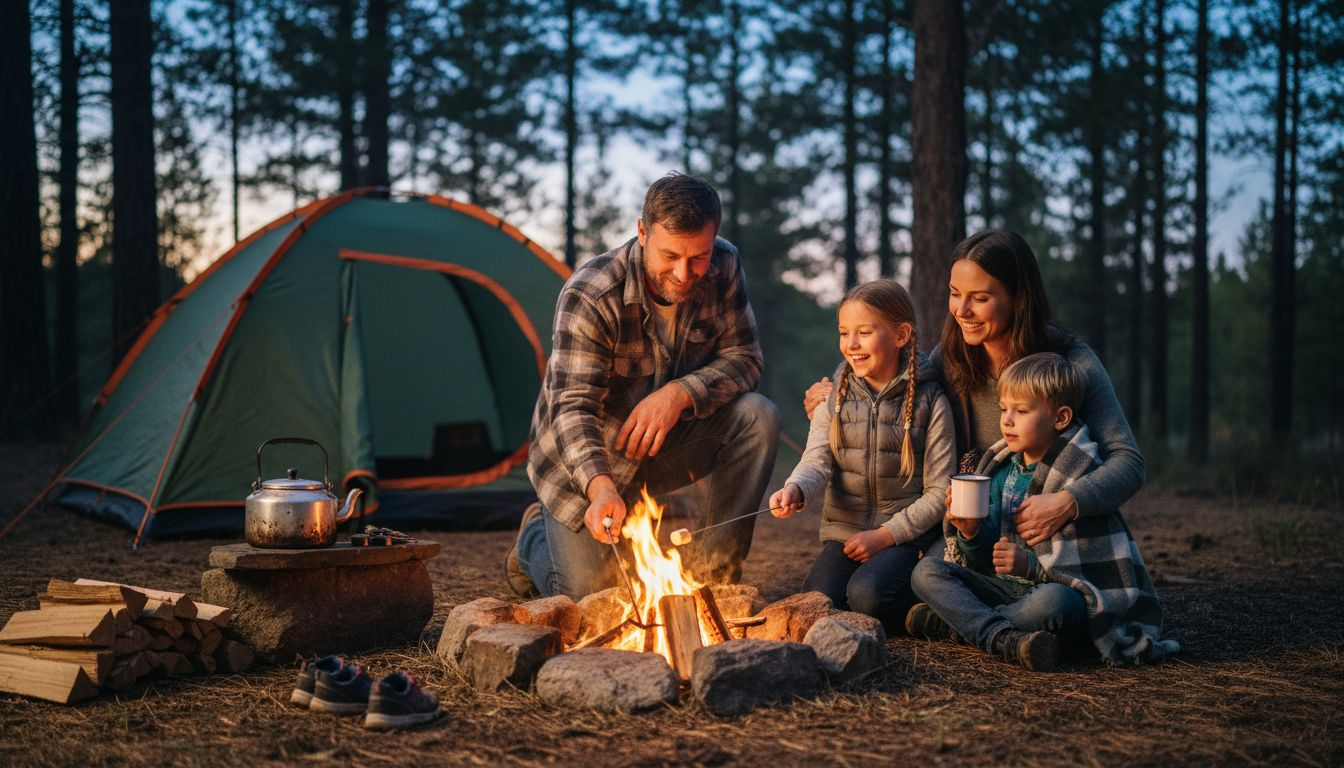
Every parent faces the challenge of balancing adventure with safety during camping trips in the United States. Campfires add warmth and excitement to evenings outdoors, but even a simple mistake can put loved ones and nature at risk. Learning campfire safety fundamentals gives families the confidence to select safe sites, manage fires responsibly, and keep children protected. This guide empowers parents with practical steps that help prevent hazards while creating unforgettable American family memories under the stars.
Key Takeaways
| Point | Details |
|---|---|
| Campfire Safety Fundamentals | Understanding proper campfire management techniques and supervising children is essential for preventing hazards during camping trips. |
| Types of Campfires | Familiarize yourself with different campfire types to ensure they are suited for their intended purpose, whether for cooking, warmth, or gathering. |
| Safe Setup and Maintenance | Always select a safe location for campfires, maintain a controlled size, and have necessary fire suppression tools readily available. |
| Legal Regulations | Check local fire regulations and bans before camping to avoid fines and ensure adherence to safety measures for the environment. |
What Campfire Safety Means for Families
Campfire safety represents more than just a set of rules - it's about creating memorable outdoor experiences while protecting your loved ones from potential hazards. For families venturing into the wilderness, understanding campfire safety fundamentals means developing a comprehensive approach to fire management and prevention.
At its core, campfire safety involves multiple critical components that go far beyond simply building a fire. Proper fire management techniques require families to carefully consider location, environment, and potential risks before even striking a match. This means selecting appropriate sites, understanding local regulations, and maintaining constant vigilance during the entire camping experience.
Key aspects of family campfire safety include:
- Selecting designated fire rings or established fire pits
- Clearing a wide perimeter around the fire site
- Keeping fires small and controlled
- Maintaining a safe distance for children
- Having water or fire extinguishing tools immediately available
- Monitoring weather and fire conditions
Supervision remains the most critical element of campfire safety. Fire conditions and local regulations can change rapidly, which means adults must remain attentive and prepared to act quickly. This involves understanding fire behavior, recognizing potential risks, and teaching children appropriate safety protocols.
Pro tip: Always assign a designated fire manager who understands campfire safety principles and can oversee fire management throughout your camping trip.
Different Types of Campfires and Their Uses
Understanding the various types of campfires is essential for creating safe, functional, and enjoyable outdoor experiences. Campfire configurations can dramatically impact your ability to cook, stay warm, and maintain a safe environment during camping trips. Each fire type serves a unique purpose and requires specific construction techniques.
Campfire structures vary significantly depending on their intended use, with some designs optimized for cooking while others focus on providing warmth or creating a social gathering space. The most common campfire types include:- Teepee Fire: Ideal for quick heating and cooking
- Log Cabin Fire: Provides long-lasting, stable heat
- Star Fire: Designed for conservation of wood resources
- Pyramid Fire: Excellent for wet conditions and extended burning
- Lean-to Fire: Best for reflecting heat in survival situations
Safety remains paramount when selecting and constructing any campfire type. Forest Service guidelines emphasize the critical importance of choosing appropriate fire locations, maintaining controlled sizes, and understanding local environmental regulations. Factors such as wind direction, surrounding vegetation, and available fire rings can significantly influence your fire-building strategy.
Campers must also consider the specific environment and purpose of their fire. A cooking fire requires different design principles compared to a warming fire or an evening social fire. Understanding these nuanced differences helps prevent accidents and ensures a more enjoyable outdoor experience.
Here's a comparison of popular campfire types and their ideal uses:
| Campfire Type | Best Use Scenario | Wood Efficiency |
|---|---|---|
| Teepee | Quick cooking, warmth | High initial burn |
| Log Cabin | Extended heat, social | Steady, slow usage |
| Star | Wood conservation | Very high efficiency |
| Pyramid | Wet or damp settings | Reliable in rain |
| Lean-to | Survival, wind block | Moderate efficiency |
Pro tip: Always carry multiple fire-starting tools and understand how to construct different fire types before your camping trip.
Safe Campfire Setup and Maintenance Steps
Creating a safe campfire involves more than just striking a match. Campfire preparation requires careful planning, strategic location selection, and meticulous attention to environmental conditions. Families must understand the critical steps that transform a potential hazard into a memorable outdoor experience.
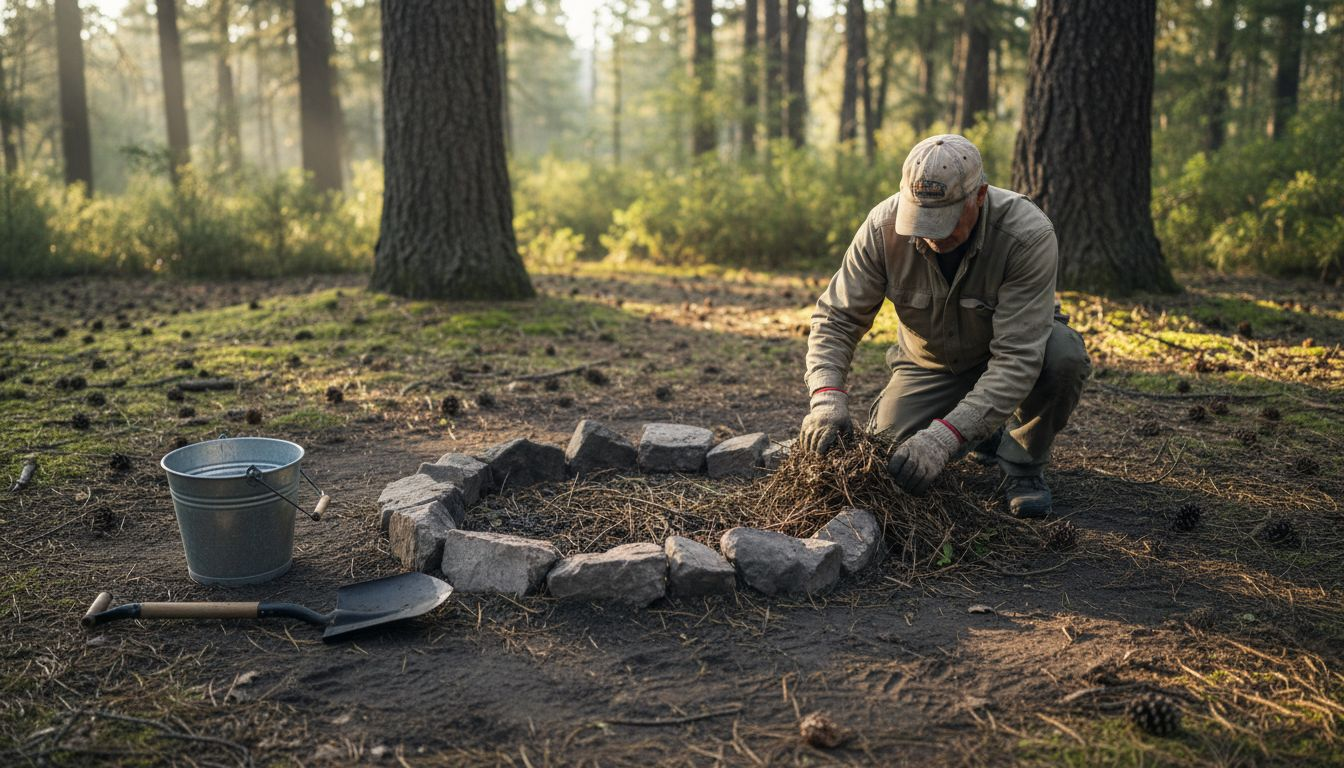
Safe campfire setup begins with location selection, which means choosing an area at least 15 feet away from tents, trees, and other flammable materials. The ground preparation involves critical steps:
- Clear a 10-foot diameter around the fire site
- Remove all dry leaves, grass, and combustible materials
- Select a spot with minimal overhead branches
- Use existing fire rings when possible
- Ensure a flat, stable ground surface
Maintaining the campfire requires constant supervision and strategic management. Bureau of Land Management guidelines emphasize keeping fires small, controlled, and never left unattended. Proper fire maintenance includes having essential tools nearby, such as water buckets, shovels, and fire extinguishers, to quickly respond to any unexpected situations.
Successful campfire management involves understanding fire behavior, wind conditions, and local environmental regulations. Families should always check local fire restrictions, carry appropriate fire-starting tools, and develop a comprehensive fire safety plan before their camping trip.
Pro tip: Practice building and extinguishing campfires in controlled environments before your actual camping trip to build confidence and skill.
Campfire Rules for Children and Adults
Campfire safety is a shared responsibility that requires clear guidelines and consistent communication between adults and children. Campfire boundaries are not just physical lines but critical safety protocols that protect every family member from potential accidents and injuries.
Designated safety zones are crucial for preventing accidental burns and maintaining control around campfires. The recommended safety rules include:- Establish a three-foot perimeter around the fire
- Adults are the only ones allowed to start and manage fires
- Children must remain outside the designated safety zone
- Keep fire-starting tools and matches out of children's reach
- Teach children the "stop, drop, and roll" technique
- Never leave children unsupervised near a campfire
Bureau of Land Management guidelines stress the importance of continuous adult supervision. This means actively monitoring children's behavior, explaining fire risks, and demonstrating safe interactions with campfires. Parents should create a comprehensive safety plan that includes clear instructions and potential emergency responses.
Education is key in campfire safety. Children should understand fire's potential dangers through age-appropriate conversations, practical demonstrations, and consistent reinforcement of safety rules. By establishing trust, explaining risks, and modeling responsible behavior, families can create a safe and enjoyable camping environment.
Pro tip: Practice campfire safety rules at home through role-playing scenarios to ensure children understand and can respond correctly in real situations.
Legal Regulations and Local Fire Bans
Campfire regulations are not uniform across different regions, making it critical for campers to understand the specific legal landscape of fire management in their intended destination. Ignorance of local rules can result in significant fines, potential legal consequences, and increased wildfire risks.
National park campfire regulations vary dramatically based on environmental conditions, seasonal changes, and local ecosystem vulnerabilities. Campers must be prepared to navigate complex legal requirements that include:
- Checking current fire ban status before traveling
- Obtaining necessary fire permits
- Understanding specific regional fire restrictions
- Knowing penalties for non-compliance
- Monitoring weather and drought conditions
- Verifying fire safety requirements with local authorities
Effective campfire legal compliance requires more than simply reading rules. Campers should contact local ranger stations, check official websites, and confirm current fire status before their trip. Understanding these regulations protects not just individual campers, but entire ecosystems and surrounding communities.
Pro tip: Always screenshot or print current fire restriction information from official sources and carry physical documentation during your camping trip.
Common Campfire Hazards and How to Avoid Them
Campfires can quickly transform from a warm gathering point to a dangerous situation when safety protocols are overlooked. Understanding and anticipating potential fire risks is crucial for protecting your family and the surrounding environment.
Bureau of Land Management safety guidelines highlight several critical campfire hazards that families must be aware of:
- Uncontrolled fire spread to surrounding vegetation
- Burns from direct flame contact or hot embers
- Injuries from improper fire starter usage
- Environmental damage from careless fire management
- Potential wildfire initiation in dry conditions
- Smoke inhalation risks
Recreational camping resources recommend specific strategies to mitigate these risks. Families should focus on maintaining a controlled fire environment by creating a clear perimeter, keeping fires small and contained, and ensuring constant adult supervision. This means understanding wind conditions, clearing potential fuel sources, and having immediate fire suppression tools readily available.
Most campfire accidents result from a combination of environmental factors and human error. Proper preparation involves not just understanding potential hazards, but developing a proactive safety mindset that considers every aspect of fire management, from initial setup to complete extinguishment.
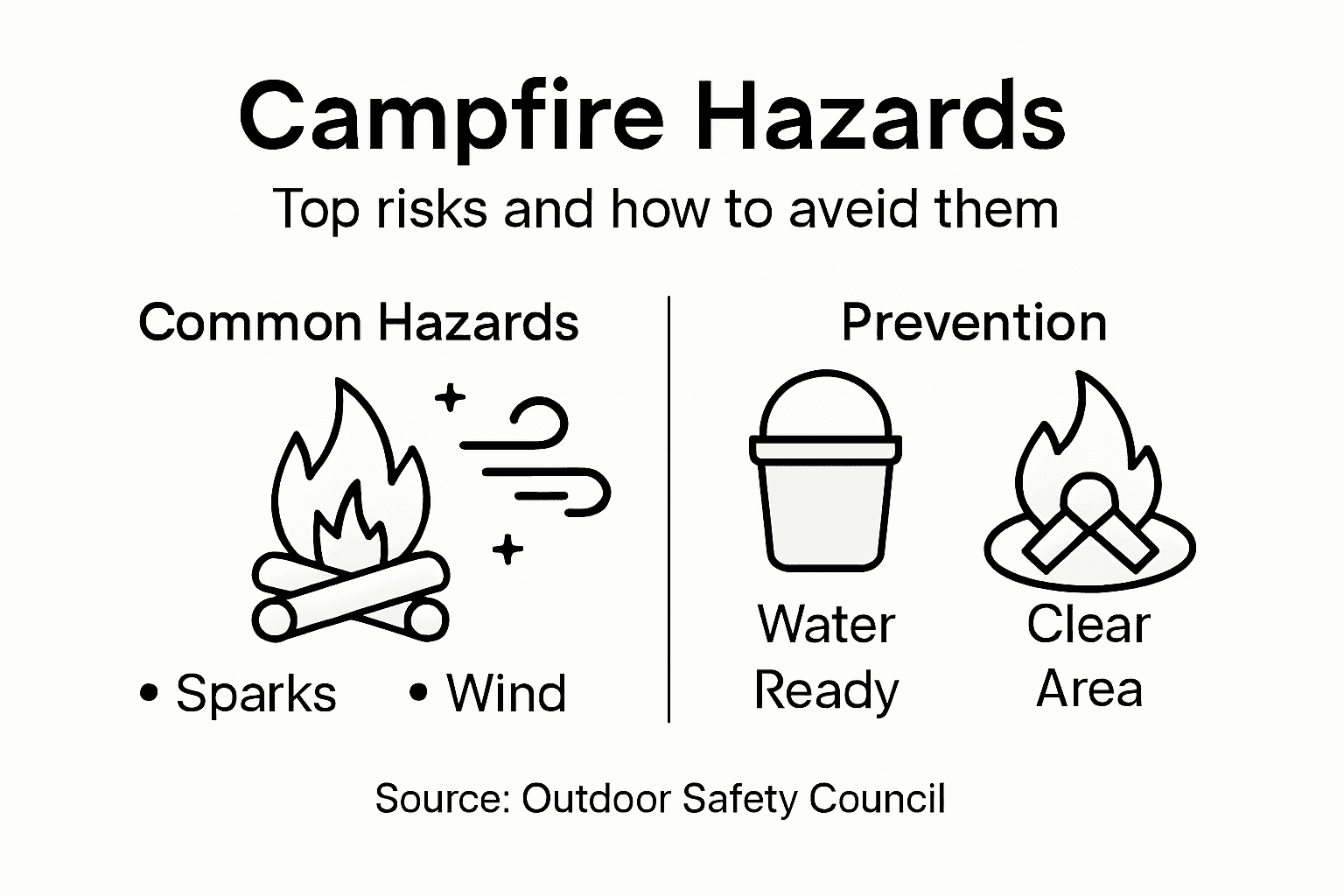
See common campfire hazards and how to prevent them:
| Hazard | Prevention Strategy | Key Benefit |
|---|---|---|
| Fire spreading to vegetation | Clear brush, maintain perimeter | Reduces wildfire risk |
| Burns from flames or embers | Establish safety zones, adult watch | Protects children and adults |
| Smoke inhalation | Build downwind, keep camp clear | Healthier breathing zone |
| Unattended fire | Assign supervisor, never leave | Stops runaway incidents |
Pro tip: Create a family campfire safety checklist and review it together before every camping trip to ensure everyone understands their role in maintaining a safe fire environment.
Stay Safe and Confident Around Every Campfire
Campfire safety is a vital part of any family camping adventure. The article highlights challenges like managing fire risks, supervising children, and complying with local fire regulations. You want to enjoy your outdoor experience without fearing uncontrolled flames or dangerous accidents. Achieving this means having the right gear and knowledge to build, maintain, and extinguish campfires safely while protecting your loved ones.
At Life Camp Adventure, we understand these needs and provide reliable equipment designed for safe campfire management. From durable fire-starting tools to essential safety gear and extinguishing supplies, our products help you take control of your campfire environment. When you prepare with quality gear and expert advice, you can create memorable moments around the fire and avoid common hazards like spreading flames or burns.
Explore our selection of outdoor essentials now to equip your family for safer camping. Life Camp Adventure offers comfort, durability, and ease of use so you can focus on what truly matters: enjoying the great outdoors with confidence.

Ready to elevate your campfire safety? Visit Life Camp Adventure and discover dependable gear designed to protect your family and enhance your camping experience today.
Frequently Asked Questions
What are the key components of campfire safety for families?
Key components of campfire safety include selecting designated fire rings, clearing a wide perimeter, keeping fires small, maintaining a safe distance for children, having fire extinguishing tools available, and constant supervision of the fire.
How should I prepare the area before starting a campfire?
Prepare the area by selecting a location at least 15 feet away from tents and trees, clearing a 10-foot diameter around the fire site, removing combustible materials, and using existing fire rings when possible.
What types of campfires are best for different purposes?
Teepee fires are great for quick heating, log cabin fires provide long-lasting warmth, star fires conserve wood, pyramid fires are ideal in damp conditions, and lean-to fires are helpful in survival scenarios.
What legal regulations should campers be aware of regarding campfires?
Campers should check current fire ban statuses, obtain necessary permits, understand regional fire restrictions, and be aware of penalties for non-compliance with local regulations on fire management.
