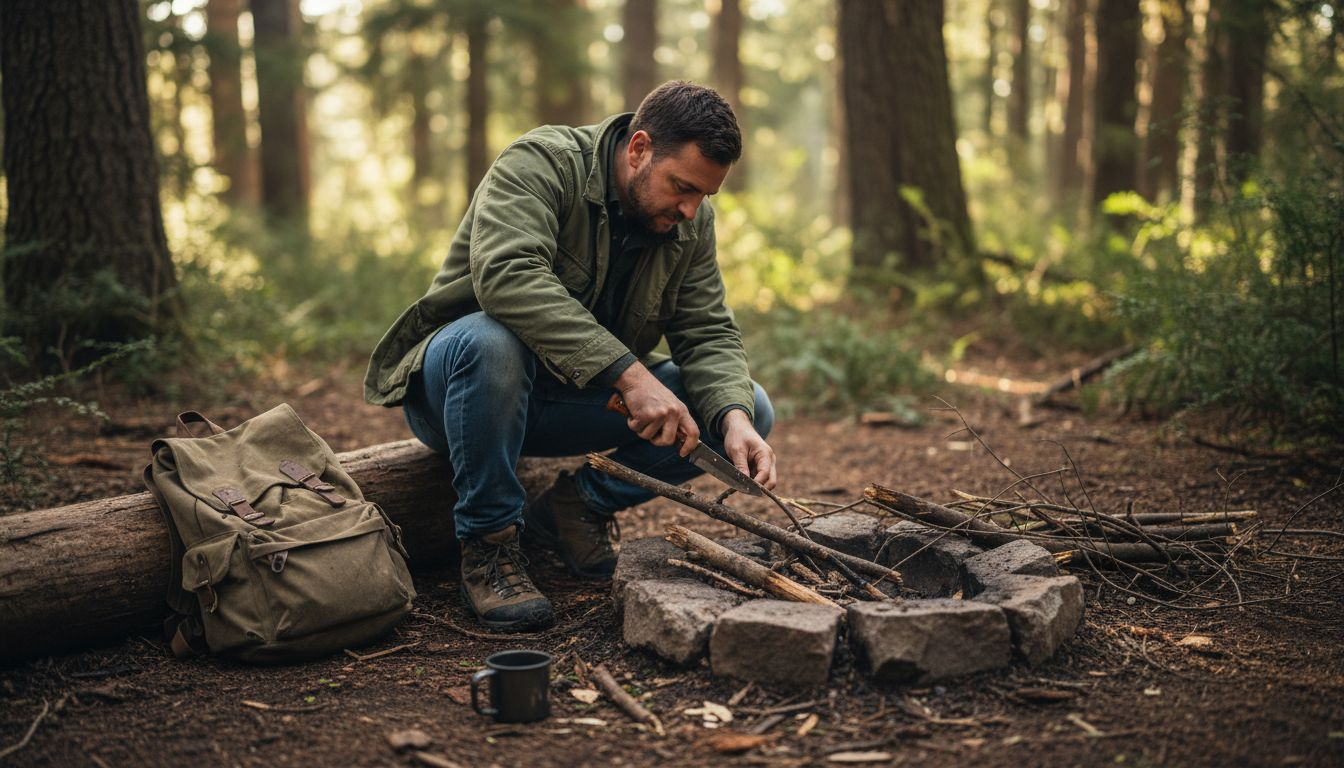
Every American camping trip brings its own unexpected tests, from making simple snacks to handling emergencies in the wild. For families and beginner campers, the right camping knife is more than just a tool. It can mean the difference between confidence and anxiety outdoors. With over 60 percent of American households now planning nature getaways, knowing what makes a camping knife truly essential will help you prepare, protect, and make the most of every adventure.
Key Takeaways
| Point | Details |
|---|---|
| Importance of Camping Knives | Camping knives are essential survival tools that support outdoor tasks like shelter building, food preparation, and first aid. |
| Selecting the Right Knife | Choose a camping knife based on activities and environment, prioritizing functionalities such as blade material and handle ergonomics. |
| Maintenance and Safety | Regular maintenance, proper handling techniques, and understanding local knife laws are crucial for safe and effective use. |
| Common Mistakes | Avoid selecting oversized or merely decorative knives; prioritize practical functionality and comfort in your selection process. |
What Makes a Camping Knife Essential
Camping knives are far more than simple cutting tools—they are essential survival companions designed to support outdoor adventurers through unpredictable wilderness challenges. Essential multi-functional survival tools represent critical equipment that transforms potential danger into manageable situations.
A quality camping knife provides multiple survival functions beyond basic cutting. These versatile instruments enable critical tasks such as building emergency shelters, preparing food, starting fires, creating makeshift tools, performing first aid, and managing unexpected wilderness obstacles. The right knife becomes an extension of your preparedness strategy, offering practical solutions when standard resources become unavailable.
When selecting a camping knife, consider its core capabilities across different scenarios. Key characteristics include a sturdy full tang design, robust blade material resistant to corrosion, comfortable ergonomic grip, and appropriate blade length for multiple tasks. The knife should balance lightweight portability with durability, ensuring it can handle everything from delicate food preparation to more aggressive survival requirements.
Pro tip: Always practice proper knife handling techniques and maintain your blade's sharpness before your outdoor adventure to ensure maximum effectiveness and safety.
Types of Camping Knives and Their Uses
Camping knives come in diverse styles, each designed to address specific outdoor challenges. The full-tang fixed blade knife represents the most robust option for serious outdoor enthusiasts, offering unparalleled strength and reliability in harsh wilderness environments. These knives feature a single piece of metal extending through the entire handle, providing maximum durability and preventing potential breakage during intense survival scenarios.
Different camping knife types serve unique purposes for outdoor adventurers. Folding knives offer compact portability and convenient storage, making them ideal for lightweight backpackers and day hikers. Fixed blade knives excel in heavy-duty tasks like chopping wood, building shelters, and processing game. Multi-tools combine knife functionality with additional features like can openers, screwdrivers, and saw blades, providing versatile solutions for campers who prioritize minimal gear weight.
When selecting a camping knife, consider your specific outdoor activities and environment. Hunters might prefer a specialized skinning knife with a curved blade, while wilderness survival enthusiasts could prioritize a robust full tang design with a drop point blade. Backpackers often choose lightweight folding knives, while expedition teams might opt for more substantial fixed blade options that can handle extreme conditions and multiple survival tasks.
Pro tip: Always match your knife selection to your specific camping style and anticipated terrain, and invest in a high-quality blade that balances durability with practical functionality.
Here's a concise comparison of common camping knife types and their ideal uses:
| Knife Type | Portability | Best For | Typical Drawbacks |
|---|---|---|---|
| Folding Knife | Highly portable | Food prep, day hikes | Weaker for heavy tasks |
| Fixed Blade | Moderately bulky | Shelter & game tasks | Requires sheath for safety |
| Multi-Tool | Compact | Versatile quick fixes | Complex mechanisms, price |
| Skinning Knife | Specialized | Hunting, precise cuts | Limited general functionality |
Important Blade Designs and Materials
Understanding blade designs and materials is crucial for selecting the right camping knife. The folding pocket knife represents an excellent example of modern knife engineering, combining compact design with functional materials that meet diverse outdoor needs. Different blade designs serve specific purposes, with each shape optimized for particular cutting tasks and environmental challenges.
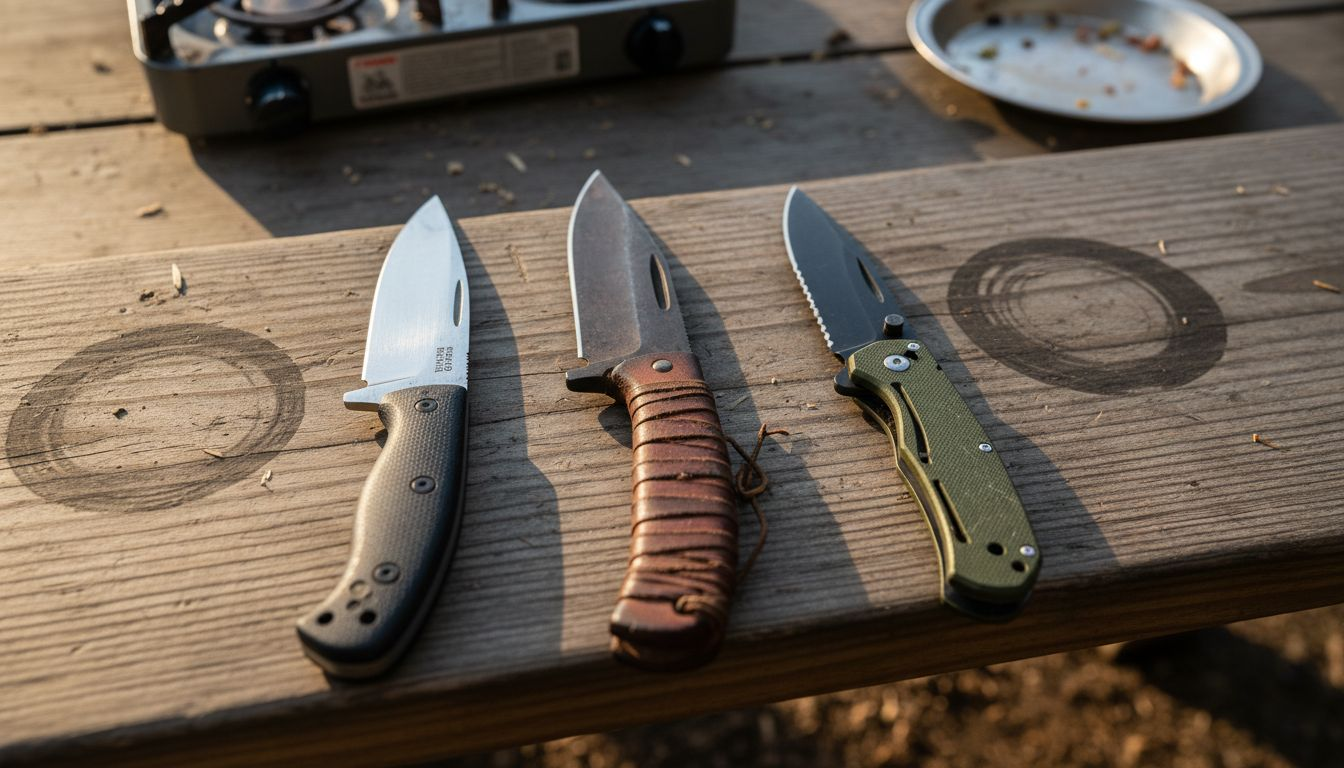
Blade materials play a critical role in knife performance and durability. Stainless steel remains the most popular choice for camping knives, offering excellent corrosion resistance and maintaining a sharp edge. High-carbon steel provides superior hardness and edge retention, making it ideal for demanding wilderness tasks. Exotic materials like ceramic and titanium offer unique advantages, with ceramic blades providing exceptional sharpness and titanium blades delivering lightweight durability.
Camping knife blade designs range from drop point and clip point to trailing point and tanto styles. Drop point blades offer versatile performance with a strong, controllable tip perfect for general outdoor tasks. Clip point blades provide excellent piercing capabilities, while trailing point designs excel in precise cutting and food preparation. Tanto blades deliver remarkable strength and are particularly suited for heavy-duty survival scenarios, featuring a reinforced point that resists lateral stress and potential breakage.
Pro tip: Invest in a blade material and design that matches your specific camping environment, and always maintain your knife with regular sharpening and proper storage to ensure long-lasting performance.
Use this reference table to quickly evaluate popular blade materials used in camping knives:
| Material | Edge Retention | Corrosion Resistance | Weight (Compared) |
|---|---|---|---|
| Stainless Steel | Moderate to good | Excellent | Medium |
| High-Carbon Steel | Excellent | Poor unless coated | Medium |
| Ceramic | Exceptional | Won't rust | Very light |
| Titanium | Good | Very high | Light |
Handle Features, Safety, and Ergonomics
Handle design represents a critical aspect of camping knife performance and user safety. Knife handle ergonomics significantly impact user control, comfort, and accident prevention during outdoor activities. Different materials and design elements contribute to a knife's overall handling characteristics, with specialized grip patterns and material compositions engineered to provide maximum control in challenging environments.
Camping knife handles are constructed from various materials, each offering unique advantages. Rubber handles provide exceptional grip in wet conditions, while micarta and G10 materials deliver outstanding durability and resistance to temperature extremes. Natural materials like wood offer aesthetic appeal and traditional craftsmanship, though synthetic materials typically provide superior performance in harsh outdoor settings. Textured surfaces and ergonomic contours help prevent hand fatigue and reduce slippage during extended use.
Safety features are paramount in camping knife handle design. Finger guards prevent accidental slippage onto the blade, creating a critical barrier between the user's hand and the cutting edge. Full tang construction—where the blade metal extends completely through the handle—provides maximum strength and stability. Handles with strategic finger grooves and balanced weight distribution enhance control, allowing precise movements and reducing the risk of unexpected blade movement during critical outdoor tasks.
Pro tip: Always inspect your knife handle for wear, cracks, or damage before each camping trip, and replace handles that show signs of structural compromise to maintain optimal safety and performance.
Mistakes to Avoid When Selecting Knives
Selecting the right camping knife requires careful consideration and avoiding common pitfalls that can compromise your outdoor safety and equipment effectiveness. Common knife selection mistakes often stem from prioritizing appearance over functionality, leading to poor performance and potential safety risks during outdoor adventures. Understanding these potential errors can help campers make more informed and strategic purchasing decisions.
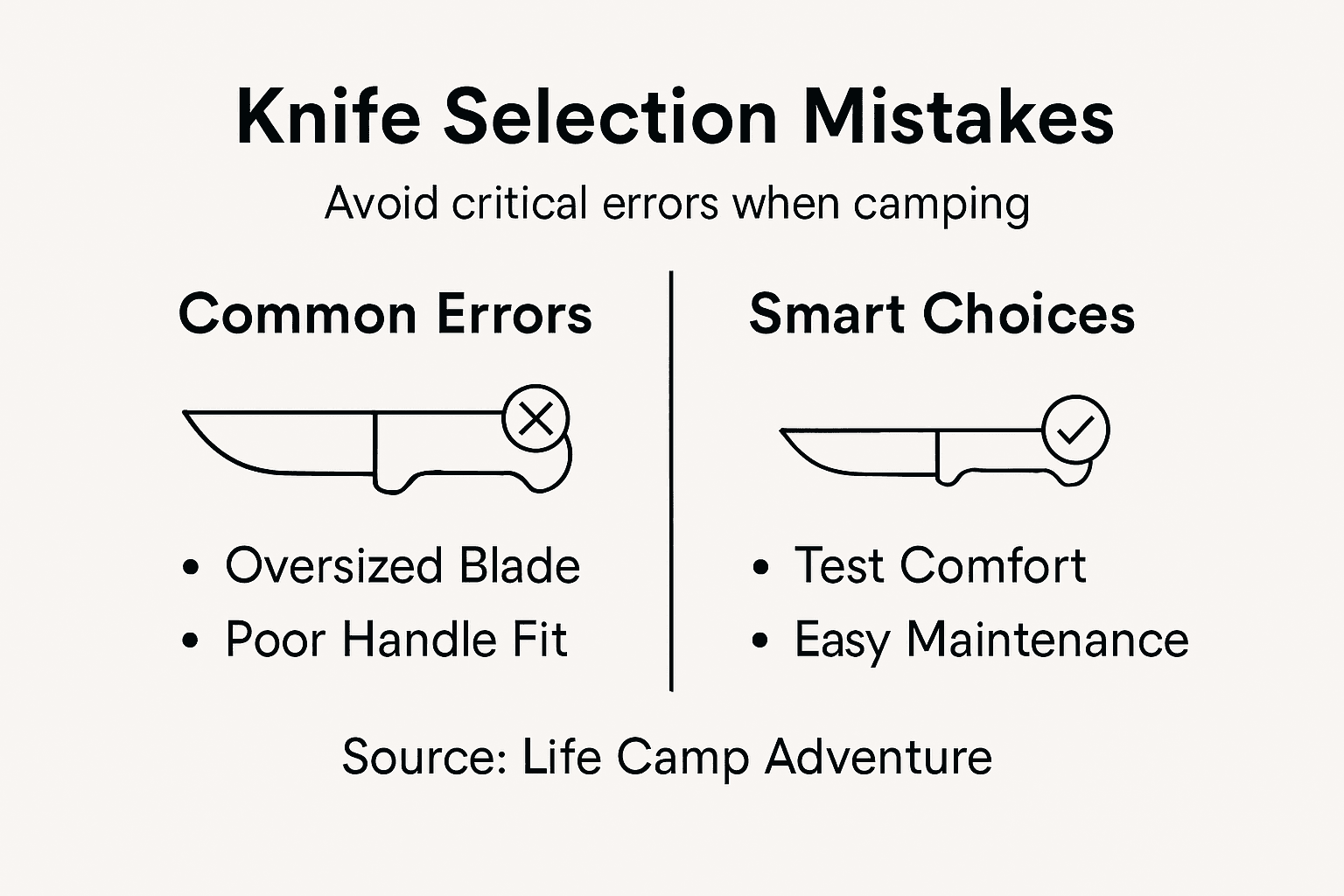
One significant mistake is choosing knives that are either too large or completely impractical for camping environments. Oversized blades create unnecessary weight and reduce portability, while miniature knives lack the strength required for essential outdoor tasks. Many novice campers mistakenly select combat-style or decorative knives that look impressive but fail to provide genuine utility. Optimal camping knives should balance compact design with robust functionality, offering versatility across different wilderness scenarios.
Another critical error involves neglecting handle ergonomics and blade maintenance requirements. Campers frequently overlook the importance of comfortable grip design, smooth handle materials, and blade construction that matches their specific outdoor activities. Some individuals choose knives with complex maintenance needs that become challenging to sharpen or care for in remote locations. The ideal camping knife should feature straightforward maintenance, comfortable handling, and materials that withstand varying environmental conditions without requiring extensive specialized care.
Pro tip: Test potential camping knives for comfort and weight before purchasing, and always prioritize practical functionality over aesthetic appeal or marketing claims.
Safe Use, Maintenance, and Legal Tips
Camping knife safety extends far beyond simple handling techniques, encompassing legal considerations, proper maintenance, and responsible usage. Understanding knife regulations is crucial for any outdoor enthusiast, as legal requirements can vary dramatically between different regions and jurisdictions. Travelers must research and comply with local laws regarding blade length, transportation, and permissible carry methods before embarking on their outdoor adventures.
Proper maintenance represents another critical aspect of camping knife ownership. Regular cleaning, careful storage, and consistent sharpening ensure your knife remains a reliable tool rather than a potential safety hazard. Developing a maintenance routine involves cleaning the blade after each use, applying light oil to prevent corrosion, storing the knife in a dry environment, and using appropriate sharpening techniques that maintain the blade's original angle and edge geometry. Neglecting these fundamental care practices can significantly reduce your knife's performance and lifespan.
Safe knife handling requires ongoing education and practice. Users should always maintain a clear safety zone when using the knife, keeping others at a safe distance and avoiding sudden movements. Proper grip techniques, understanding cutting directions, and maintaining constant awareness of your surroundings are essential skills. Transportation of camping knives demands equal caution, with blades securely sheathed and stored separately from other gear to prevent accidental exposure or damage.
Pro tip: Practice knife handling and maintenance in a controlled environment before your camping trip, and always treat your camping knife as a serious tool requiring respect and careful management.
Equip Yourself with the Right Camping Knife for Safety and Versatility
Choosing the right camping knife is essential for tackling the challenges of outdoor survival with confidence. This article highlights key pain points such as selecting durable blade materials, ensuring ergonomic handle design, and avoiding common mistakes that compromise safety and functionality. Whether you need a multi-functional fixed blade or a compact folding knife, having the right tool makes all the difference in managing shelter building, food preparation, and emergency tasks.
At Life Camp Adventure, we understand these critical needs and offer a carefully curated selection of camping knives designed to balance strength, safety, and practical versatility. Our gear supports your preparedness strategies with reliable, high-quality tools that are easy to maintain and built for real-world wilderness use.
Explore our full range of camping knives and survival gear to find the perfect fit for your outdoor style today.

Take control of your next adventure by choosing gear that meets the highest standards of durability and safety. Visit Life Camp Adventure now to equip yourself with knives that match the demands of your wilderness explorations and keep you prepared for whatever nature presents.
Frequently Asked Questions
What is the importance of having a camping knife?
A camping knife is essential for survival as it enables various critical tasks, such as constructing shelters, preparing food, starting fires, and performing first aid, making it a versatile tool for outdoor adventures.
What are the main types of camping knives?
The main types of camping knives include folding knives, fixed blade knives, multi-tools, and skinning knives, each designed for specific tasks such as portability, heavy-duty usage, or versatile functionality depending on outdoor needs.
How do I choose the right blade material for my camping knife?
Selecting the right blade material involves considering edge retention and corrosion resistance. Stainless steel is popular for its durability, while high-carbon steel offers excellent edge retention, and ceramic provides exceptional sharpness, but may be less durable in rugged conditions.
What safety features should I look for in a camping knife handle?
Look for handles with ergonomic designs, finger guards, full tang construction for strength, and textured surfaces for better grip. These features will enhance control during use and minimize the risk of accidents.
Recommended
- Full-tang Fixed Blade Knife with Leather Sheath, Clip Point Blade and Wood Handl
- Camping Hatchet Machete Knife Set Sheath Hunting Knife Flashlight Paracord
- Hunting Knife and Hatchet Axe Combo Set Sheath Fixed Blade Knife Camping
- Survival Shovel 8 in 1 Camping Shovel Folding Multitool Portable Compact
- Climbing Equipment: Choosing the Right Gear Matters - Gripnatic
