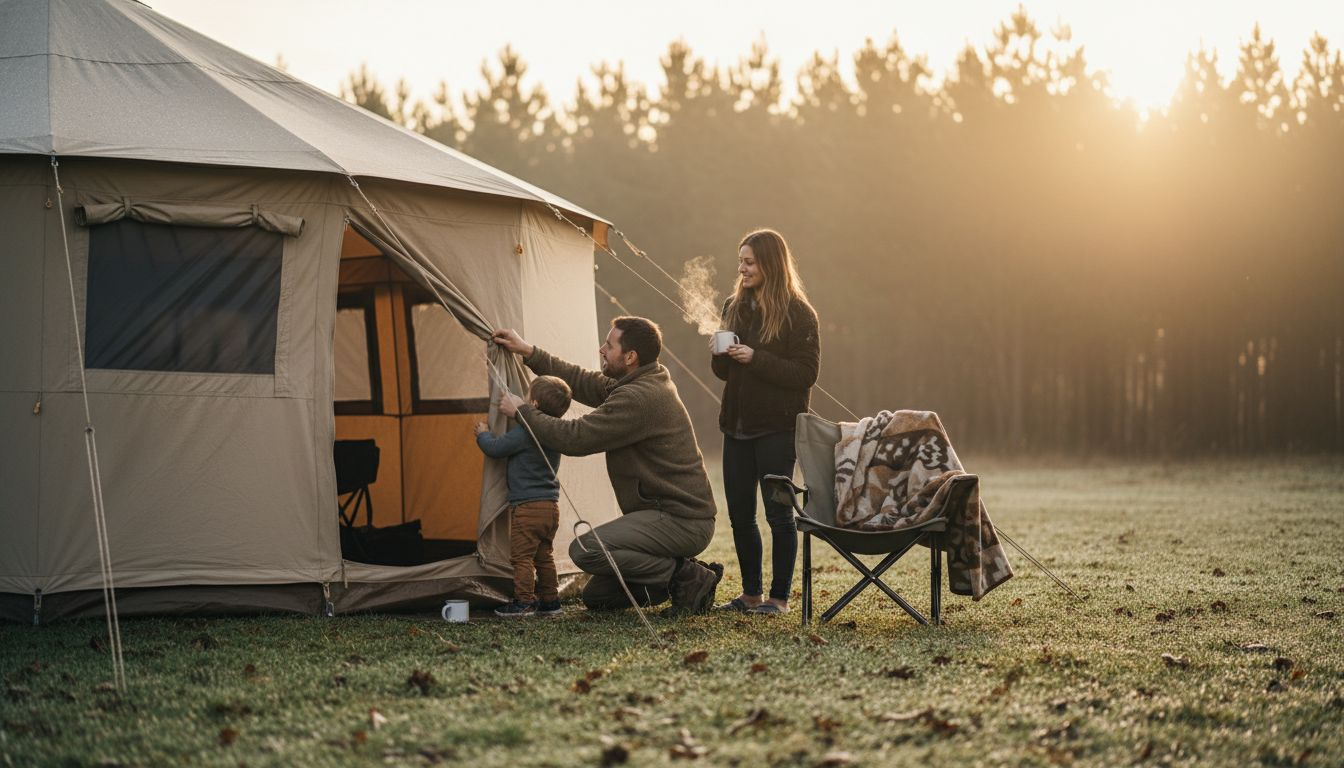
Every parent faces the challenge of keeping their family comfortable and safe during a camping trip, especially when sharing a tent. The importance of proper ventilation inside your shelter cannot be overstated, as it plays a big role in reducing stuffy air, managing humidity, and supporting your family's health. Learning how air moves through your tent means more restful nights and peace of mind while enjoying the great North American outdoors.
Key Takeaways
| Point | Details |
|---|---|
| Importance of Ventilation | Proper tent ventilation enhances comfort and safety by promoting fresh air circulation and reducing indoor air contaminants. |
| Types of Ventilation Systems | Modern tents utilize natural, mechanical, and hybrid ventilation systems to adapt to various climates and ensure airflow. |
| Condensation Prevention | Managing condensation is crucial; effective ventilation strategies help maintain a comfortable microclimate and prevent mold growth. |
| Common Mistakes | Campers often compromise air quality by sealing tents completely; understanding airflow dynamics is essential for optimal ventilation. |
What Is Tent Ventilation and Why It Matters
Tent ventilation is a critical but often overlooked aspect of camping comfort and safety that directly impacts your outdoor experience. At its core, ventilation involves strategic air movement inside your tent, allowing fresh outdoor air to circulate while removing stale, humid indoor air. Proper ventilation helps reduce indoor air contaminants and creates a healthier, more comfortable sleeping environment.
The science behind tent ventilation is rooted in basic airflow principles. When multiple people occupy a small, enclosed space like a tent, body heat, breath moisture, and perspiration quickly generate condensation. Without adequate air circulation, this moisture accumulates on tent walls, creating a damp, uncomfortable environment that can lead to mold growth, reduced insulation effectiveness, and potential respiratory issues. Modern tent designs incorporate strategic mesh panels, adjustable vents, and double-wall constructions specifically to address these challenges.
Effective tent ventilation serves multiple purposes beyond basic comfort. It helps regulate internal temperature, prevents condensation buildup, reduces the risk of respiratory hazards, and can even improve overall camping safety. Natural and mechanical ventilation strategies allow campers to adapt to varying environmental conditions, ensuring a more pleasant outdoor experience regardless of weather or location.
Pro tip: Position your tent with the prevailing wind direction in mind, and always keep at least two vents partially open to maintain continuous airflow, even during cooler nights.
Types of Ventilation Systems in Modern Tents
Modern tent ventilation systems have evolved significantly from traditional static designs, now offering sophisticated approaches to managing airflow and internal climate. Natural ventilation strategies leverage wind direction and strategic tent positioning to create effective air circulation without mechanical intervention. These systems typically involve carefully placed mesh panels, adjustable vents, and fabric designs that allow controlled air movement while preventing direct drafts.
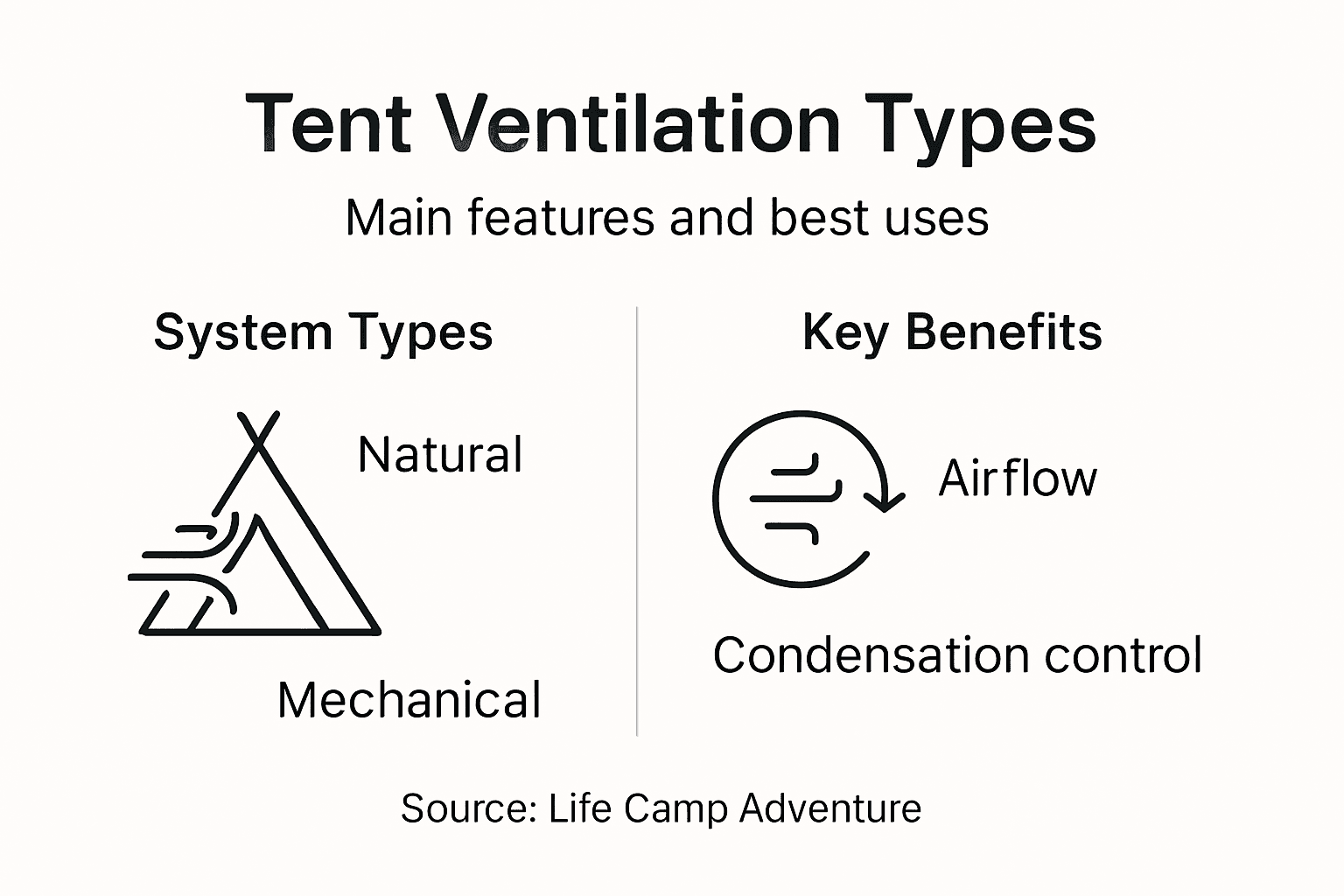
Tent manufacturers now incorporate three primary ventilation approaches: natural, mechanical, and hybrid systems. Natural ventilation relies on wind-driven and thermal buoyancy principles, using mesh windows, adjustable rain flaps, and strategic opening placements to promote airflow. Mechanical ventilation introduces battery-powered or portable fans that actively move air, particularly useful in larger family tents or during camping scenarios with minimal natural wind. Hybrid ventilation systems combine both approaches, offering campers maximum flexibility in managing interior tent conditions.
The most advanced ventilation systems now feature sophisticated design elements like double-wall construction, which creates an additional air buffer between the inner living space and exterior fabric. Hybrid ventilation techniques allow campers to adapt to changing environmental conditions by manually adjusting airflow mechanisms. These systems not only improve comfort but also help prevent condensation buildup, reduce internal humidity, and maintain a more consistent temperature regardless of external weather conditions.
Pro tip: When setting up your tent, always test and adjust ventilation points before nightfall to ensure optimal airflow and understand how wind direction impacts your specific tent design.
Here is a comparison of modern tent ventilation system types and their main features:
| Ventilation Type | Main Mechanism | Ideal Tent Size | Typical Applications |
|---|---|---|---|
| Natural | Mesh panels, vent flaps | Small to medium | Backpacking, lightweight tents |
| Mechanical | Battery-powered fans | Medium to large | Family tents, group sites |
| Hybrid | Both natural & mechanical | Any size | Variable climates, year-round use |
How Ventilation Impacts Comfort and Safety
Tent ventilation is far more than a simple comfort feature - it's a critical safety component that directly affects campers' health and well-being. Good ventilation significantly reduces airborne health risks by managing indoor air quality, temperature, and humidity levels. In the confined space of a tent, proper airflow becomes essential for preventing moisture buildup, regulating temperature, and minimizing potential respiratory health hazards.
The impact of ventilation extends beyond immediate comfort to long-term health considerations. Poor air circulation can lead to several camping-related health challenges, including increased condensation, mold growth, and higher risks of respiratory infections. When multiple people share a small tent space, the concentration of moisture from breathing, sweating, and temperature differences can quickly create an environment prone to bacterial and viral transmission. Strategic ventilation design helps mitigate these risks by continuously exchanging interior air with fresh outdoor oxygen, maintaining a healthier microclimate.
Modern tent designs increasingly recognize the complex relationship between ventilation, thermal regulation, and safety. Ventilation rates directly influence virus concentration and persistence in enclosed spaces, making airflow management crucial for preventing potential illness transmission. Advanced tent ventilation systems now incorporate multiple mechanisms like adjustable mesh panels, strategic vent placement, and moisture-wicking fabrics to create a dynamic environment that adapts to changing external conditions while protecting occupants' health and comfort.
Pro tip: Always pack a small battery-powered fan with adjustable speeds to supplement your tent's natural ventilation system, especially when camping in humid or stagnant environments.
Below is a summary of key health and comfort risks associated with poor tent ventilation:
| Risk Factor | Potential Impact | Prevention Method |
|---|---|---|
| Condensation | Damp sleeping conditions | Use multiple vents, airflow |
| Mold Growth | Health hazards | Dry surfaces, air exchange |
| High Humidity | Discomfort, poor sleep | Temperature regulation |
| Virus Transmission | Increased illness risk | Continuous fresh airflow |
Preventing Condensation and Managing Temperature
Condensation represents one of the most challenging environmental factors for tent campers, transforming a potentially comfortable shelter into a damp and uncomfortable space. Moisture control requires understanding key environmental dynamics involving air movement, temperature differentials, and humidity levels. When warm, humid air encounters cooler tent surfaces, water droplets form, creating an environment ripe for potential mold growth and uncomfortable sleeping conditions.
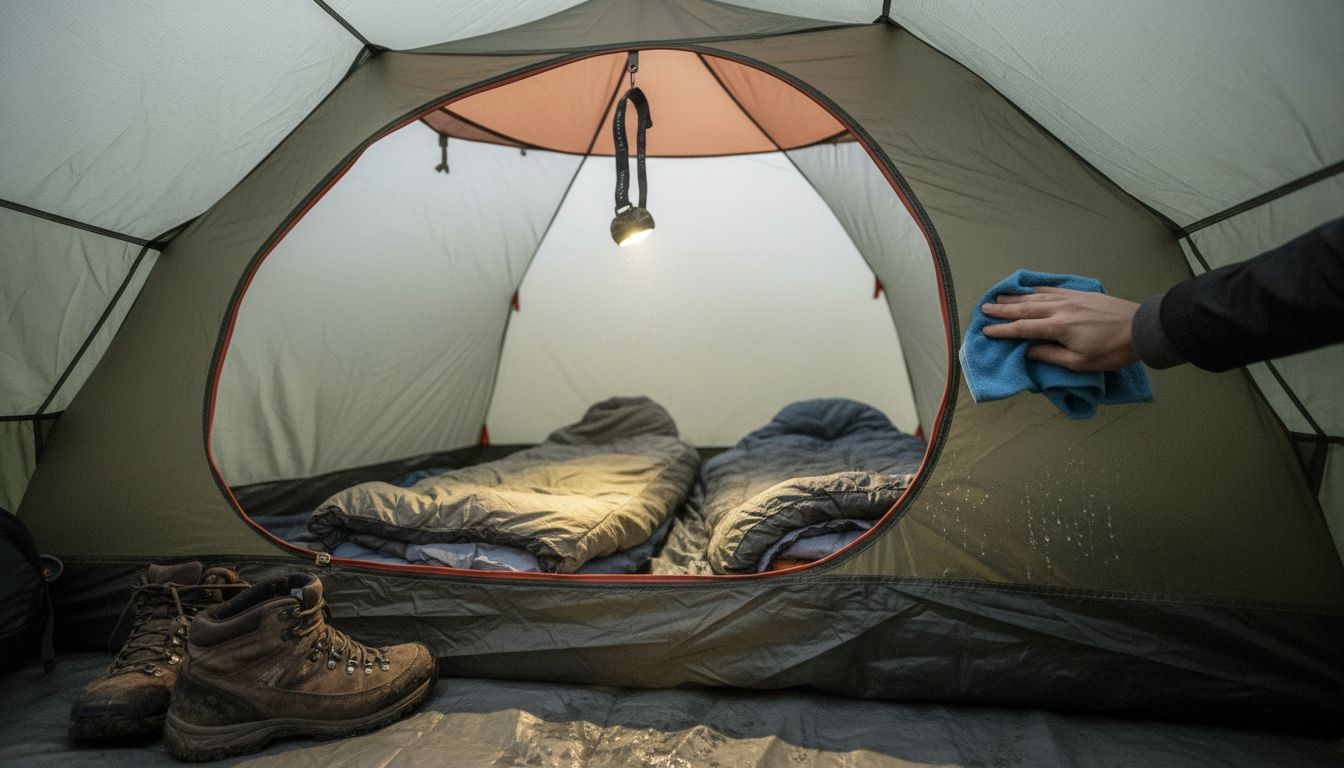
The science behind condensation management involves strategic ventilation and thermal regulation. Temperature differences between a tent's interior and exterior create condensation when warm, moisture-laden air comes into contact with cooler surfaces. Campers can mitigate these risks by selecting tents with advanced moisture-wicking fabrics, implementing proper ventilation strategies, and understanding how body heat and breathing contribute to indoor humidity. Double-wall tent designs provide an additional barrier against condensation, creating an air gap that helps regulate internal temperature and reduce moisture buildup.
Effective moisture management strategies extend beyond simple ventilation, requiring a holistic approach to tent climate control. Modern tent manufacturers incorporate innovative features like breathable fabrics, strategic vent placement, and moisture-resistant coatings to address condensation challenges. Campers can further enhance their tent's performance by selecting appropriate camping locations, avoiding ground moisture, and using groundsheets that provide an additional thermal and moisture barrier between the tent floor and the potentially damp ground.Pro tip: Always pack a small microfiber towel to quickly wipe down tent interior surfaces in the morning, removing any accumulated condensation before it can cause long-term moisture issues.
Common Ventilation Mistakes Campers Make
Many campers unknowingly compromise their tent's comfort and safety by making critical ventilation errors that can transform a potentially enjoyable outdoor experience into a miserable night. Common ventilation mistakes increase health risks by creating environments that trap moisture, reduce air quality, and potentially expose occupants to harmful airborne particles. Inexperienced campers often seal their tents completely, mistakenly believing this will protect them from cold or insects, when in reality, it creates a breeding ground for condensation and stale air.
One of the most significant ventilation missteps involves improper fan and airflow management. Incorrect fan placement can actually spread contaminants, defeating the purpose of attempting to improve air circulation. Campers frequently position fans without considering wind direction or the tent's internal airflow dynamics, which can inadvertently push humid air toward sleeping areas or create uncomfortable temperature zones. Strategic vent positioning is crucial, requiring understanding of how air moves through a tent's design and how external environmental conditions impact internal climate.
Technology and modern tent designs have evolved to address ventilation challenges, but human error remains a persistent problem. Common mistakes include completely closing all vents during cold nights, failing to adjust ventilation based on occupancy and external temperature, and neglecting to clean or maintain ventilation mechanisms. Some campers overcompensate by creating excessive airflow, which can introduce unwanted external pollutants or dramatically lower internal temperatures, compromising both comfort and personal safety. Understanding the delicate balance of tent ventilation requires knowledge of environmental conditions, tent design, and basic airflow principles.
Pro tip: Always pack adjustable vent clips and practice opening and closing your tent's ventilation points before your trip to understand their precise functionality in different weather conditions.
Elevate Your Camping Comfort with Optimized Tent Ventilation
Understanding the crucial role of tent ventilation in managing moisture, temperature, and air quality is the first step toward a safer and more comfortable outdoor experience. If you've faced problems like persistent condensation, stuffy air, or unpredictable temperature swings, you are not alone. The article uncovered common challenges such as managing airflow through natural or mechanical systems and preventing mold growth, all essential for camping health and safety.
At Life Camp Adventure, we are committed to equipping you with gear that addresses these exact concerns. Our range includes tents designed with advanced ventilation features and accessories like portable fans and moisture-wicking materials to help you maintain a fresh and dry shelter no matter the weather.

Take control of your camping environment today. Explore our collection and discover solutions that help reduce condensation, improve airflow, and protect your health on every adventure. Visit Life Camp Adventure now and gear up for your next trip with confidence. Your comfort and safety in the outdoors start here.
Frequently Asked Questions
What is tent ventilation and why is it important?
Tent ventilation is the process of allowing fresh air to circulate within a tent while expelling stale, humid air. Proper ventilation is crucial for reducing indoor air contaminants, preventing condensation, and creating a healthier and more comfortable sleeping environment.
What are the common types of ventilation systems used in tents?
Modern tents typically utilize three primary ventilation systems: natural (using mesh panels and strategically placed vents), mechanical (using battery-powered fans), and hybrid systems that combine both approaches for optimal air circulation.
How can poor ventilation affect my camping experience?
Poor ventilation can lead to increased condensation, mold growth, and higher humidity levels, making the tent uncomfortable. Additionally, it can increase the risk of respiratory issues due to stale air and airborne contaminants, negatively impacting campers' health and well-being.
What steps can I take to improve ventilation in my tent?
To enhance ventilation, ensure at least two vents are partially open at all times, position the tent according to prevailing wind direction, utilize battery-powered fans for larger tents, and select tents with advanced ventilation features like dual-wall construction and moisture-wicking fabrics.
