What Is a Camp Stove? Essential Choices for Beginners
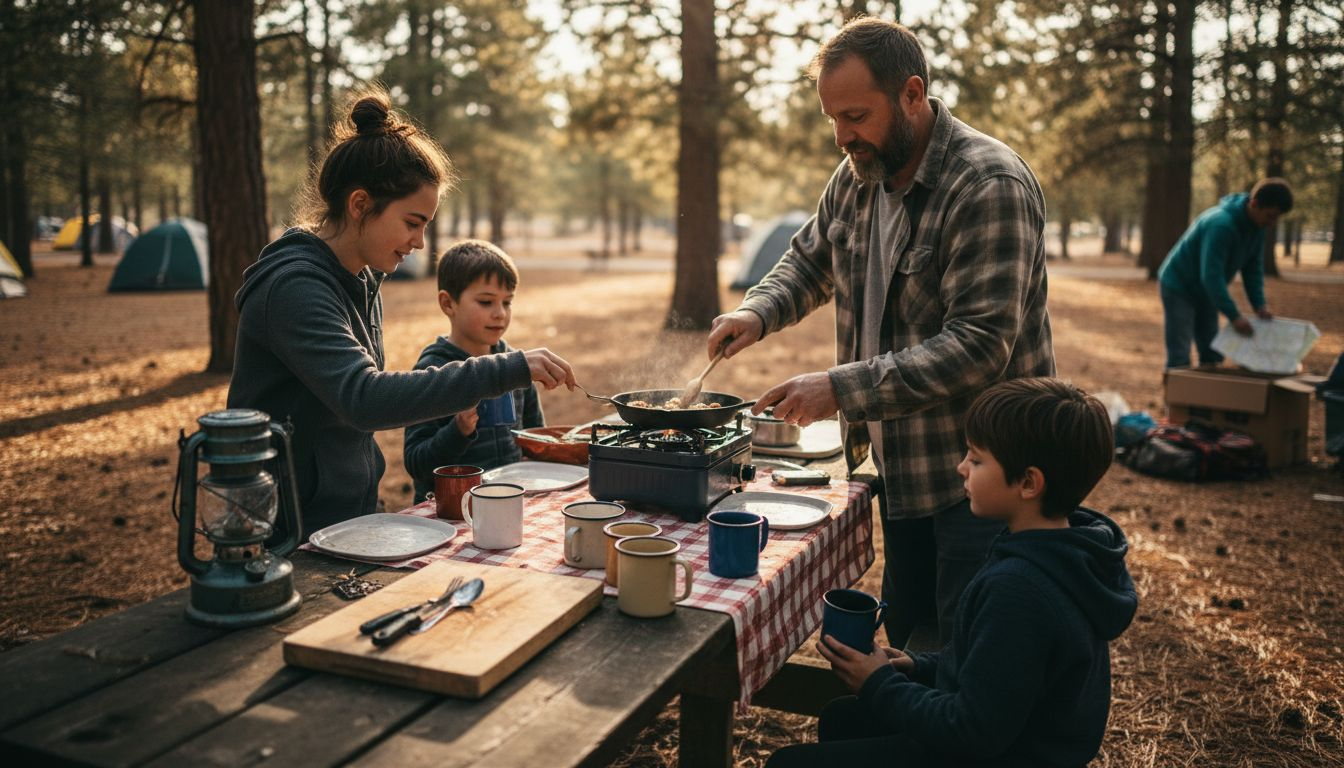
Most American families feel surprised to learn that nearly half of first-time campers end up frustrated by confusing gear. Choosing the right camp stove shapes how smoothly your weekends go, whether you are whipping up hot cocoa or making breakfast under the stars. This introduction clears up common myths and helps you find compact, reliable camp stove choices that keep outdoor cooking simple, safe, and fun for every American beginner.
Key Takeaways
| Point | Details |
|---|---|
| Understanding Stove Types | Camp stoves vary in type and function; select one based on your adventure's unique demands and cooking requirements. |
| Safety First | Always prioritize safety by adhering to manufacturer guidelines, maintaining a stable setup, and being aware of potential fire hazards. |
| Choose Based on Cooking Needs | Consider your group size and expected meal complexity when choosing a stove to ensure efficiency and satisfaction during your trip. |
| Pre-Trip Testing | Familiarize yourself with your camp stove's operation and setup at home to build confidence and ensure a smooth outdoor cooking experience. |
Camp stove basics and common misconceptions
Camp stoves are portable cooking devices designed specifically for outdoor environments, offering adventurers a reliable way to prepare meals away from traditional kitchen settings. Portable stoves have evolved significantly from early designs using various fuel types to modern specialized equipment tailored for specific outdoor activities.
Understanding camp stoves requires recognizing their diversity. Unlike home cooking equipment, these compact devices come in multiple configurations designed for different environments. Backpacking stoves prioritize lightweight performance, while car camping stoves offer more substantial cooking surfaces. Fuel options range from butane and propane to white gas and alcohol, each with unique advantages depending on temperature, altitude, and intended use.
Common misconceptions about camp stoves can lead to frustrating outdoor experiences. Many beginners assume all stoves perform identically, but fuel type and stove design significantly impact cooking efficiency. Some believe more powerful stoves always translate to better cooking, when in reality, the best stove depends on specific trip requirements like group size, cooking needs, and environmental conditions.
Pro tip: Before purchasing a camp stove, carefully assess your specific outdoor cooking needs, considering factors like trip duration, group size, expected weather conditions, and planned meal complexity.
Types of camp stoves for outdoor use
Camp stoves come in several distinct categories, each designed to meet specific outdoor cooking needs. Portable stoves can be broadly classified by their fuel type and operational design, ranging from simple unpressurized models to sophisticated multi-fuel systems that can handle diverse environmental conditions.
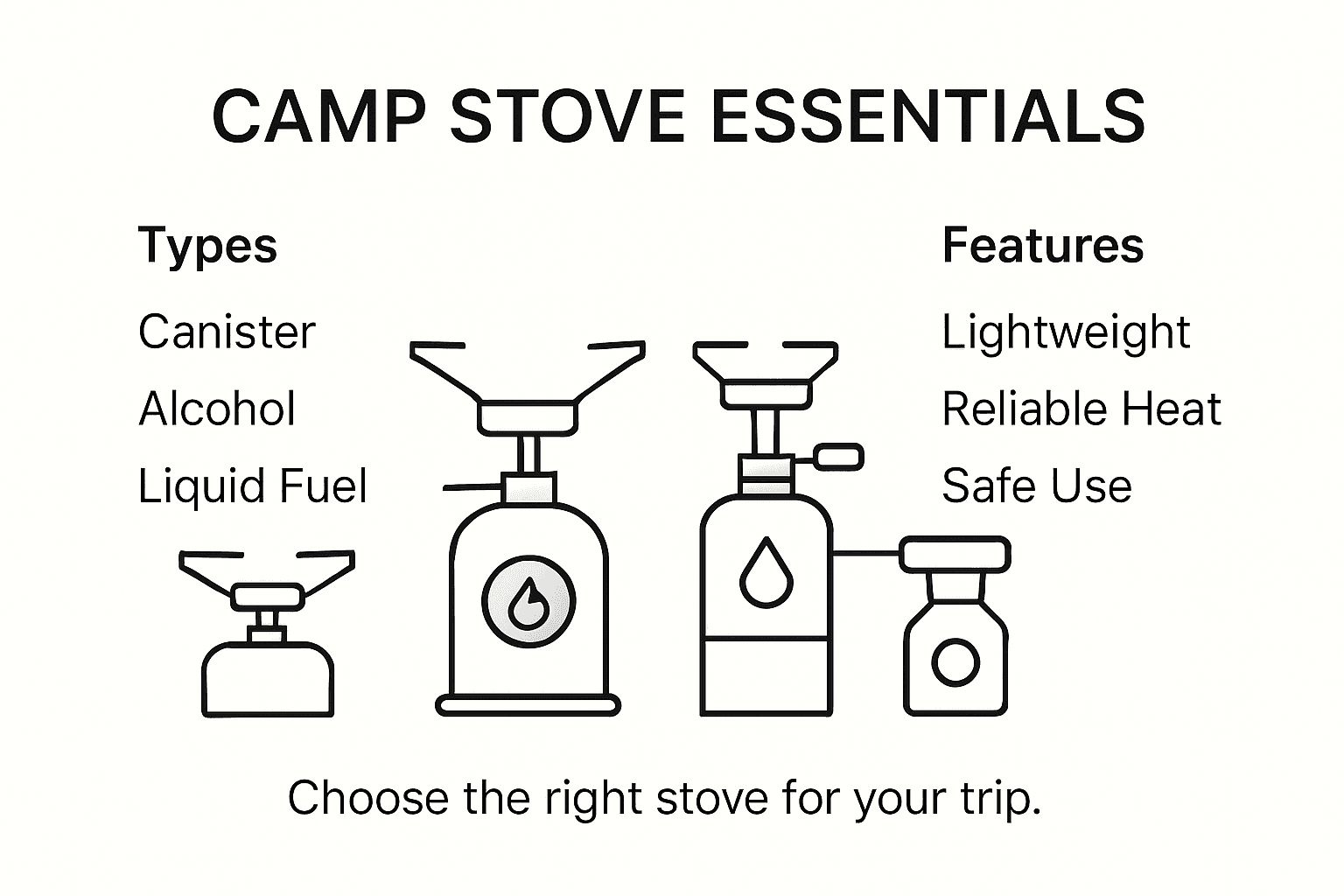
The most common types include canister stoves, which use pressurized gas and are lightweight and convenient for backpackers. Liquid fuel stoves offer greater versatility, burning white gas or multiple fuel types and performing exceptionally well in cold temperatures and high altitudes. These liquid-fuel models provide reliable heat in challenging outdoor environments, making them popular among serious outdoor enthusiasts who require consistent cooking performance.
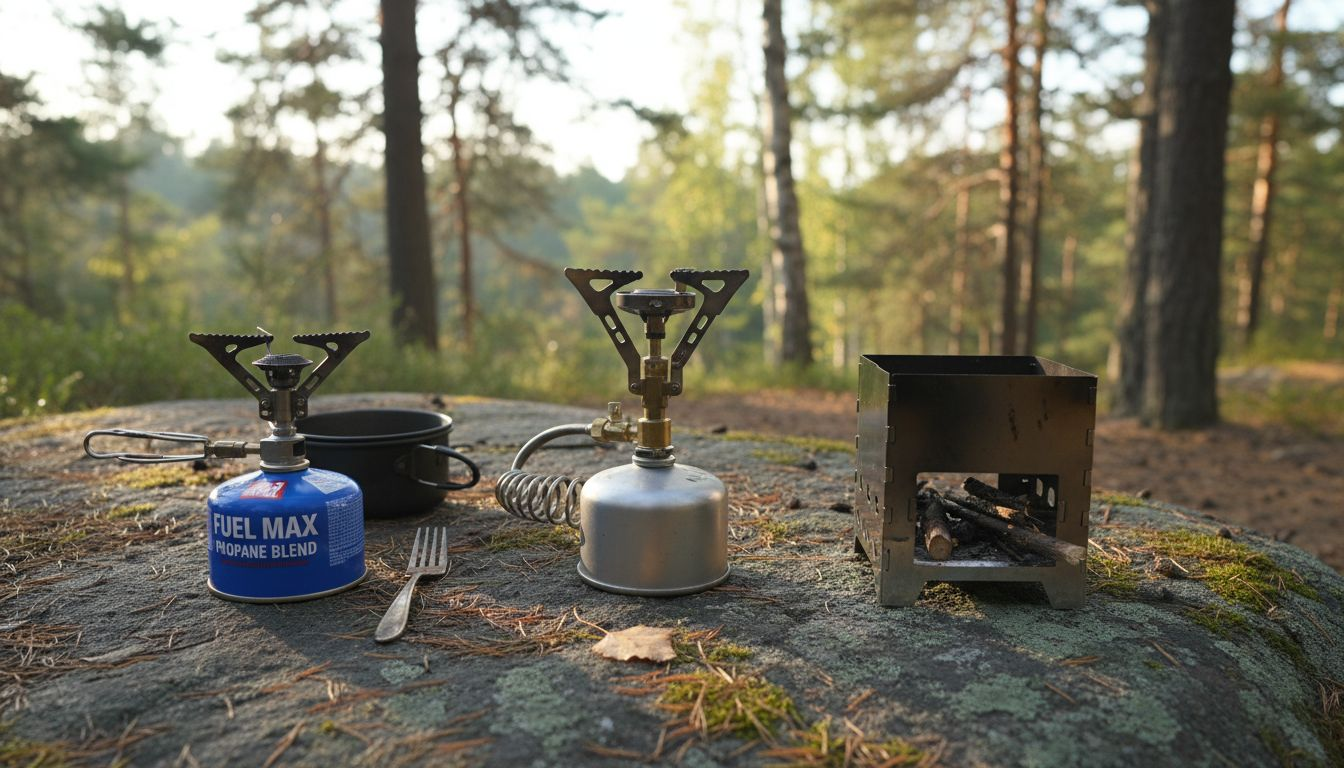
Additional camp stove varieties include alcohol stoves for ultralight backpacking, wood burning stoves for wilderness survival scenarios, and integrated cooking systems that combine stove and cookware for maximum efficiency. Ultralight camping stoves with Piezo ignition represent a modern solution for adventurers seeking compact and reliable cooking equipment that minimizes weight and maximizes convenience.
Here's a quick look at common camp stove types and their best use cases:
| Stove Type | Ideal For | Main Strength | Limitation |
|---|---|---|---|
| Canister Gas Stove | Backpackers, families | Fast, portable setup | Poor performance in extreme cold |
| Liquid Fuel Stove | Expedition, cold weather | Operates at low temps | Heavier and requires maintenance |
| Alcohol Stove | Ultralight hikers | Lightweight, silent | Slow boil, low heat output |
| Wood Burning Stove | Remote wilderness | Uses found fuel | Dependent on dry wood availability |
| Integrated Systems | Solo campers, fast meals | Efficient, quick meals | Typically single pot only |
Pro tip: Consider your specific outdoor cooking requirements, trip duration, and expected environmental conditions when selecting a camp stove to ensure you choose the most appropriate model for your adventure.
Key features and how camp stoves work
Camp stoves are sophisticated cooking devices engineered to provide reliable heat sources in outdoor environments. Key stove features include precise flame control, wind resistance, and fuel efficiency, which determine their performance across different outdoor conditions. Modern camp stoves are designed with multiple considerations, balancing portability, durability, and cooking capabilities.
The fundamental mechanism of camp stoves involves converting stored fuel into a controllable flame through carefully engineered combustion systems. Canister stoves use pressurized gas cartridges that release fuel through a regulated valve, while liquid fuel stoves utilize pressurized fuel tanks that require manual priming to initiate combustion. Each design offers unique advantages: canister stoves provide quick setup and easy operation, whereas liquid fuel models offer greater versatility in extreme temperatures and remote locations.
Fuel-efficient stove technologies emphasize not just heat generation but also safety and environmental considerations. Advanced camp stoves incorporate features like adjustable wind guards, stable base designs, and precise simmer controls that allow users to cook everything from boiling water to preparing complex meals. Portable backpacking stoves with dual fuel capabilities represent the cutting edge of outdoor cooking technology, providing flexibility for diverse camping scenarios.Pro tip: Always test your camp stove at home before a camping trip to familiarize yourself with its specific operational quirks and ensure you can manage its setup and fuel requirements effectively.
Beginner-friendly options for families
Camping stoves for families require careful consideration of safety, ease of use, and versatility. New outdoor enthusiasts need equipment that is intuitive, reliable, and capable of meeting various cooking needs without overwhelming technical complexity. Family-friendly camp stoves should balance simplicity with performance, ensuring that even novice campers can prepare meals confidently and comfortably.
Canister stoves emerge as an ideal solution for families entering the world of outdoor cooking. These stoves feature straightforward ignition systems, stable designs, and minimal maintenance requirements. Multi-burner models provide additional flexibility, allowing parents to simultaneously prepare multiple dishes or beverages. The key advantages include quick setup, predictable flame control, and compatibility with widely available fuel sources that do not require extensive technical knowledge to manage.
Compact cooking technologies designed for outdoor expeditions prioritize safety and user-friendliness. Modern family-oriented camp stoves incorporate features like automatic ignition, wind protection, and ergonomic designs that reduce the learning curve for beginners. Portable camping stoves with dual fuel capabilities offer additional versatility, allowing families to adapt to different camping environments and fuel availability.Pro tip: Invest time in a practice cooking session at home before your camping trip to familiarize everyone with the stove's operation and build confidence in outdoor cooking skills.
Safety tips and common mistakes to avoid
Campfire and stove safety demands constant vigilance and proactive preparation. Understanding potential risks and implementing preventative measures can dramatically reduce the likelihood of accidents during outdoor cooking experiences. The most critical safety principle involves maintaining awareness and creating a controlled cooking environment that minimizes potential hazards.Proper camp stove operation requires strict adherence to manufacturer guidelines and fundamental safety protocols. Key safety recommendations include setting up stoves on completely stable, level surfaces away from flammable materials, maintaining a clear surrounding area, and ensuring proper ventilation. Common mistakes that inexperienced campers make involve rushing setup, using damaged equipment, or attempting to operate stoves in confined spaces without adequate airflow.
Fuel management represents another critical safety consideration for camp stove users. Improper fuel handling can lead to dangerous leaks, unexpected flare-ups, or equipment malfunction. Portable camping stoves with dual fuel capabilities require extra attention to fuel storage, transportation, and transfer procedures. Campers should always inspect fuel containers for damage, use appropriate storage containers, and keep fuel sources sealed and separated from cooking and sleeping areas.
Use this table to guide safe camp stove operation and avoid frequent mistakes:
| Safety Tip | Why It Matters | Common Mistake |
|---|---|---|
| Stable, level setup | Prevents tip-over or fuel spills | Placing stove on uneven ground |
| Always ventilate cooking area | Reduces risk of carbon buildup | Using stove inside tents |
| Inspect fuel containers | Prevents leaks, fire hazards | Ignoring damaged seals/caps |
| Keep fuel far from heat source | Minimizes accident potential | Storing fuel near open flame |
Pro tip: Always pack a compact fire extinguisher or emergency water supply specifically designated for stove-related incidents, and ensure all camping participants understand basic fire safety protocols before beginning your outdoor adventure.
Find the Perfect Camp Stove for Your Outdoor Adventure
Choosing the right camp stove can feel overwhelming with so many fuel types and designs to consider. This article highlights the common challenges beginners face like understanding fuel efficiency, selecting the ideal stove for your trip conditions, and ensuring safe operation. Whether you are looking for a lightweight canister stove for backpacking or a versatile dual-fuel model for cold weather, addressing these pain points early is key to a successful and enjoyable experience.
At Life Camp Adventure, we specialize in high-quality camping gear that makes outdoor cooking simple and reliable. Our carefully chosen selection of camp stoves prioritizes ease of use, durability, and performance so you can focus on creating memories instead of struggling with equipment. Experience the difference with trusted brands that offer features like stable setups, fuel efficiency, and safety enhancements to match your needs.
Explore our range of dependable camp stoves at Life Camp Adventure and equip yourself with gear designed to perform no matter where your journey takes you. Start your adventure confidently by visiting Life Camp Adventure today and make your next outdoor meal a great one.
Frequently Asked Questions
What types of camp stoves are available for beginners?
Beginners can choose from various types of camp stoves, including canister stoves for portability, liquid fuel stoves for versatility in extreme conditions, alcohol stoves for ultralight hiking, wood-burning stoves for environmental sustainability, and integrated cooking systems for efficient meal preparation.
How do I determine which camp stove is right for my needs?
To determine the best camp stove for your needs, consider factors such as the length of your trip, group size, expected weather conditions, and the complexity of the meals you plan to cook. Assessing these factors will help you choose the most suitable stove configuration.
What safety precautions should I take when using a camp stove?
When using a camp stove, ensure it is set up on a stable, level surface away from flammable materials, maintain proper ventilation, and regularly inspect your fuel containers for damage. Always follow the manufacturer's instructions to operate the stove safely.
Can I use a camp stove inside my tent?
It is not safe to use a camp stove inside a tent due to the risk of carbon monoxide buildup and potential fire hazards. Always use camp stoves in open, well-ventilated areas to minimize risks while cooking.
Recommended
- 2000W 2 In 1 Camping Stove Tent Heater Outdoor Gas Stove Portable Backpacking St
- VEVOR Tent Wood Stove,Outdoor Camping Wood Burning Stove Stainless Steel With Fo
- 3300W Portable Camping Stove Butane Canister Dual Fuel Burner Piezo Electric Ign
- VEVOR Tent Wood Stove 17.5x14.7x10.6 inch, Camping Wood Stove 304 Stainless Stee
