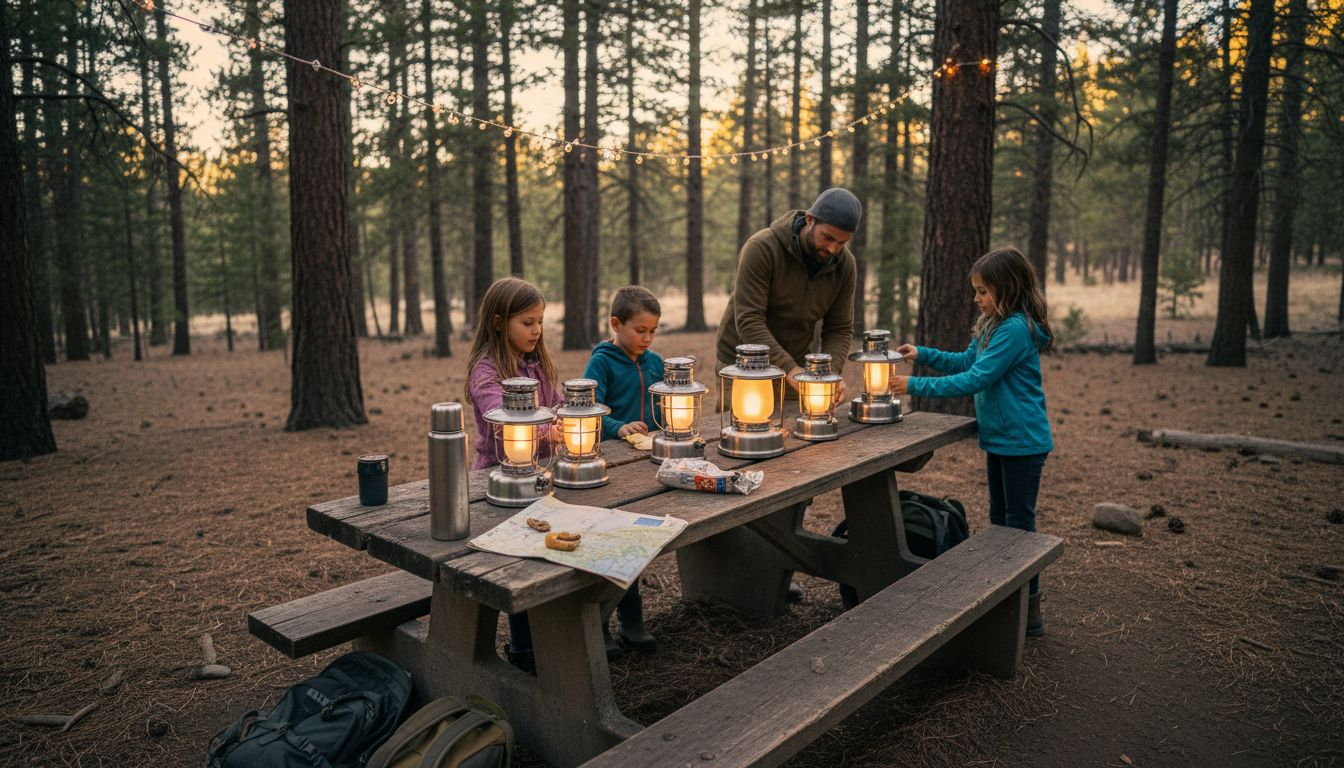
Every parent knows how stressful it feels when your campsite turns pitch black the moment the sun drops. Reliable lighting is more than convenience—it is a critical safety system for American families camping near cities like Seattle or Austin. Myths around camp lighting run deep, from thinking only super bright lights keep everyone safe to believing basic lanterns are enough. This guide sheds light on finding practical solutions, helping you choose gear that truly balances visibility, comfort, and protection for your next outdoor adventure with the whole family.
Key Takeaways
| Point | Details |
|---|---|
| Camp lighting enhances safety. | Proper lighting reduces injury risks and deters wildlife, creating a secure environment at your campsite. |
| Brighter isn't always better. | Excessive brightness creates glare and shadows, reducing visibility; moderate, well-placed lights are more effective. |
| Choose the right equipment for activities. | Select between headlamps, lanterns, flashlights, and string lights based on specific camping needs for better usability. |
| Maintenance is key. | Regularly check batteries, clean lenses, and invest in reliable lighting to avoid failures during trips. |
Camp Lighting Defined and Common Myths
Camp lighting is any light source you use at your campsite to improve visibility, safety, and comfort after dark. This includes lanterns, headlamps, string lights, and flashlights. Unlike home lighting, camp lighting needs to balance practicality with portability. You're not powering permanent fixtures. You're carrying solutions that work in remote settings where grid power doesn't exist.
The biggest myth about camp lighting is that it needs to be blindingly bright. Many first-time campers bring massive floodlights expecting them to transform their site into something resembling a parking lot. In reality, appropriate lighting balances visibility and glare control. Excessive brightness actually creates dark shadows, wastes battery power, and can damage night vision. A modest lantern or two is usually enough.
Another common misconception is that lighting is just about convenience. People think it's nice to have, but not critical. That's dangerously wrong. Poor lighting directly increases injury risk and creates security vulnerabilities at your campsite. For families with kids, proper lighting prevents tripping hazards around tents and coolers. It also deters unwanted wildlife from approaching your site.
Gender-sensitive lighting solutions matter too, especially for women and girls who face elevated safety concerns in outdoor settings. Strategic placement of lights creates well-lit pathways to bathrooms and communal areas. This reduces vulnerability to accidents and theft.Another myth: brighter always means safer. The truth is more nuanced. Harsh, uncontrolled light creates glare that actually reduces visibility and exhausts your eyes. Softer, strategically placed lighting with proper coverage works better than one bright source.
Pro tip: Start with one reliable lantern for your tent area and one headlamp per person, then add string lights or task lighting only if needed. This approach saves weight and battery life while still keeping your family safe and comfortable.
Key Types of Camping Lights Explained
Camping lights come in several distinct types, each designed for specific situations. Understanding the difference helps you pack smart and avoid hauling gear you won't actually use. The main categories include headlamps, lanterns, flashlights, and string lights. Each serves a different purpose at your campsite.
Headlamps are hands-free lights you wear on your forehead. They're perfect for nighttime tasks like setting up your tent, cooking dinner, or finding your way to the bathroom. The best part: your hands stay free. For urban campers heading out from Seattle or Austin, a headlamp lets you move around camp safely without fumbling with flashlights.
Lanterns provide ambient lighting for your entire campsite. These stationary lights hang from tree branches or sit on tables, illuminating a wide area instead of a narrow beam. Lanterns work great for gathering spots where your family wants to relax together after dark. Camping lights vary by beam distance and brightness levels, so choose accordingly based on your campsite size.
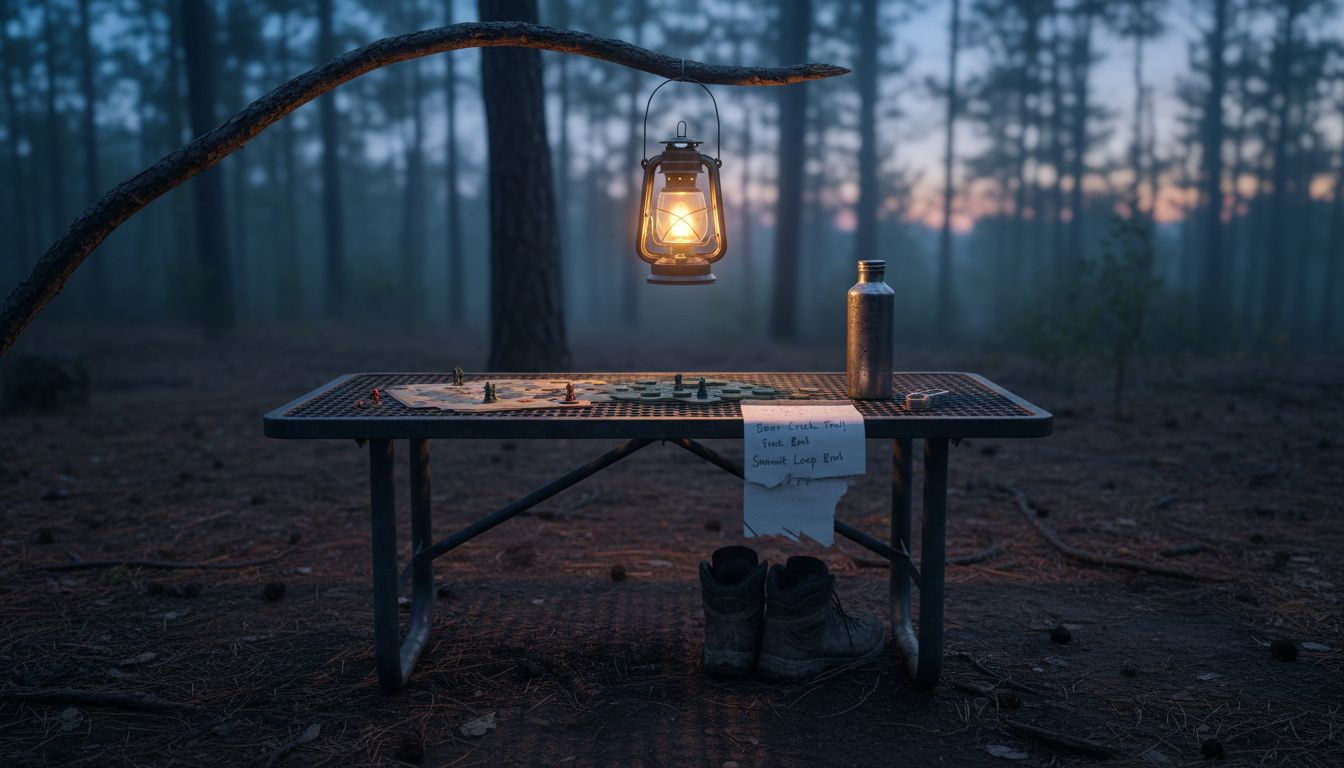
Flashlights offer portable, focused light for specific tasks. They're smaller and lighter than lanterns, making them ideal for quick trips around camp or navigating hiking trails. Modern camping flashlights come in various sizes, from pocket models to powerful tactical versions. Most families keep at least one backup flashlight in their gear.
String lights add both function and atmosphere to your camping experience. These lightweight, decorative lights create cozy pathways and mark safe zones for kids. They use minimal battery power and work especially well at family campgrounds where you might stay in one spot for several days.
The following table summarizes the major types of camping lights and their best-use scenarios:
| Light Type | Ideal Use | Portability | Atmosphere Contribution |
|---|---|---|---|
| Headlamp | Personal tasks at night | Very lightweight | Minimal, functional |
| Lantern | Central camp lighting | Moderately bulky | Creates cozy spaces |
| Flashlight | Quick navigation | Lightweight | Low, utilitarian |
| String Lights | Decoration and pathways | Lightweight | High, festive |
Power sources matter too. Battery-powered lights remain most practical for portable camping. USB-rechargeable options reduce waste and long-term costs. Solar-powered lights work if you have sunny days to charge them. Choose based on your trip length and battery availability.
Pro tip: Pack one headlamp per person, one central lantern for camp, and one backup flashlight shared among the group. This combination covers every lighting need without excessive weight or battery drain.
Essential Features and How Camp Lighting Works
Effective camp lighting isn't just about brightness. It's about choosing lights with the right features for outdoor use. The most important characteristics include durability, energy efficiency, ease of use, and proper light distribution. When you're camping in variable weather conditions around Seattle or Austin, your lights need to withstand rain, temperature swings, and rough handling.
Durability matters because camping gear gets tossed in packs and bounced over rough terrain. Look for lights with reinforced construction, waterproof ratings, and impact-resistant materials. Most quality camping lights meet IPX4 or higher water resistance standards, meaning they handle splashes and light rain without failing. Battery compartments should seal tightly to prevent moisture damage.
Energy efficiency determines how long your lights actually work during trips. LED technology uses significantly less battery power than older incandescent bulbs. A LED lantern runs 20 to 40 hours on a set of batteries, while traditional bulbs last only a few hours. This efficiency difference means fewer battery changes and lighter packs.
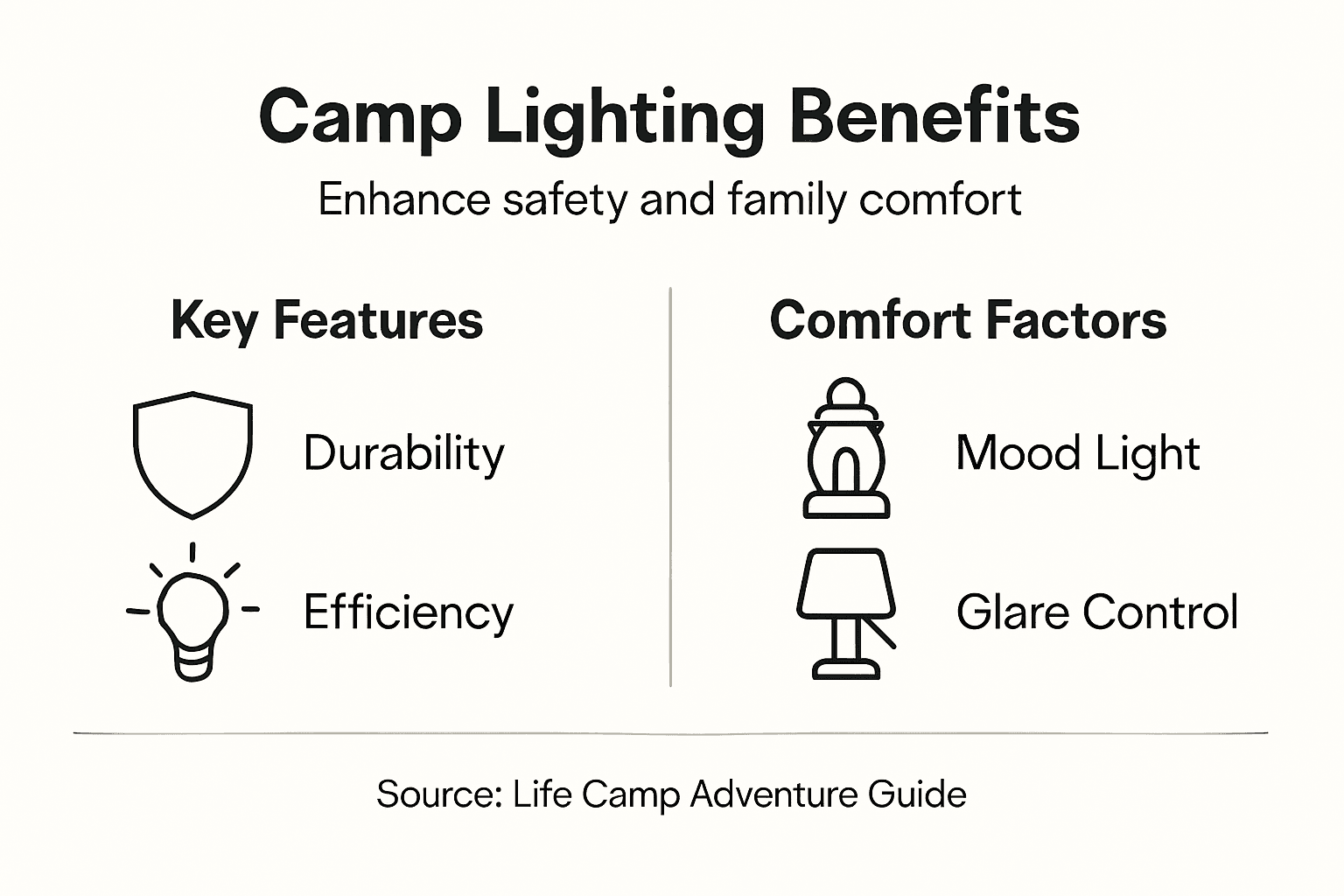
Light distribution controls how the beam spreads across your campsite. Proper illumination levels support visual performance and reduce accidents. Wide, diffused light from lanterns works better for general camp areas. Focused beams from headlamps excel for specific tasks. Glare control prevents eye strain and reduces light pollution that disturbs other campers and wildlife.
Power sources vary by lighting type. Battery-powered lights offer maximum portability but require replacement or recharging. Solar options work during sunny days but take time to charge fully. USB-rechargeable lights provide a middle ground, letting you charge from portable power banks or car chargers. Dimming and sensor activation features optimize both safety and battery life.
How lighting actually works depends on the source. LED lights convert electrical current directly to light through semiconductors. This process generates minimal heat, making LEDs cooler and safer than alternatives. Battery power flows through circuitry to the LED, where it produces focused or diffused light depending on the lens design.
Pro tip: Prioritize waterproof headlamps with rechargeable batteries and diffused lanterns with adjustable brightness over single-purpose flashlights, since you'll actually use them multiple times on every camping trip.
Here's a comparative look at key features to prioritize when selecting camp lighting:
| Feature | Impact on Camping | Why It Matters |
|---|---|---|
| Durability | Survives rough use | Prevents failure outdoors |
| Energy Efficiency | Longer illumination | Fewer battery changes |
| Glare Control | Reduced eye strain | Improves night visibility |
| Adjustable Brightness | Versatility | Matches different activities |
| Water Resistance | Handles wet conditions | Reliable in the rain |
Enhancing Safety, Navigation, and Family Comfort
Good camp lighting transforms your outdoor experience from stressful to enjoyable. The right lighting setup prevents injuries, helps everyone move safely around camp, and creates the relaxed atmosphere families actually want. When you think about safety first, comfort follows naturally.
Safety improvements start with visibility on paths and common areas. Well-placed lights eliminate tripping hazards around tents, coolers, and fire rings. Kids can see where they're walking at night without stumbling over gear. Uniform light distribution reduces slip and trip hazards while deterring security risks. Strategic placement means lights shine on walkways, not in people's faces.
Navigation becomes straightforward when your campsite has consistent lighting. Family members know where bathrooms are located, where the water station sits, and how to return to the tent area safely. Headlamps give individuals control over their own visibility without relying on central lighting. This independence matters for kids learning to navigate camp independently.
Comfort goes beyond just safety. Camp lighting enables safe movement while providing sense of security. When your family feels secure, they relax. Warm colored lights create welcoming social spaces where people naturally gather. String lights around a seating area encourage conversation and bonding. Your campsite becomes a destination rather than just a place to sleep.
For women and children especially, good lighting reduces anxiety about nighttime bathroom trips or evening activities. The psychological comfort of well-lit spaces shouldn't be underestimated. Kids sleep better when they feel secure. Parents worry less about their children moving around camp.
Consider how different light colors affect mood. Warm white light feels inviting and comfortable. Cool white light works better for task lighting. Preserving some darkness helps maintain night vision for stargazing and reduces light pollution affecting the broader camping area.
Pro tip: Place your main lantern where it illuminates pathways and common areas, then position headlamps for individual tasks. This two-tier approach keeps people safe while creating that cozy atmosphere where families actually want to hang out together.
Risks, Costs, and Avoiding Common Mistakes
Skipping proper camp lighting might seem like a way to save money, but it creates real risks. Poor visibility leads to injuries around your campsite. People trip over unseen obstacles, miss footing on uneven terrain, and struggle with basic tasks. Beyond physical accidents, inadequate lighting affects mental well-being and creates security concerns that undermine your entire camping experience.
Injury risks multiply when lighting is insufficient or poorly placed. Kids are especially vulnerable to tripping hazards in darkness. Adults misjudge distances and step awkwardly around camp. Even simple tasks like cooking or finding gear become dangerous when visibility is compromised. These aren't minor inconveniences. They're genuine safety emergencies that could cut your trip short or require medical attention.
Cost considerations matter more than you think. Quality lighting requires upfront investment, but poor-quality alternatives cost more long-term. Cheap lights fail quickly, forcing replacement purchases. Low-battery lights drain fast, requiring constant restocking. The real expense comes from repeated failures, not from buying reliable equipment once. Over-illumination causing glare and neglecting community preferences leads to misuse. Investing in the right lights upfront prevents wasteful replacement cycles.
Common mistakes often stem from misunderstanding lighting needs. Many campers buy one massive bright light instead of strategic layered lighting. They ignore glare control, creating harsh shadows that actually reduce visibility. Some neglect maintenance entirely, letting battery corrosion or dirt accumulate until lights fail completely.
Don't ignore glare control. Excessive brightness creates eye strain and reduces the ability to see detail. Your pupils adjust to intense light, making surrounding areas seem darker by comparison. Strategic, moderate lighting works better than blinding intensity.
Plan for emergency lighting. One forgotten backup light means your whole family navigates in darkness if your main light fails. Always carry redundant lighting options. Keep extra batteries separate from your lights to prevent simultaneous failure.
Don't neglect maintenance. Check batteries before trips. Clean light lenses. Store lights in protective cases. Small preventive actions prevent failures when you need lights most.
Pro tip: Start with budget-friendly reliable basics rather than premium lights with features you won't use, then upgrade specific types based on actual camping needs you discover on your first few trips.
Illuminate Your Campsite with Confidence and Comfort
Proper camp lighting is more than just convenience It is essential for safety navigation and creating a welcoming space for your family after dark This article highlights the challenges of balancing brightness durability and energy efficiency while avoiding common mistakes like glare and inadequate backups Your goal is to find reliable hands free lantern and pathway lighting that keeps everyone safe and comfortable without carrying excess weight or wasting battery power
At Life Camp Adventure we understand these exact needs Our curated collection of camping lights features durable waterproof headlamps rechargeable lanterns and energy efficient flashlights built for real outdoor conditions Explore gear designed to provide balanced illumination for all tasks from setting up tents to lighting pathways We equip you to prevent injury minimize eye strain and foster a cozy atmosphere where your family can relax and bond safely after sunset
Discover reliable camp lighting solutions that match the expert advice from this guide Take control of your outdoor safety and comfort by choosing gear trusted by adventurers like you Don’t compromise on quality or peace of mind Start your next trip prepared with Life Camp Adventure today and light the way for memorable safe explorations
Explore our full range of high quality camping gear
Frequently Asked Questions
What is camp lighting and why is it important?
Camp lighting refers to any light source used at a campsite to enhance visibility, safety, and comfort after dark. Proper camp lighting is crucial to prevent injuries, facilitate navigation, and create a secure environment for campers, especially families.
How do different types of camp lights compare in terms of function?
Headlamps are ideal for hands-free tasks, lanterns provide ambient lighting for communal areas, flashlights offer focused light for navigation, and string lights enhance atmosphere while marking safe pathways. Each type serves distinct purposes at a campsite.
What features should I look for in a camping light?
Prioritize durability (waterproof and impact-resistant), energy efficiency (preferably LED), and proper light distribution to minimize glare. Look for adjustable brightness settings to suit different tasks and conditions, ensuring optimal performance during your trip.
How can I effectively use camp lighting to enhance safety?
Strategically place lights to illuminate pathways, common areas, and potential hazards. Use a combination of lanterns for general ambient light and headlamps for tasks, ensuring that all family members have individual visibility while reducing the risk of accidents around the campsite.
