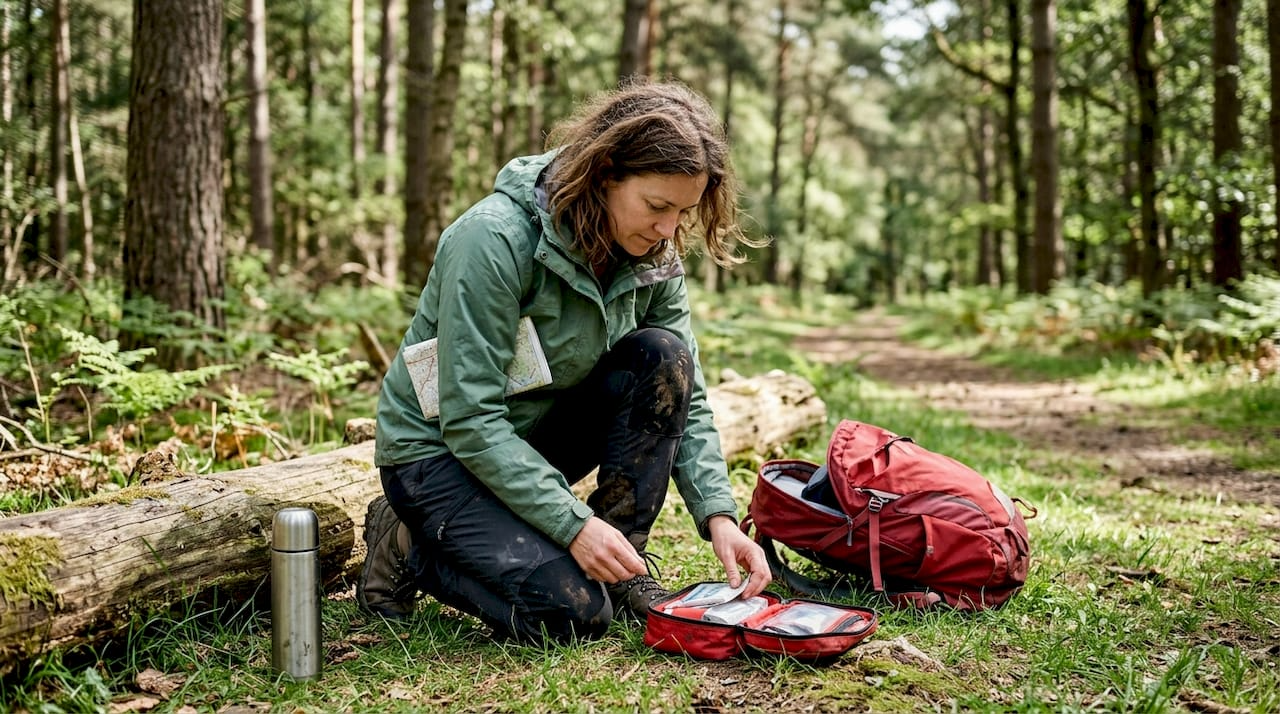
You're three miles from the trailhead when your hiking partner slips on wet rock and lands hard. No cell signal. No ranger station nearby. What you do in the next five minutes could determine whether they walk out or get carried out. Wilderness emergencies are not rare edge cases. They happen to prepared hikers, experienced campers, and seasoned adventurers. The difference between a close call and a tragedy is almost always knowledge and readiness. This guide covers exactly what you need: how to build the right kit, master core first aid actions, avoid critical mistakes, and keep your skills sharp enough to actually use when it counts.
Key Takeaways
| Point | Details |
|---|---|
| Customize your kit | Wilderness first aid kits should be tailored to your activity and environment for maximum effectiveness. |
| Master stepwise skills | Follow proven steps for wounds, bleeding, burns, and shock to ensure rapid, appropriate response outdoors. |
| Practice and improvise | Skill retention drops without hands-on practice, and improvisation is essential when supplies run out. |
| Avoid common errors | Review and troubleshoot common mishaps like poor scene safety and misuse of equipment to stay safe. |
| Prioritize ongoing learning | Regular training and scenario drills keep you ready for real wilderness emergencies. |
Preparing your wilderness first aid kit and mindset
With the importance of wilderness first aid clear, let's start with your first line of defense: being well-prepared.
A solid kit is not just a box of bandages. It's a carefully chosen set of tools matched to your environment, trip length, and group size. Wilderness Medical Society Practice Guidelines recommend customizing first aid kits for specific austere environments, because a desert canyon trip demands different supplies than a cold-weather alpine route. A one-size kit will leave you short when it matters most.
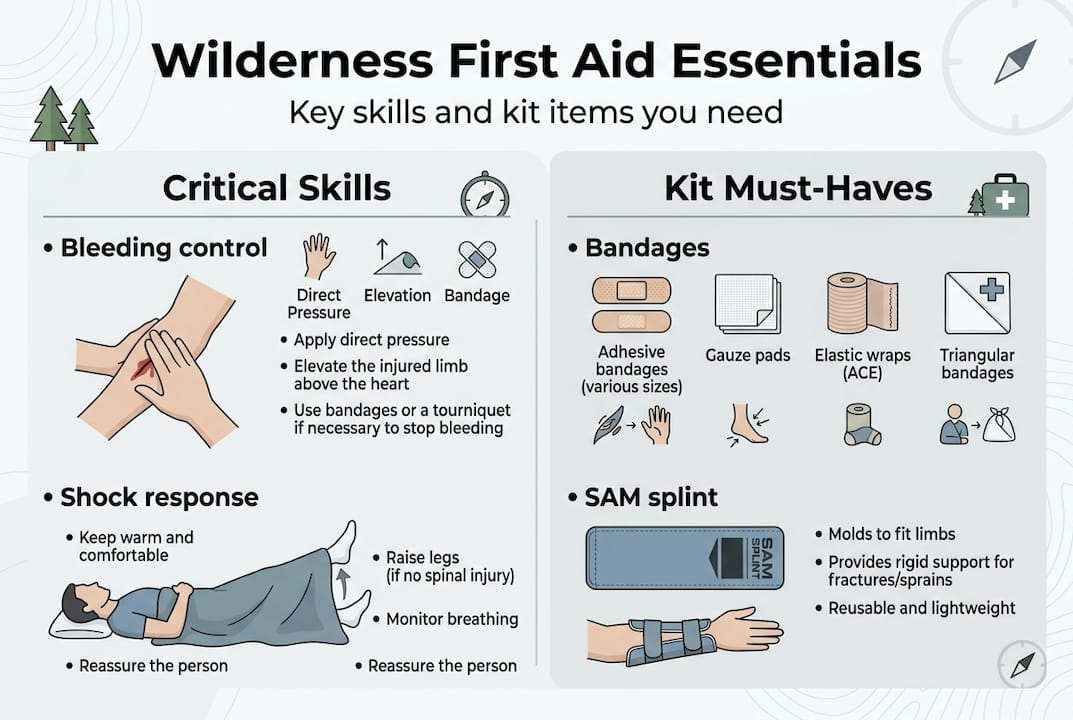
Here are the core items every wilderness first aid kit should include:
- Sterile gauze pads and rolled gauze
- Medical tape and elastic bandages
- Nitrile gloves (at least two pairs)
- Wound disinfectant and irrigation syringe
- SAM splint and triangular bandage
- Blister care (moleskin or hydrocolloid pads)
- Pain relievers and antihistamines
- Emergency mylar blanket
- Small scissors and tweezers
- CPR face shield
For a quick reference on what to prioritize, check out our guide on first aid kits outdoors.
| Kit item | Primary use | Improvised alternative |
|---|---|---|
| SAM splint | Immobilize fractures | Sticks and clothing strips |
| Gauze | Wound packing and coverage | Clean torn shirt fabric |
| Emergency blanket | Prevent hypothermia | Extra layers, dry leaves |
| Irrigation syringe | Wound cleaning | Water bottle with pinhole cap |
| Triangular bandage | Sling or wrap | Jacket sleeve or scarf |
Improvisation is a real skill. Knowing that a firm stick and a torn shirt sleeve can function as a splint means you are never truly without options. Review outdoor survival basics to build that adaptive thinking before your next trip.
Mental preparedness matters just as much as physical supplies. Panic is the enemy of effective first aid. Run through "what if" scenarios at home. Practice opening your kit and locating items without looking. Rehearse the steps for your most likely emergencies.
Pro Tip: Before every trip, do a five-minute kit audit. Check expiration dates, restock used items, and mentally walk through one emergency scenario. This small habit builds the calm you'll need in a real crisis.
Core wilderness first aid skills and step-by-step action plan
Once your kit and mindset are wilderness-ready, it's time to master the core first aid actions you'll actually need.
The first rule of any emergency is scene safety. Never rush to an injured person without checking for ongoing hazards like unstable terrain, falling rocks, or swift water. A second victim helps no one. Once the scene is safe, follow this action sequence:
- Stop severe bleeding by applying firm, direct pressure with gauze. Hold for a full ten minutes without peeking. Use a tourniquet only for life-threatening limb bleeding that does not respond to pressure.
- Treat for shock and hypothermia by laying the person flat, insulating them from the ground, and covering them with your emergency blanket.
- Immobilize injuries before any movement. Splint fractures in the position found. Do not try to realign bones.
- Clean and protect wounds by irrigating with clean water under pressure, then covering with sterile gauze. Infection risk rises sharply in remote settings.
- Seek help by activating your emergency communication device, sending a runner, or beginning a controlled evacuation.
"Improvisation is a key skill when formal supplies run low." Wilderness First Aid Risk Management
The essential first aid steps you use in the backcountry differ from urban first aid in one critical way: help is not coming in eight minutes. You may need to manage a patient for hours or even days. That changes everything about how you prioritize and pace your actions.
| Emergency | First action | Key difference in wilderness |
|---|---|---|
| Severe bleeding | Direct pressure, tourniquet if needed | Longer hold times, monitor for infection |
| Burns | Cool with clean water, cover loosely | No ice, watch for hypothermia risk |
| Hypothermia | Insulate, remove wet clothing | Gentle rewarming only, no rubbing |
| Heat stroke | Move to shade, cool with water | Aggressive cooling, prioritize evacuation |
WMS evidence-based standards for treating wounds, burns, hypothermia, and heat illness form the backbone of every reputable wilderness first aid course. Knowing these principles gives you a framework that works even when conditions are messy. For a broader foundation, our outdoor survival guide covers how these skills fit into the bigger picture of backcountry safety.
Common mistakes and troubleshooting in wilderness first aid
Knowing what to do is only half the battle. Many emergencies go wrong due to simple, avoidable mistakes.
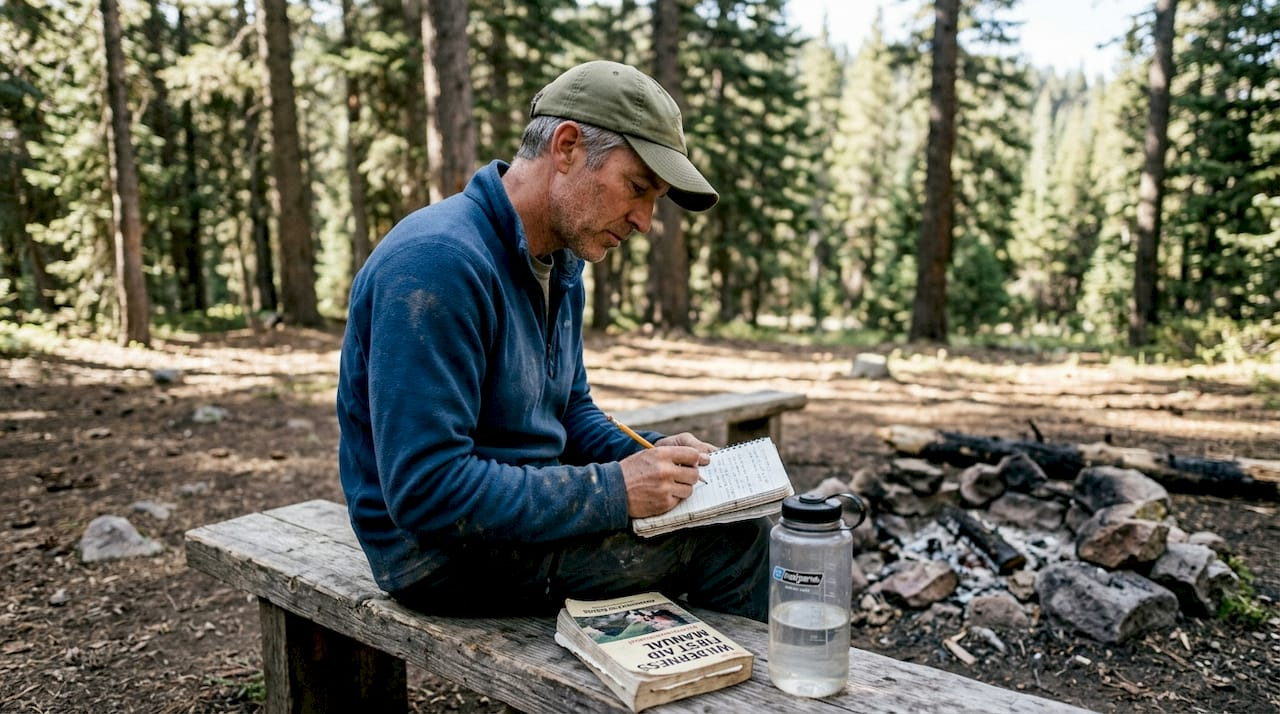
The most common error is showing up unprepared. People buy a kit and never open it. They take a course and never practice again. Skill retention declines significantly over time without periodic practice, meaning the course you took two years ago may not be enough to help you today.
Here are the mistakes we see most often:
- Misusing tourniquets. Applying one too loosely, too high, or for minor wounds can cause serious harm. Tourniquets are for life-threatening limb bleeds only.
- Ignoring early warning signs. Mild shivering, slight confusion, or flushed skin are the body's early alerts. Waiting until symptoms are severe dramatically reduces treatment options.
- Moving an unstabilized patient. Dragging someone with a possible spinal injury can turn a survivable situation into a permanent one. Stabilize first, always.
- Skipping scene safety. Rushing to help without checking for hazards puts you at risk too.
- Not documenting. Time of injury, symptoms, and treatments given are critical information for rescue teams.
"Periodic practice is required for skill retention, which studies show declines over time."
Pro Tip: After any emergency, even a minor one, do a quick debrief with your group. What worked? What felt uncertain? This honest review builds better habits faster than any classroom exercise.
Review your camp safety procedures regularly and make them part of your pre-trip routine, not an afterthought.
Verifying readiness: Practice, training, and beyond
Mistakes are less likely when your skills stay sharp, which means ongoing training is essential.
Choosing the right wilderness first aid course matters. Look for programs that include hands-on scenarios, not just lectures. The Wilderness First Responder (WFR) and Wilderness First Aid (WFA) certifications from organizations like NOLS or SOLO are widely respected. A good course puts you in realistic, stressful situations so your brain builds the right response patterns.
Empirical data supports the efficacy of wilderness first aid training, but ongoing practice is what actually maintains your ability to perform under pressure. Certification is a starting point, not a finish line.
Here is a simple practice schedule to keep skills current:
- Monthly: Review one skill from your course notes. Practice bandaging or splinting on a willing friend.
- Every three months: Run a scenario drill with your hiking group. Simulate a sprained ankle or a bleeding wound and work through the full response.
- Every six months: Recheck your kit, update supplies, and revisit your emergency action plan.
- Annually: Consider a refresher course or recertification to reset your confidence.
Key stat: Most wilderness first aid skills fade within 6 to 12 months without active review. That is not a flaw in the training. It is just how human memory works under stress.
Simple self-tests help too. Time yourself locating specific kit items. Quiz yourself on the steps for treating hypothermia. Ask a partner to describe a symptom and practice your verbal assessment. These small drills build the muscle memory that kicks in when adrenaline is running high.
For motivation to keep training, explore the outdoor adventure benefits that come with genuine backcountry confidence.
- Take a course with real scenario practice
- Drill monthly, even for five minutes
- Debrief after every trip
- Refresh certification every one to two years
- Practice improvisation with whatever is on hand
What most people miss about wilderness first aid
Here is the uncomfortable truth: most people who complete a wilderness first aid course feel ready, but are not. Not because the training was bad, but because a certificate does not equal capability under real stress.
The gear in your pack matters far less than what happens in your head when someone is bleeding and scared and the weather is turning. We have seen hikers with fully stocked kits freeze up because they never practiced making decisions under pressure. We have also seen minimalist adventurers handle serious injuries with a stick, a bandana, and calm focus.
The real survival skill is adaptability. Protocols are useful frameworks, but wilderness emergencies rarely follow the textbook. A splint made from sticks and a shirt can absolutely save a limb. Knowing when to improvise and when to stick to protocol is what separates effective responders from panicked bystanders.
One-off certification courses are better than nothing, but small-group simulation drills are where real competence is built. Find two or three hiking partners and run messy, realistic scenarios together. Make it uncomfortable. That discomfort is exactly what prepares you for the real thing.
If you want to go deeper into the mindset and skills that matter most in the backcountry, our guide on backcountry hiking essentials is a strong next step.
Take your wilderness safety to the next level
Ready to go further with your wilderness safety journey? Building real competence means pairing sharp skills with gear you can actually trust when conditions get hard. The right equipment does not replace training, but it absolutely amplifies it.

At Life Camp Adventure, we have put together resources to help you compare camping tents and find shelter solutions that hold up in serious conditions. You can also go deeper on outdoor first aid steps and build out your full outdoor survival steps toolkit. Whether you are gearing up for your first backcountry trip or refining a system that already works, we are here to help you explore with confidence.
Frequently asked questions
What are the most important items for a wilderness first aid kit?
Include bandages, gauze, disinfectant, gloves, medical tape, a splint, blister care, pain relievers, and an emergency blanket. WMS guidelines specify these as essential items for wilderness kits.
How do I treat shock in a remote location?
Lay the person flat, keep them warm with insulation and an emergency blanket, elevate their legs if no spinal injury is suspected, and begin evacuation planning immediately. Standard wilderness first aid response prioritizes warmth and rapid evacuation for shock.
How often do I need to retrain wilderness first aid skills?
Every 6 to 12 months is the recommended window, as skill retention drops significantly without active practice and review.
What's the biggest mistake people make during wilderness emergencies?
Skipping scene safety and moving an unstabilized patient are the two most dangerous errors. WMS core recommendations place scene safety and stabilization at the top of every response protocol.
Is basic CPR certification enough for remote wilderness emergencies?
No. CPR is a valuable skill but covers only cardiac events. Wilderness first aid addresses trauma, burns, hypothermia, evacuation decisions, and improvised treatment in ways that basic CPR training does not.
Recommended
- Master essential first aid steps for outdoors safety 2026
- Outdoor Survival Basics: Essential Steps for Beginners
- Why Pack Survival Gear: Safety, Comfort, and Confidence
- 7 Essential Types of Camping Gear Every Explorer Needs
- Essential Solo Travel Safety Tips to Explore with Confidence - PilotTravelDeals.com
