How to Stay Warm Camping: Expert Tips for Winter Comfort
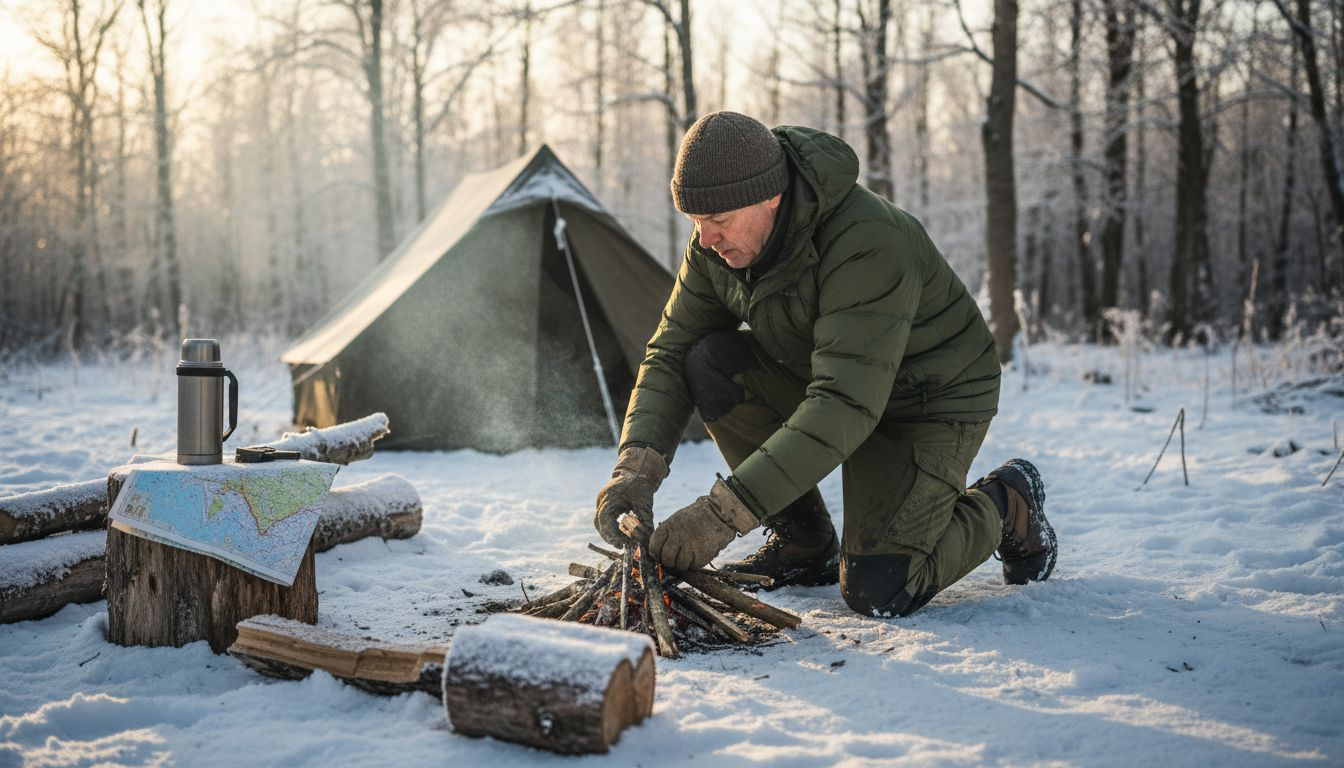
Cold winds and damp weather test even seasoned American campers across the Pacific Northwest every winter. Facing icy nights in Olympic National Park or around Mount Rainier, staying comfortable becomes serious business. Roughly fifty percent of outdoor enthusiasts admit their winter trips are ruined by inadequate gear or poor heat management. Expert guidance helps you choose the best layers, set up insulated campsites, and keep your body warm, all while maximizing comfort and safety in harsh conditions.
Quick Summary
| Key Point | Explanation |
|---|---|
| 1. Choose Appropriate Layering | Layering is crucial for managing body heat and moisture in cold weather. Use a moisture-wicking base, insulating mid-layer, and a waterproof outer shell. |
| 2. Create Insulated Campsite | Select sheltered areas with natural windbreaks and insulate your tent to reduce heat loss and manage moisture effectively. |
| 3. Monitor Body Temperature | Regularly check your extremities for cold stress, and adjust your clothing layers promptly to maintain body heat and comfort. |
| 4. Prepare Warm Meals & Drinks | Hot foods and beverages are vital for maintaining warmth and energy levels while camping in cold conditions. Pack lightweight, quick-prep options. |
| 5. Carry Emergency Gear | Keep disposable hand warmers and a lightweight snow shovel handy for quick adjustments to your camp setup in adverse weather conditions. |
Step 1: Choose the Right Cold Weather Gear
Picking the right cold weather gear can make the difference between a miserable winter camping experience and an unforgettable adventure. Understanding how to layer and select appropriate materials is crucial for staying warm and comfortable in challenging outdoor environments.
When selecting cold weather clothing, focus on creating a strategic layering system that traps heat while managing moisture. Extreme cold weather clothing is specifically designed to create an insulating barrier against harsh winter conditions. Start with a moisture-wicking base layer made from synthetic materials or merino wool that pulls sweat away from your skin. Your mid-layer should provide substantial insulation think fleece or wool that creates air pockets to trap body heat. The outer shell layer needs to be windproof and waterproof to protect against precipitation and chilling winds.
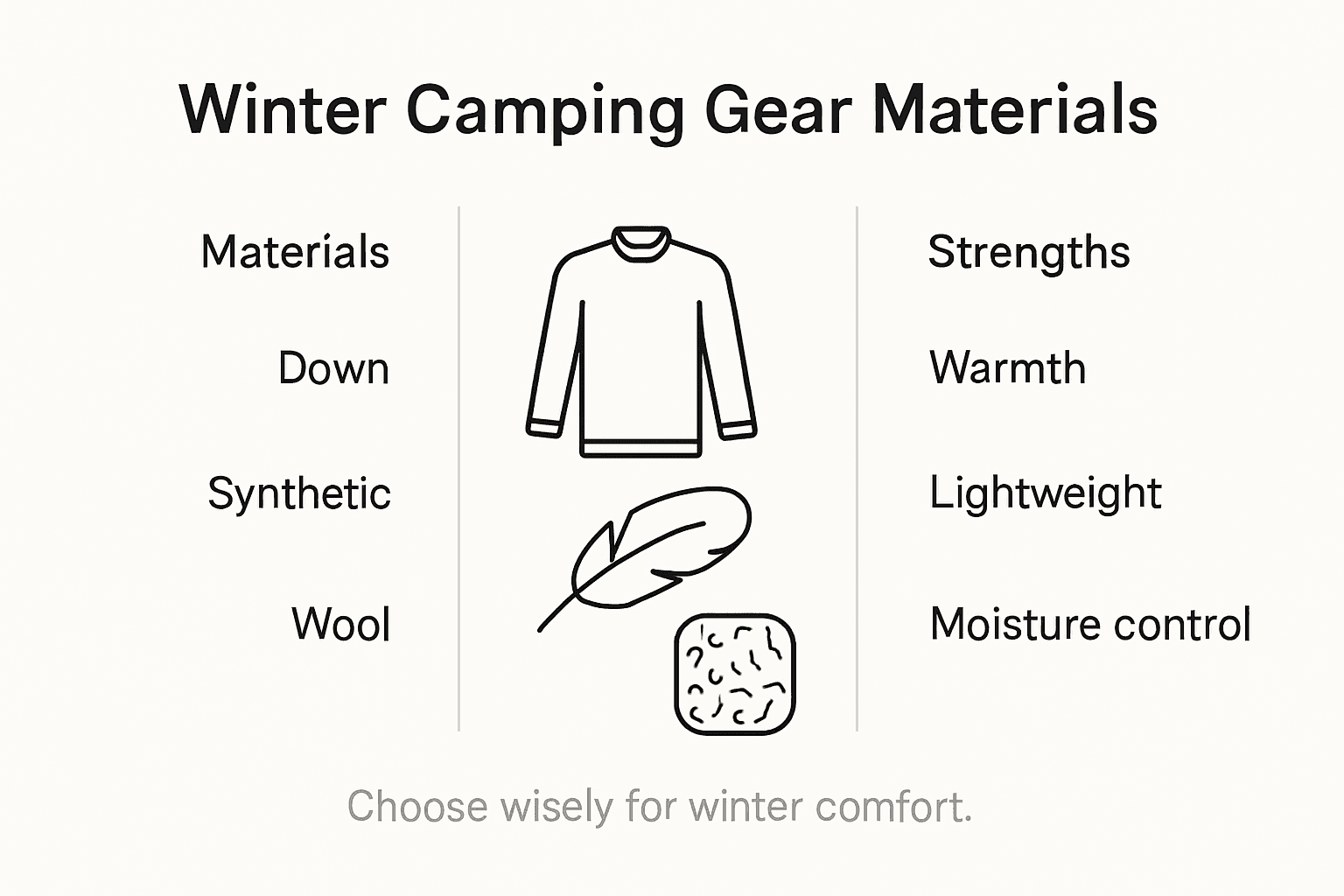
Materials matter significantly in winter gear selection. Goose down offers incredible warmth-to-weight ratio but loses insulating properties when wet synthetic insulation performs better in damp conditions. Pay attention to fill power ratings for down jackets higher numbers indicate better insulation. Wool remains an exceptional natural material that retains warmth even when slightly damp making it an excellent choice for winter camping layers.
Here's a quick guide comparing common cold weather clothing materials:
| Material | Best Use | Strengths | Drawbacks |
|---|---|---|---|
| Goose Down | Outer insulation jacket | Lightweight, high warmth ratio | Loses warmth when wet |
| Synthetic Fill | Insulating layers | Stays warm if damp, dries fast | Bulkier, slightly heavier |
| Merino Wool | Base or mid layer | Warm when damp, odor resistant | Can be pricey, needs careful washing |
| Fleece | Mid layer | Quick-drying, breathable | Wind penetrates easily |
Pro tip: Always pack an extra set of dry base layers and keep them sealed in a waterproof stuff sack to ensure you have a backup warming option if your primary clothing gets wet.
Step 2: Set Up an Insulated Campsite
Creating a well-insulated campsite is your first line of defense against winter's harsh conditions. Your goal is to establish a comfortable and protective environment that shields you from wind, cold, and potential moisture.
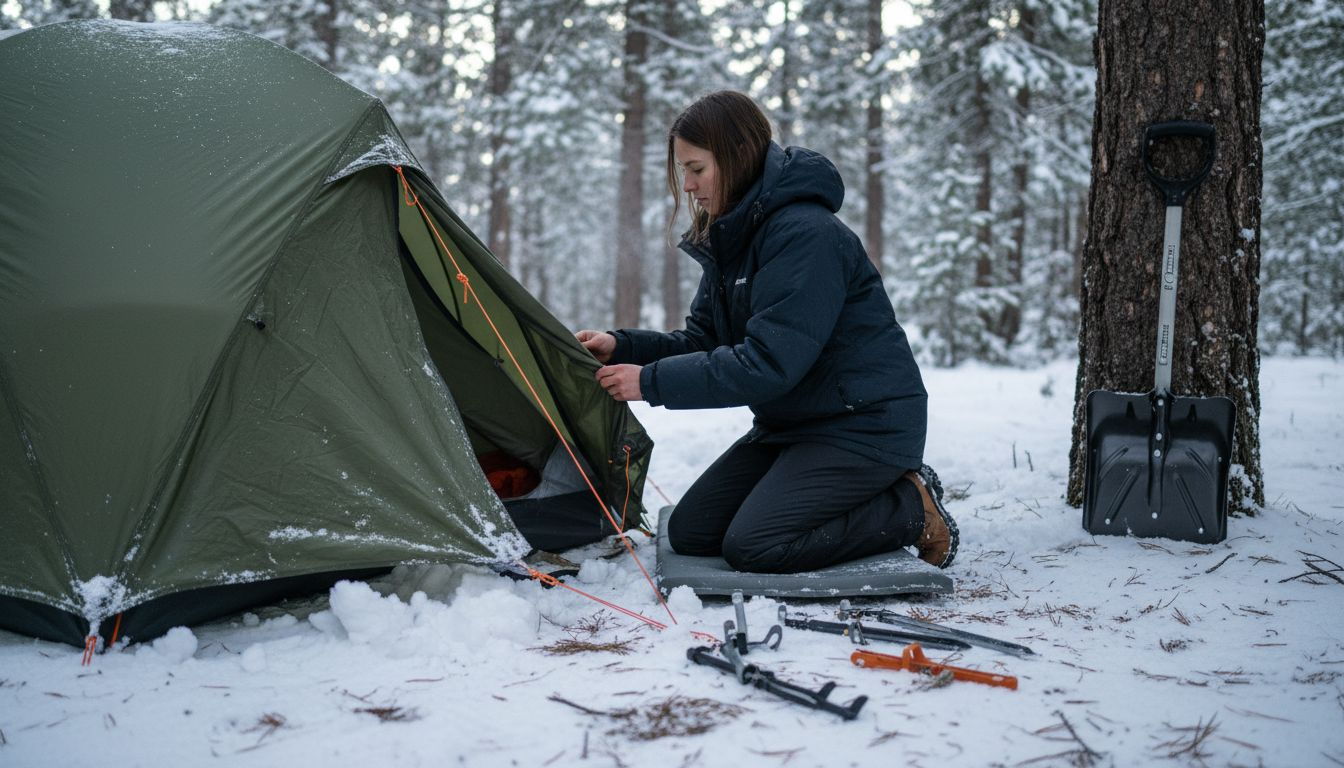
When selecting your campsite, prioritize locations with natural windbreaks such as dense tree lines or rock formations. Winter camping safety involves strategic site selection that minimizes exposure to wind and potential wetness. Pack down the snow to create a stable and level foundation for your tent, using snow blocks or packed snow walls to create additional wind protection. If possible, dig a slight depression around your tent site this helps reduce wind impact and provides extra insulation.
Your shelter setup requires careful consideration of insulation techniques. Use a four-season tent with robust fabric and strong poles designed to withstand snow and wind loads. Place a high-quality insulated sleeping pad directly on the packed snow surface to prevent ground heat loss. Consider using a secondary ground cloth underneath your tent for an extra barrier against moisture. When positioning your tent, angle the entrance away from prevailing winds and ensure adequate ventilation to prevent condensation buildup inside your shelter.
Pro tip: Always carry a lightweight snow shovel and compact emergency blanket to quickly adjust your campsite and create additional wind barriers if weather conditions suddenly change.
Step 3: Layer Clothing and Manage Heat
Mastering the art of layering is your key to staying warm and comfortable during winter camping adventures. Your clothing strategy will determine whether you survive or thrive in challenging cold environments.
Proper cold weather clothing techniques involve creating a strategic system that traps heat while allowing moisture to escape. Start with a moisture-wicking base layer made from synthetic materials or merino wool that pulls sweat away from your skin. This first layer is critical because dampness can quickly lead to heat loss. Your mid-layer should be an insulating piece like fleece or wool that creates air pockets to trap body warmth. The outer shell layer must be windproof and water-resistant to protect against harsh winter conditions.Pay special attention to often forgotten areas like your head, hands, and feet these are your body's primary heat-loss zones. Opt for mittens instead of gloves as they keep fingers warmer by allowing them to share heat. Choose high-quality wool socks and consider bringing extra pairs to swap out if they become damp. When moving, remove layers to prevent overheating and sweating which can lead to rapid cooling when you stop. The key is maintaining a consistent body temperature by adjusting your clothing as your activity level changes.
Pro tip: Keep a lightweight down jacket or puffy vest easily accessible in your backpack to quickly add warmth during rest breaks or when temperatures suddenly drop.
Step 4: Prepare Warm Food and Beverages
Warm food and beverages are more than just comfort in winter camping they are essential survival tools that help regulate your body temperature and provide critical energy. Understanding how to effectively prepare and consume warm nutrition can make the difference between a miserable and an enjoyable cold weather adventure.
Hot beverage preparation strategies are crucial for maintaining warmth and safety. Aim to serve hot drinks between 130 and 160°F to balance comfort and prevent potential burns. Bring lightweight camping stoves that can quickly boil water for tea, coffee, or instant soup mixes. Pack dehydrated meals that require only hot water these are lightweight, space efficient, and provide instant nutrition. Consider bringing insulated mugs or thermoses that can retain heat for extended periods allowing you to enjoy warm liquids throughout the day.Prioritize high energy and water rich foods that support both nutrition and hydration. Soups, stews, and one pot meals are excellent choices because they provide warmth and substantial calories. Pack ingredients that are lightweight but nutrient dense such as dried meats, nuts, whole grains, and dried fruits. Always keep some emergency high calorie snacks accessible in case you need quick energy. Remember that eating regularly helps your body generate internal heat so snack frequently even if you do not feel particularly hungry.
Use this table to understand essential winter camping food and beverage choices:
| Food/Beverage | Purpose | Why It Matters |
|---|---|---|
| Hot Drinks | Core body warmth | Raise temperature, hydrate |
| Dehydrated Meals | Quick energy, easy prep | Lightweight, filling |
| Insulated Thermos | Heat retention | Keeps drinks warm longer |
| High-Calorie Snacks | Quick energy boosts | Prevents heat loss lapses |
Pro tip: Prepackage your meal ingredients in individual waterproof bags and label them with cooking instructions to streamline meal preparation in cold conditions.
Step 5: Check and Adjust Camp Heat Regularly
Staying warm in winter camping is an active process that requires constant monitoring and strategic adjustments. Your ability to quickly recognize and respond to temperature changes can mean the difference between comfort and potential hypothermia.
Winter weather heat management involves a systematic approach to tracking your body temperature and campsite conditions. Start by checking your extremities every 30 to 45 minutes for signs of cold stress such as numbness or unusual pallor. Pay special attention to fingers, toes, ears, and nose these areas are most vulnerable to heat loss. Adjust your clothing layers immediately if you notice any signs of cooling remove layers if you are sweating during physical activity or add insulation if you feel a chill. Ensure your shelter remains well ventilated to prevent moisture buildup while maintaining enough insulation to trap body heat.Keep a small thermometer accessible to monitor both your body temperature and ambient campsite conditions. Learn to recognize the early warning signs of hypothermia such as uncontrolled shivering, mental confusion, or slurred speech. Maintain a consistent energy intake through regular snacking and hydration this helps your body generate internal heat. Create a routine of checking your gear insulation sleeping bags, tent walls, and ground covers to ensure they remain dry and effective. Move periodically to generate body heat but avoid sweating which can lead to rapid cooling when you stop moving.
Pro tip: Carry disposable hand and foot warmers as emergency backup heating sources and keep them in an easily accessible pocket for quick deployment.
Stay Warm and Confident with the Right Winter Camping Gear
Winter camping offers incredible adventure but demands smart choices to conquer cold, moisture, and wind. The article highlights critical challenges like selecting proper insulating layers, managing campsite heat, and preparing warm nutrition. These are essential steps to prevent heat loss and maintain comfort through harsh conditions.
At Life Camp Adventure, we understand these specific pain points and goals of staying warm and dry with dependable gear built for extreme outdoor environments. Whether you need moisture-wicking base layers, insulated sleeping pads, or robust four-season tents, our range of camping equipment and survival essentials supports your layers and campsite setup for lasting warmth and protection.
Ready to elevate your winter camping comfort and safety? Visit Life Camp Adventure now to explore high-quality products designed for warmth retention and weather resistance. Don’t wait until the cold catches you off guard equip your adventure with trusted gear today and transform your next winter outing into a confident, cozy experience.
Frequently Asked Questions
How do I choose the right cold weather gear for winter camping?
Selecting the right cold weather gear involves creating a layered system that traps heat and manages moisture. Start with a moisture-wicking base layer, followed by an insulating mid-layer, and finish with a waterproof outer shell to protect against wind and precipitation.
What are the best types of insulation for cold weather camping?
Goose down provides excellent warmth but loses insulation when wet, while synthetic insulation performs better in damp conditions. Consider using merino wool for base layers, as it retains warmth even when slightly damp, making it a great choice for winter camping.
How can I set up an insulated campsite effectively?
To create an insulated campsite, choose a location with natural windbreaks like trees or rocks, and pack down the snow for a stable foundation. Utilize a four-season tent and incorporate snow walls or packed snow for extra wind protection.
What should I do to manage heat while camping in winter?
Managing heat requires wearing layers and adjusting your clothing based on activity levels. Regularly check for signs of chilling and remove or add layers as necessary to maintain a comfortable body temperature during your outdoor activities.
How can warm food and beverages help me stay warm while camping?
Warm food and beverages are essential for regulating body temperature during winter camping. Prioritize high-energy meals like soups and stoves that boil water quickly for hot drinks, helping you maintain warmth and energy levels in cold conditions.
What are some effective ways to check and adjust camp heat regularly?
Keep track of your body temperature and campsite conditions by checking your extremities every 30 to 45 minutes. Adjust your clothing layers based on your comfort and consistently monitor your food and energy intake to ensure you produce enough internal heat throughout your camping trip.
