
Choosing outdoor gear can feel like learning a new language, especially in cities like Denver or Seattle where adventure calls just beyond the city limits. Without a clear understanding of terms like "denier rating" or "DWR," simple shopping trips can quickly become confusing. Gaining insight into key outdoor gear terminology empowers you to pick equipment that truly fits your plans, whether you're prepping for a city park hike or your first mountain camping trip.
Key Takeaways
| Point | Details |
|---|---|
| Understanding Terminology is Essential | Familiarize yourself with outdoor gear terminology to make informed equipment choices that enhance performance and safety. |
| Material Knowledge Enhances Decision Making | Knowing the specific properties of materials helps in selecting gear suitable for varying environmental conditions. |
| Safety and Comfort Depend on Accurate Language | Recognize how terminology like insulation rating and ergonomic design influences your safety and comfort during outdoor activities. |
| Avoid Misinterpretations of Technical Terms | Clarify the meaning of common gear terms like water-resistant and waterproof to ensure appropriate gear selection for different scenarios. |
What Outdoor Gear Terminology Really Means

Outdoor gear terminology can feel like a complex language designed to confuse newcomers. Whether you're planning a weekend camping trip or preparing for a multi-day mountain expedition, understanding the core vocabulary is your first step toward smart gear selection. Understanding outdoor gear fundamentals helps adventurers make informed choices that balance performance, comfort, and safety.
The world of outdoor equipment uses specialized terms that describe material properties, design features, and performance capabilities. Waterproofing, breathability, insulation, and weight-to-warmth ratio are critical concepts that determine how well your gear will perform in challenging environments. Hikers and campers need to recognize these terms to select equipment that matches their specific adventure requirements and environmental conditions.
Terminology also reflects advanced manufacturing techniques and material science innovations. Technical fabrics like Gore-Tex, ripstop nylon, and merino wool represent more than just materials - they signify specific performance characteristics. Understanding these terms helps you move beyond marketing hype and evaluate gear based on actual functional attributes like moisture management, durability, and thermal regulation.
Pro tip: Always ask outdoor gear retailers or experienced adventurers to explain specific terminology you don't understand - most are happy to share their knowledge and help you make better purchasing decisions.
Types of Essential Outdoor Gear Terms
Understanding the essential terminology of outdoor gear is crucial for making informed equipment choices. Essential camping gear categories help adventurers navigate the complex world of outdoor equipment with confidence. These specialized terms go beyond simple product descriptions, providing insights into performance, durability, and functional capabilities.
Key outdoor gear terms can be categorized into several critical areas. Material Performance Terms describe how fabrics and materials behave in outdoor conditions, including water resistance, breathability, and thermal regulation. Construction Terms focus on design elements like reinforced seams, articulated joints, and ergonomic shaping that impact comfort and mobility. Technical Specification Terms quantify gear capabilities through measurements like denier rating (fabric durability), fill power (insulation effectiveness), and waterproof rating.
Advanced outdoor enthusiasts recognize that these terms represent more than marketing language - they are precise indicators of gear functionality. Terms like ultralight, packable, and multi-use reveal critical attributes that determine an item's versatility and suitability for specific adventures. Understanding these nuanced descriptions allows adventurers to select equipment that meets their exact performance requirements, whether navigating alpine environments or preparing for weekend camping trips.
Pro tip: Create a personal reference glossary of outdoor gear terms to quickly decode product descriptions and make more informed purchasing decisions.
Decoding Materials, Ratings, and Certifications
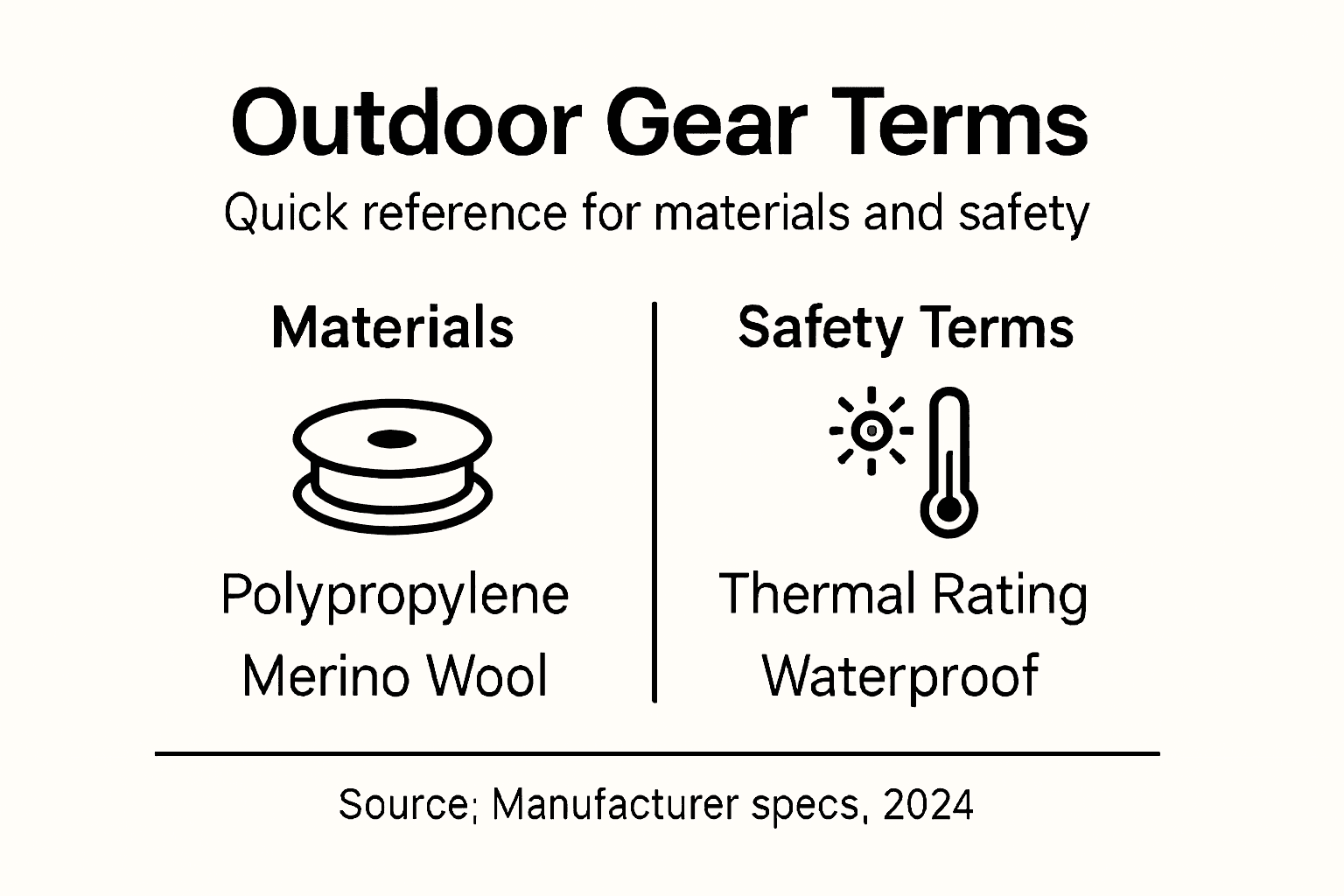
Outdoor gear materials and ratings represent a complex language of performance and protection that every adventurer needs to understand. These technical specifications transform seemingly ordinary fabrics and equipment into precision instruments designed for specific environmental challenges. Modern outdoor gear goes far beyond basic clothing or equipment - it's engineered science that directly impacts your comfort, safety, and performance in diverse conditions.Material composition forms the foundation of outdoor gear functionality. Technical fabrics like polypropylene, merino wool, and advanced synthetic blends offer unique properties such as moisture wicking, thermal regulation, and durability. Performance ratings provide quantifiable metrics that help consumers compare gear objectively. These include denier ratings (measuring fabric strength), waterproof ratings (indicating water resistance), and breathability indexes that determine how effectively a material manages moisture and temperature.
Here is a quick reference comparing common outdoor gear material terms and their unique benefits:
| Material Term | Key Property | Typical Benefit |
|---|---|---|
| Gore-Tex | Waterproof/Breathable | Keeps dry, reduces sweating |
| Merino Wool | Thermal Regulation | Warmth, resists odors |
| Ripstop Nylon | Tear Resistance | Durable, lightweight |
| Polypropylene | Moisture Wicking | Stays dry, dries quickly |
| Synthetic Blends | Versatility | Custom performance features |
Certification marks represent crucial validation points for outdoor equipment claims. Environmental standards, UV protection ratings, and sustainability certifications offer transparency about a product's actual capabilities and ecological impact. Advanced outdoor enthusiasts understand that these marks are more than marketing - they're scientific endorsements of a product's real-world performance potential. Understanding these technical details allows adventurers to make informed choices that align perfectly with their specific outdoor needs and environmental challenges.
Pro tip: Always carry a small magnifying glass or smartphone to closely examine fabric tags and certification labels when purchasing outdoor gear.
How Terminology Impacts Safety and Comfort
Why pack survival gear represents more than just equipment selection - it's a critical understanding of how specific terminology directly influences personal safety and outdoor comfort. Precise language in outdoor gear specifications bridges the gap between theoretical protection and real-world performance, providing adventurers with the knowledge to make informed choices that can potentially save lives in challenging environments.Safety terminology focuses on critical performance indicators that directly impact human survival and well-being. Thermal regulation terms like moisture-wicking, insulation rating, and temperature range determine how effectively gear protects against hypothermia and heat exhaustion. Ergonomic design terminology such as articulated joints, reinforced stress points, and breathable panels ensure that equipment moves with the body, reducing fatigue and preventing potential injury during extended outdoor activities.
Comfort-related terminology goes beyond simple aesthetic descriptions, representing engineered solutions to environmental challenges. Advanced materials with terms like hydrophobic, quick-dry, and adaptive stretch provide precise insights into how gear will perform under different conditions. Understanding these nuanced descriptions allows adventurers to select equipment that adapts to changing environments, maintaining personal comfort and reducing the physical stress associated with outdoor exploration.
Pro tip: Create a personal reference card with key outdoor gear terminology to quickly decode product descriptions and make more informed safety-focused purchasing decisions.
Avoiding Mistakes with Common Gear Language
Outdoor gear terminology challenges can perplex even experienced adventurers, creating potential risks and disappointment in equipment selection. Misunderstanding technical language transforms seemingly straightforward purchasing decisions into complex navigational challenges that could compromise safety and performance in critical outdoor situations.Common misconceptions arise from complex acronyms and technical specifications that sound more impressive than they perform. Abbreviations like DWR (durable water repellent) are frequently misinterpreted as full waterproofing, when in reality they represent a temporary surface treatment that provides limited moisture protection. Denier ratings, which measure fabric strength, are often misunderstood as a comprehensive indicator of durability, neglecting other crucial factors like material composition, weave density, and intended usage environment.
Effective gear selection requires moving beyond surface-level marketing language and developing a nuanced understanding of technical terminology. Advanced outdoor enthusiasts learn to decode complex descriptions by focusing on specific performance characteristics rather than generic claims. Understanding subtle distinctions between terms like water-resistant, waterproof, and hydrophobic can mean the difference between staying dry and experiencing uncomfortable, potentially dangerous moisture exposure during outdoor adventures.
The table below highlights the difference between similar gear terms that are often misunderstood:
| Term | Definition | Best Use Scenario |
|---|---|---|
| Water-Resistant | Repels light moisture, not fully waterproof | Short hikes, light rain |
| Waterproof | Impermeable to water under specific conditions | Heavy rain, river crossings |
| Hydrophobic | Actively repels water at the fiber level | Wet climates, snow activities |
| DWR (Durable Water Repellent) | Surface coating, temporary water resistance | Refreshing jackets, added layer |
Pro tip: Ask outdoor gear experts to explain specific technical terms you don't understand, and always request a clear demonstration of the gear's actual performance capabilities before making a purchase.
Master Outdoor Gear Terms and Choose with Confidence
Understanding complex outdoor gear terminology like waterproof ratings, breathable fabrics, and insulation values can feel overwhelming. This article highlights the common challenges adventurers face when deciphering specialized language that impacts their comfort and safety. If you want to move beyond confusion and make smarter gear decisions based on clear knowledge rather than marketing jargon, Life Camp Adventure is here to help.
Explore reliable camping equipment and survival essentials designed to deliver exactly what each technical term promises.
Equip yourself with high-quality gear that matches your needs for durability, comfort, and protection. Visit Life Camp Adventure today for trusted products and expert support to turn your understanding of outdoor gear terminology into real-world confidence on every expedition.
Frequently Asked Questions
What does waterproofing mean in outdoor gear terminology?
Waterproofing refers to a material's ability to prevent water from penetrating through it. This is essential for keeping you dry in wet conditions, but it's important to note that not all waterproof materials are created equal, and some are designed for specific levels of moisture exposure.
How do I understand the difference between water-resistant and waterproof?
Water-resistant materials can repel light moisture but may not withstand heavy rain or submersion. In contrast, waterproof materials provide a higher level of protection against water, making them suitable for more extreme wet conditions.
What is the importance of breathability in outdoor gear?
Breathability refers to a material's ability to allow moisture vapor from sweat to escape while still keeping external water out. This feature is crucial for maintaining comfort during physical activities, as it helps prevent overheating and moisture buildup inside the gear.
What is denier rating and why is it important?
Denier rating measures the thickness and density of a fabric. A higher denier rating typically indicates a more durable fabric, but it doesn’t tell the whole story. It should be considered alongside other factors like the material composition and intended use to determine the gear's overall performance.
