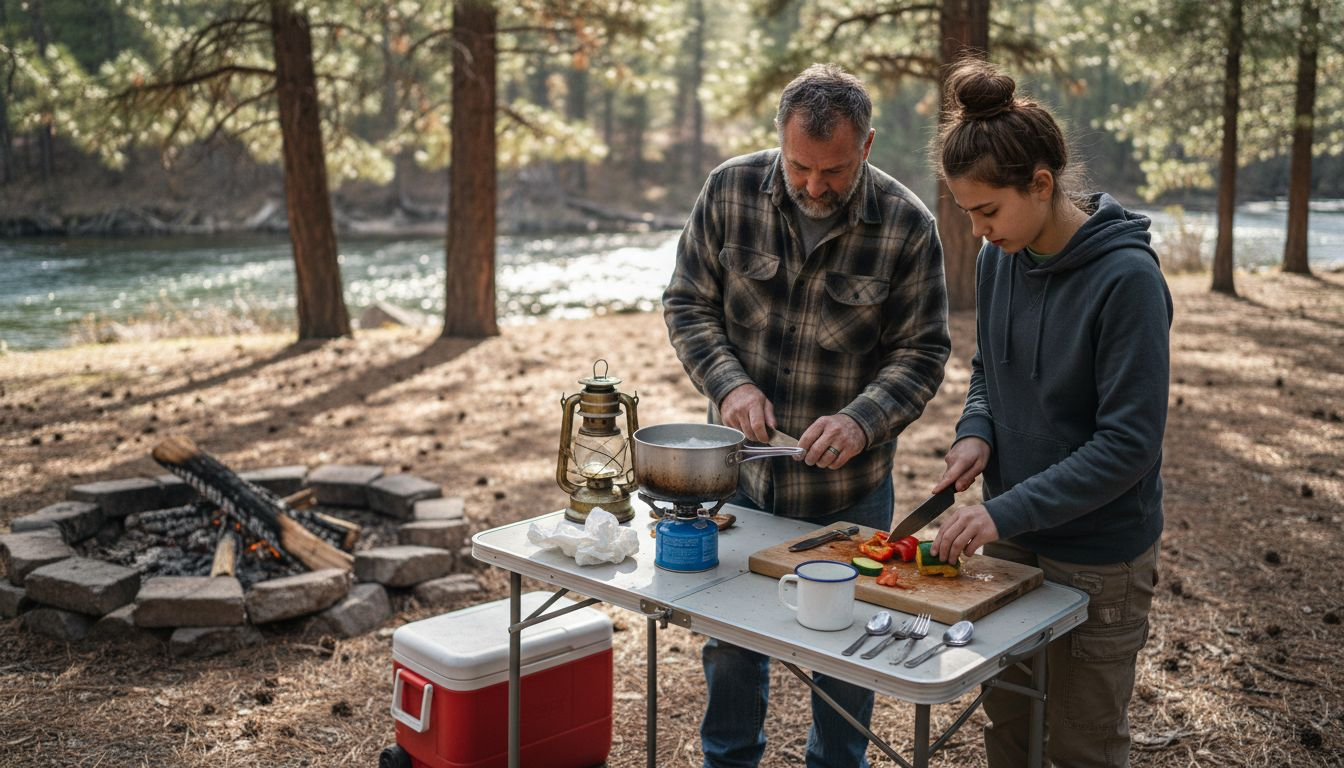
Most American campers believe that building a proper camp kitchen means carrying heavy gear and complicated setups, but advancements in outdoor equipment have changed that story. Outdoor cooking is no longer just for survival—it's about comfort, hygiene, and enjoying real meals in the wild. With over 95 percent of American outdoor enthusiasts now choosing portable, efficient camp kitchens, understanding the essentials and avoiding common myths can transform your next adventure.
Key Takeaways
| Point | Details |
|---|---|
| Camp Kitchen Importance | A camp kitchen is essential for outdoor cooking, providing organization and efficiency in meal preparation compared to traditional methods. |
| Core Components | Key items include portable stoves, lightweight cookware, and effective storage solutions to ensure safe and enjoyable cooking experiences. |
| Types of Camp Kitchens | Different configurations, such as ultralight systems or car camping stations, cater to various outdoor needs and preferences. |
| Hygiene and Maintenance | Practicing good sanitation and proper equipment management is vital for maintaining a safe cooking environment during outdoor adventures. |
Camp Kitchen Basics and Common Misconceptions
A camp kitchen represents more than just a collection of cooking equipment - it's a critical outdoor survival and comfort system that transforms wilderness meal preparation from challenging to convenient. Unlike home kitchens with multiple appliances and stable surfaces, camp kitchens must be portable, durable, and adaptable to unpredictable outdoor environments.
Understanding camp kitchen essentials starts with recognizing core components. Typically, a well-designed camp kitchen includes portable cooking surfaces, compact stoves, lightweight cookware, storage solutions for utensils and ingredients, and sanitation tools. Proper camp kitchen hygiene standards are crucial for preventing foodborne illnesses and maintaining a safe cooking environment. This means implementing rigorous cleaning protocols, using separate cutting surfaces for raw and cooked foods, and maintaining hand hygiene even in remote locations.
Common misconceptions about camp kitchens often revolve around complexity and weight. Many outdoor enthusiasts believe creating an effective camp kitchen requires expensive, bulky equipment. However, modern designs focus on ultralight, multipurpose gear that can be easily packed and quickly assembled. The key is selecting versatile tools that minimize weight while maximizing functionality. Compact stoves, nesting cookware sets, and modular storage solutions have revolutionized how adventurers approach outdoor cooking.
Pro Cooking Tip: Prep and organize all ingredients before leaving home by using resealable bags and pre-measuring spices to streamline your camp kitchen workflow and reduce cleanup time in the wilderness.
Key Camp Kitchen Must-Haves:
- Portable cooking surface
- Compact, reliable stove
- Lightweight cookware set
- Multi-tool utensil kit
- Water filtration system
- Cleaning supplies
- Trash management tools
Types of Camp Kitchens for Outdoor Use
Camp kitchens come in diverse configurations designed to meet the unique demands of different outdoor environments and adventuring styles. Outdoor cooking methods range from minimalist backcountry setups to elaborate basecamp cooking stations, each tailored to specific camping experiences and terrain challenges.
The primary camp kitchen types include ultralight backpacking systems, car camping kitchen stations, portable tabletop units, and modular expedition kitchens. Ultralight backpacking kitchens prioritize minimal weight and compact design, typically featuring lightweight stoves, collapsible cookware, and multi-functional utensils. Car camping kitchens, in contrast, offer more substantial cooking surfaces and storage, allowing campers to bring larger equipment and create more complex meals with greater convenience.
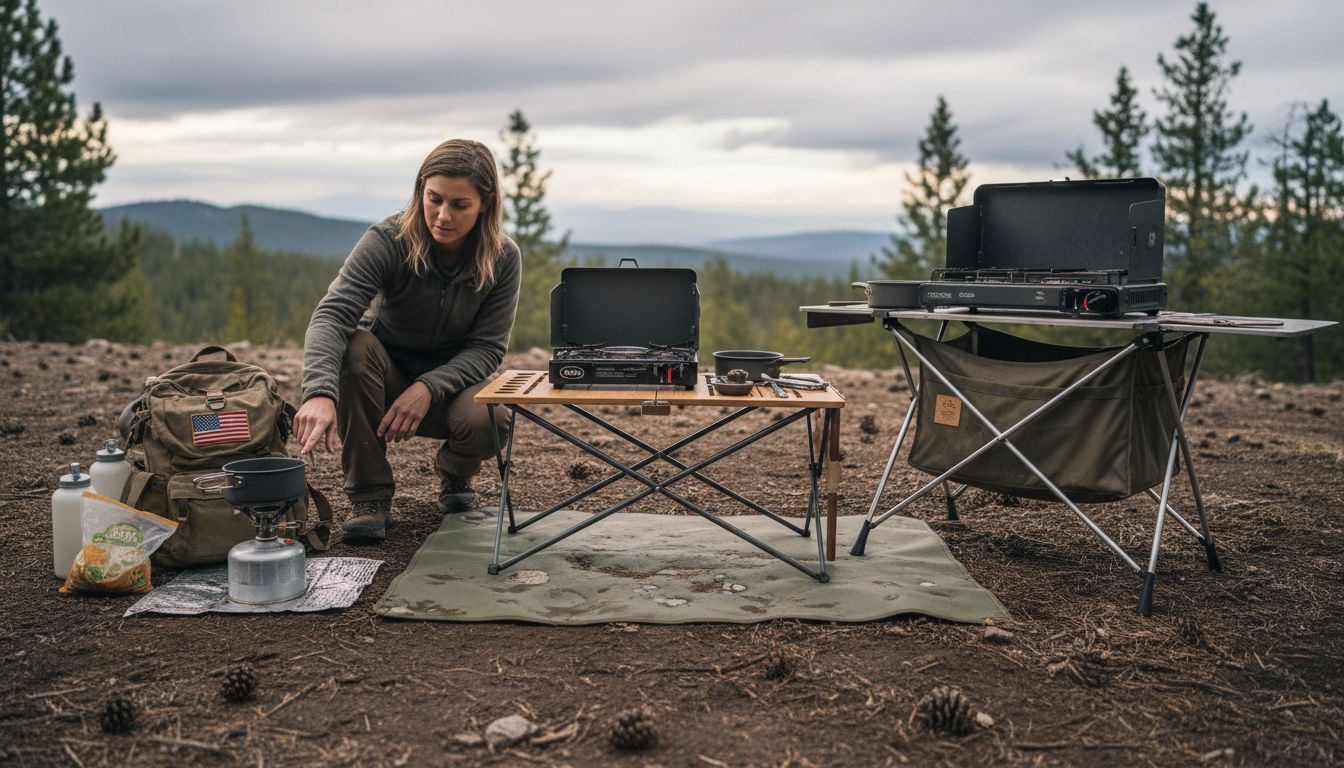
Most camp kitchen designs fall into three primary categories: freestanding units, tabletop models, and integrated systems. Freestanding units provide maximum workspace and stability, often featuring multiple preparation areas, storage compartments, and windscreens. Tabletop models offer portability and quick setup, making them ideal for short trips and casual outdoor cooking. Integrated systems combine cooking, storage, and preparation elements into a single compact unit, maximizing efficiency for adventurers who prioritize streamlined gear.
Pro Kitchen Setup Tip: Always pack your camp kitchen gear in clear, waterproof containers with labeled compartments to ensure quick access and protect equipment from moisture and potential damage during transportation.
Key Camp Kitchen Configuration Types:
Here is a comparison of common camp kitchen types and their ideal uses:
| Camp Kitchen Type | Best For | Key Strength |
|---|---|---|
| Ultralight Backpacking | Solo, remote trekking | Minimal weight, compact |
| Car Camping Kitchen | Family/group outings | Comfort, meal variety |
| Tabletop Unit | Day trips, short stays | Quick setup, portability |
| Modular Expedition | Extended expeditions | Customizable, high capacity |
- Ultralight backpacking systems
- Car camping kitchen stations
- Portable tabletop units
- Modular expedition kitchens
- Freestanding cooking platforms
- Integrated cooking systems
Essential Components and Features Explained
A comprehensive camp kitchen requires carefully selected components that balance functionality, weight, and durability. Camp kitchen equipment lists typically include essential tools designed to transform outdoor cooking from a challenging task to an enjoyable experience. The core components can be categorized into cooking, preparation, storage, and cleaning systems.
Cooking components represent the heart of any camp kitchen, with portable stoves serving as the primary cooking platform. These range from compact backpacking canister stoves to larger two-burner propane units that support more complex meal preparation. Cookware selection is equally critical, with lightweight, nesting pot sets and multipurpose skillets allowing campers to prepare diverse meals while minimizing packed volume. Specialized features like heat-distributing bases, foldable handles, and non-stick surfaces have revolutionized outdoor cooking technology.
Preparation and storage solutions are equally important in creating an efficient camp kitchen setup. Collapsible cutting boards, compact knife sets, and modular storage containers help organize ingredients and cooking tools. Lightweight, waterproof storage systems protect food from environmental challenges and wildlife, while integrated drainage and washing stations enable proper hygiene and cleanup. Modern camp kitchen designs increasingly focus on multifunctional gear that serves multiple purposes, reducing overall weight and complexity.
Pro Kitchen Design Tip: Select cooking equipment with interchangeable parts and universal fuel compatibility to maximize flexibility and reduce the number of specialized tools you need to carry.
Critical Camp Kitchen Components:
- Portable cooking stove
- Lightweight cookware set
- Compact food storage containers
- Multipurpose utensil kit
- Water filtration system
- Cleaning and sanitization tools
- Foldable preparation surface
Setting Up and Maintaining a Camp Kitchen
Establishing a functional camp kitchen requires strategic planning and attention to detail, transforming an outdoor cooking space from chaotic to efficient. The initial setup begins with selecting an appropriate location that balances convenience, safety, and environmental considerations. Ideal camp kitchen sites should be positioned away from sleeping areas, feature stable ground, and provide protection from wind while maintaining clear access to water sources and waste disposal facilities.Hygiene and organization are paramount in maintaining a safe camp kitchen environment. Proper food storage involves using sealed, waterproof containers that protect ingredients from moisture, insects, and wildlife. Separate preparation zones for raw and cooked foods help prevent cross-contamination, while compact, organized storage solutions maximize limited space. Implementing a systematic cleaning protocol that includes washing utensils, sanitizing surfaces, and properly disposing of waste ensures a healthy cooking environment and minimizes environmental impact.
Equipment management is crucial for a well-functioning camp kitchen. Create designated storage areas for cooking tools, with clearly marked containers for different categories of equipment. Lightweight, stackable containers with secure lids protect utensils and cookware from dirt and damage during transportation. Regularly inspect and maintain your cooking equipment, checking for wear, cleaning after each use, and replacing damaged items before they compromise your outdoor cooking experience.
Pro Kitchen Maintenance Tip: Develop a standardized equipment checklist and pack your camp kitchen gear in clear, labeled containers to streamline setup and ensure nothing gets left behind during your outdoor adventures.
Camp Kitchen Setup Essentials:
- Stable, level cooking surface
- Wind protection
- Separate food preparation zones
- Secure food storage containers
- Cleaning and sanitization supplies
- Waste management system
- Portable water source
Comparing Camp Kitchens to Alternative Solutions
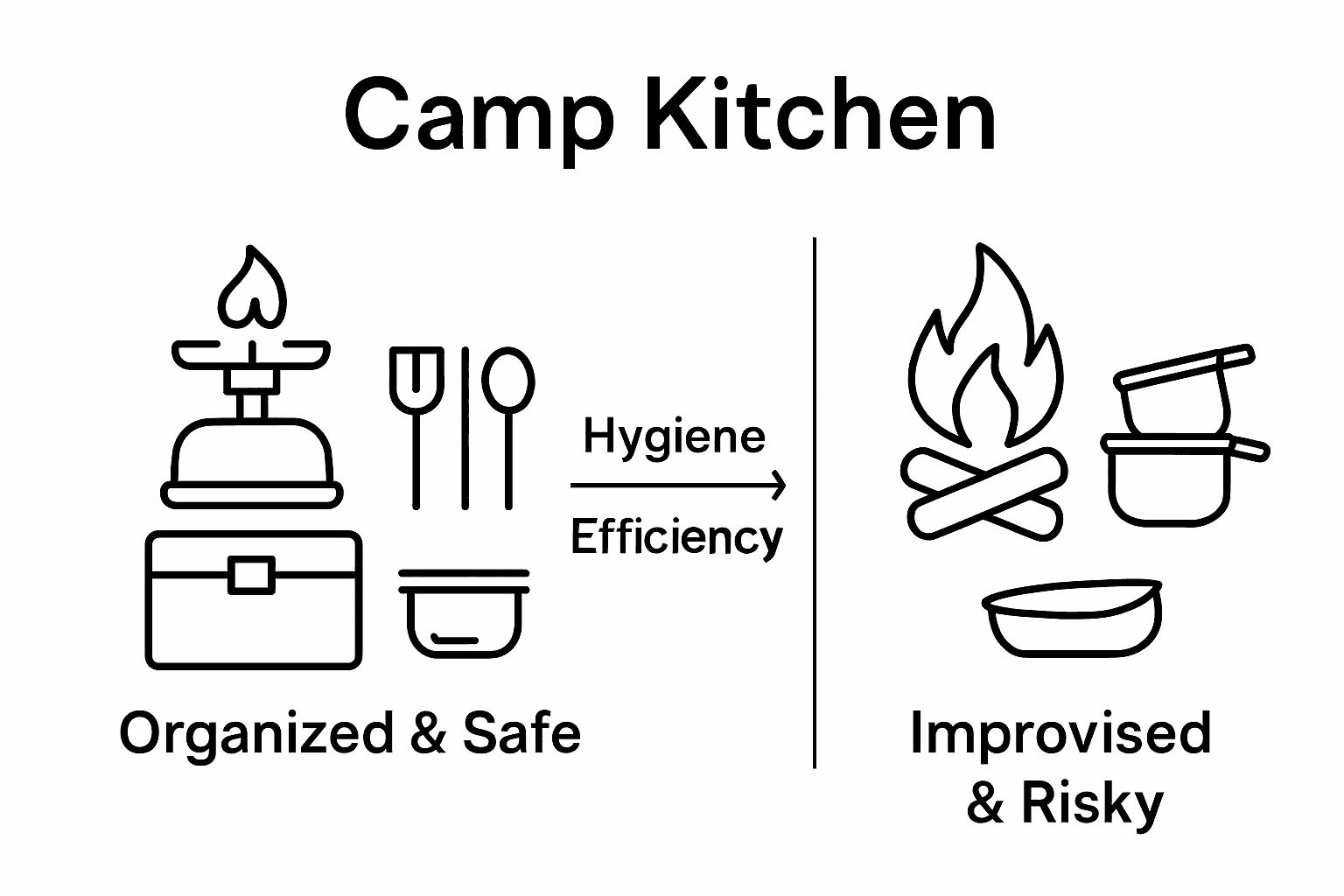
Outdoor cooking methods represent a diverse landscape of solutions ranging from traditional campfires to sophisticated portable kitchen systems. Each approach offers unique advantages and challenges, making the selection process crucial for successful outdoor cooking experiences. Traditional methods like open campfires provide rustic ambiance but lack the control and efficiency of modern camp kitchen setups.
Compared to improvised cooking solutions, dedicated camp kitchens offer significant advantages in organization, safety, and meal preparation versatility. Campfire cooking requires constant fire management, limited cooking surface area, and exposes food to direct flames, whereas portable camp kitchens provide stable cooking surfaces, windscreens, and precise temperature control. Rocket stoves and buddy burners represent intermediate solutions, offering more controlled cooking environments than open fires but less comprehensive functionality than full camp kitchen systems.
The evolution of camp kitchen technology has dramatically transformed outdoor cooking capabilities. Modern portable kitchen units integrate multiple functions into compact, lightweight designs that were unimaginable just decades ago. These systems combine cooking surfaces, storage compartments, preparation areas, and integrated cleaning stations into cohesive units that dramatically reduce setup time and complexity. Specialized features like collapsible components, modular design, and advanced material technologies have made camp kitchens increasingly adaptable to different environments and user needs.
Pro Comparison Tip: Always test your chosen cooking solution before extended trips to understand its specific strengths and limitations in real-world conditions.
Cooking Solution Comparison:
This table summarizes the added value of camp kitchens versus traditional outdoor cooking methods:
| Aspect | Camp Kitchen Systems | Traditional Campfire |
|---|---|---|
| Efficiency | High, precise control | Low, hard to manage |
| Setup Time | Fast, organized | Slow, more laborious |
| Safety | Stable, protected flame | Open, unpredictable |
| Meal Versatility | Wide recipe range | Limited, basic options |
| Environmental Impact | Low, minimal scarring | High, may damage land |
- Traditional campfire
- Rocket stoves
- Buddy burners
- Portable camp kitchen units
- Integrated modular systems
- Minimalist backpacking setups
- Fixed concrete outdoor kitchens
Elevate Your Outdoor Cooking Experience with Life Camp Adventure
Creating an efficient camp kitchen outdoors can be overwhelming with so many factors to consider like portability, hygiene, and meal versatility. This article highlights challenges such as managing limited space, ensuring safe food preparation, and choosing gear that is both lightweight and durable. If you want to move beyond the common misconceptions about bulky and complicated setups the right equipment can make all the difference. Life Camp Adventure offers high-quality camping gear designed to solve these exact pain points by providing reliable portable stoves, cookware, and storage solutions that simplify your meal preparation while outdoors.
Discover how you can transform your outdoor cooking with gear built for convenience and durability. Visit Life Camp Adventure to explore top-rated camp kitchen essentials that match the needs outlined in this article. Whether you are looking for ultralight backpacking cookware or modular car camping kitchen setups our curated collection empowers you to cook safely, efficiently, and comfortably on every trip. Don't wait—equip yourself now with tools that elevate your adventure and fuel your passion for outdoor exploration.
Frequently Asked Questions
What are the essential components of a camp kitchen?
A well-equipped camp kitchen typically includes a portable cooking surface, a compact stove, lightweight cookware, a multi-tool utensil kit, storage solutions, a water filtration system, cleaning supplies, and trash management tools.
How do I maintain hygiene in a camp kitchen?
To maintain hygiene, use separate cutting surfaces for raw and cooked foods, wash hands frequently, store food in sealed containers, and regularly clean utensils and surfaces following strict sanitation protocols.
What types of camp kitchens are best for different camping styles?
Ultralight backpacking kitchens are ideal for solo trekkers who need minimal weight. Car camping kitchens suit families or groups by accommodating larger equipment. Tabletop units are great for day trips, while modular expedition kitchens offer customizable setups for extended expeditions.
How can I streamline my camp cooking process?
Prepping all ingredients at home by using resealable bags and pre-measuring spices can streamline your cooking workflow in the wilderness. Organizing gear in clear, labeled containers also ensures quick access and easy setup.
