TL;DR:
- Proper preparation and the Ten Essentials are critical for outdoor safety in emergencies.
- Regularly practice drills and update gear to ensure effective response during real incidents.
- Clear plans, calm decision-making, and matching gear to environmental risks improve rescue outcomes.
You're three miles into a backcountry trail when the sky turns dark, the temperature drops fifteen degrees, and one hiker in your group twists an ankle on a slippery root. Suddenly, a fun afternoon becomes a race against time. What separates a scary story from a tragedy is preparation. Knowing the right emergency preparedness steps before you leave the trailhead gives you the tools, the calm, and the confidence to handle almost anything nature throws at you. This guide walks you through the frameworks, gear, and mindset you need to stay safe on every outdoor adventure.
Key Takeaways
| Point | Details |
|---|---|
| Master the Ten Essentials | Always include the core Ten Essentials in your outdoor emergency kit for maximum preparedness. |
| Adapt your kit | Customize your emergency kit for family members, children, and pets before each trip. |
| Practice as a group | Regularly run crisis drills and assign roles so every group member knows what to do in an emergency. |
| Stay calm under pressure | Follow a clear, step-by-step plan like STOP to safely manage any unexpected situation. |
Understanding emergency preparedness: The Ten Essentials
Now that you understand the risks of being unprepared, let's break down the fundamental framework for outdoor emergencies. Emergency preparedness for outdoor adventures follows the time-tested Ten Essentials system, a framework first developed by The Mountaineers in the 1930s and still the gold standard for hikers, campers, and families heading outdoors.
Here's what the Ten Essentials cover and why each one matters:
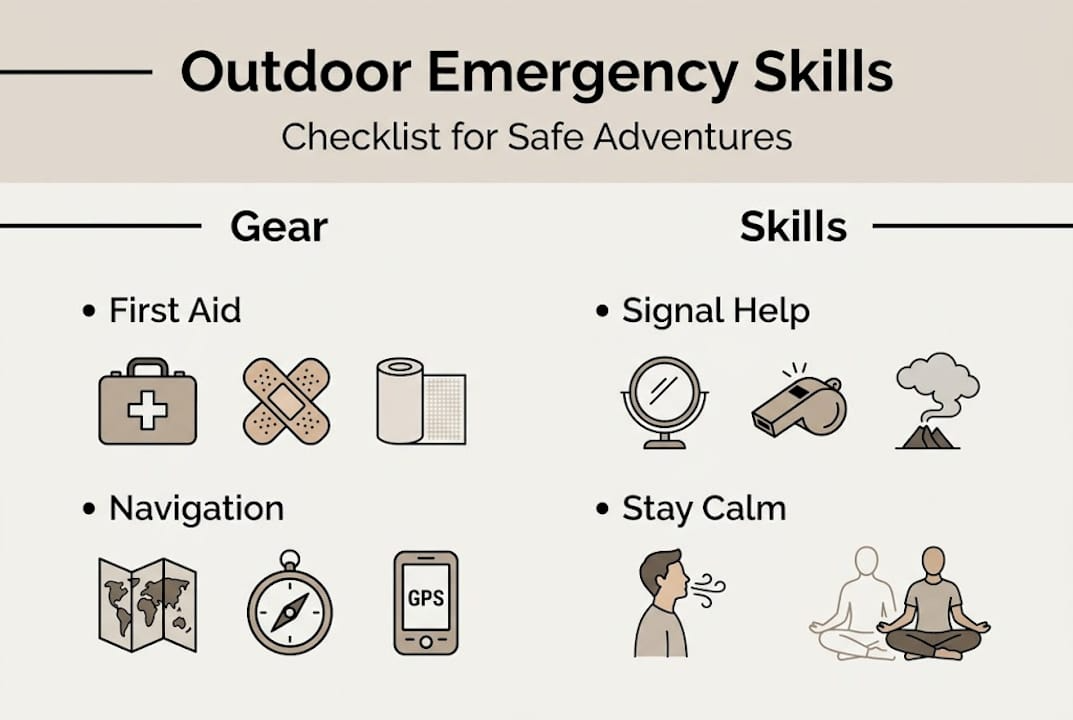
- Navigation: A map and compass (or GPS device) help you find your route and escape if you get turned around.
- Sun protection: Sunscreen, sunglasses, and a hat prevent heat exhaustion and burns, especially at elevation.
- Insulation: Extra layers guard against sudden temperature drops that can lead to hypothermia.
- Illumination: A headlamp or flashlight with spare batteries means you can move safely after dark.
- First aid supplies: A basic kit handles wounds, sprains, and allergic reactions on the trail. Check out our outdoor survival checklist for a full breakdown of what to bring.
- Fire: Waterproof matches, a lighter, or a firestarter let you signal for help and stay warm in an emergency.
- Repair kit and tools: Duct tape, a multi-tool, and cordage fix broken gear and rig improvised shelters.
- Nutrition: Extra food with a calorie buffer for one additional day keeps energy and morale up if plans change.
- Hydration: Water plus a filter or purification tablets prevent dehydration, which worsens every other emergency.
- Emergency shelter: A lightweight bivy sack or space blanket provides critical protection from wind and rain.
| Scenario | Prepared group | Unprepared group |
|---|---|---|
| Sudden storm | Sets up shelter, stays dry and warm | Exposed to elements, risk of hypothermia |
| Lost on trail | Uses map and compass to navigate out | Wanders further off course |
| Injury on trail | Treats wound with first aid kit | Untreated wound, forced evacuation |
| Darkness falls early | Headlamp keeps group moving safely | Stops moving, spends unplanned night out |
Knowing the essentials is just the first step. You also need to tailor them. A desert hike in July demands extra water and sun protection. A winter snowshoe trip prioritizes insulation and fire. Reviewing outdoor survival basics for your specific environment takes that customization further.
Pro Tip: Before each trip, review the Ten Essentials against your destination's specific weather and terrain. Add or swap items based on season, group size, and distance from help. Our guide on outdoor skills every camper should know can help you decide what to prioritize.
Step-by-step checklist: Assembling your emergency kit
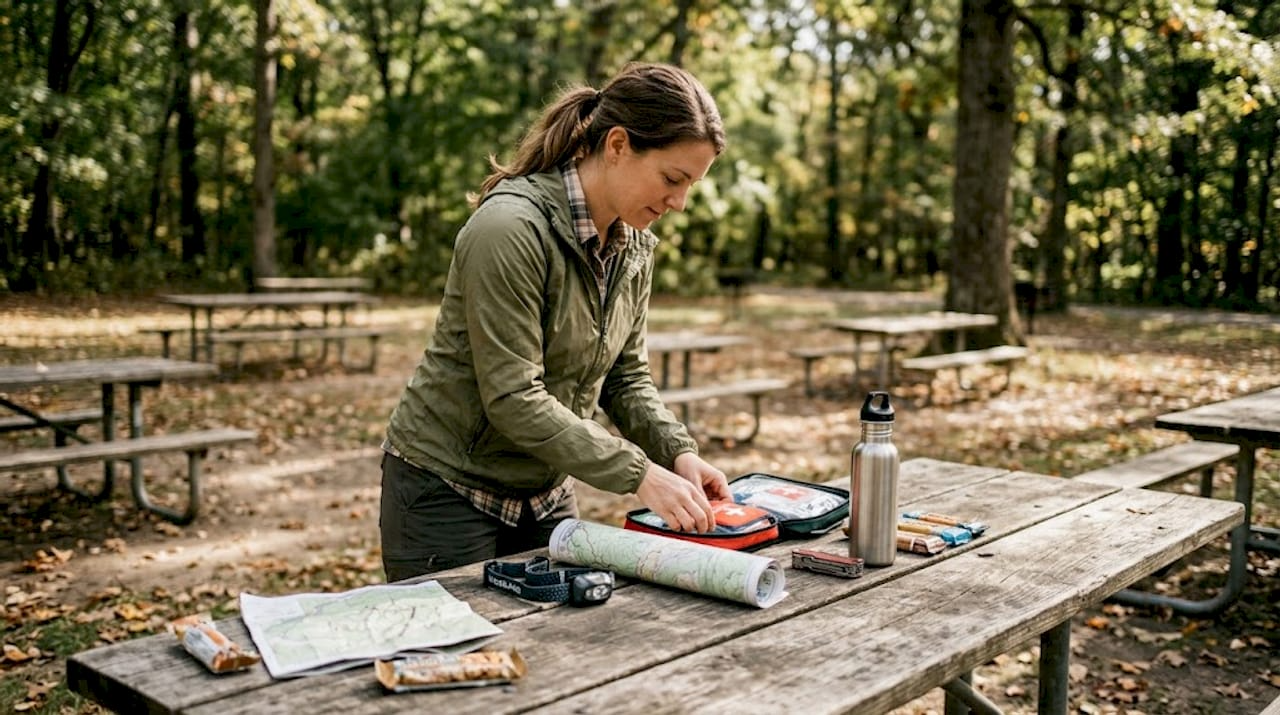
Armed with the essentials framework, your next step is to gather your gear into a ready-to-go emergency kit. A solid emergency kit includes bandages, antiseptic wipes, gauze, tape, tweezers, pain relievers, blister treatment, and any personal medications. Families should also pack child-specific items like diapers, extra snacks, and comfort items.
Here's how to build your kit step by step:
- Start with a waterproof container or bag. A dry bag or hard-shell case protects your kit from rain and river crossings.
- Add your first aid basics. Bandages, antiseptic wipes, gauze pads, medical tape, and pain relievers form your medical core. Our resource on building a first aid kit walks you through every item.
- Include your personal medications. Pre-pack them in a labeled, waterproof pouch so they're easy to find under stress.
- Add emergency signaling tools. A whistle, signal mirror, and small note with your trip plan go in an exterior pocket for fast access.
- Pack repair and tool items. Duct tape, a multi-tool, extra cordage, and safety pins handle gear failures and improvised fixes.
- Include shelter and warmth layers. A space blanket takes up almost no space and can save a life in a wind and rain situation.
- Double-check food and water. Pack at least one extra day's worth of high-calorie bars and water purification options.
| Item category | Adult kit | Family or kids addition |
|---|---|---|
| First aid | Bandages, gauze, antiseptic | Child-size bandages, fever reducer |
| Medications | Personal meds, pain relievers | Pediatric doses, allergy meds |
| Signaling | Whistle, mirror | Bright-colored bandana for child |
| Shelter | Space blanket, bivy | Extra blanket, comfort item |
| Food and water | Energy bars, water filter | Kid-friendly snacks, extra water |
Learning wilderness first aid skills makes every item in your kit more effective. Gear without knowledge is just extra weight.
Pro Tip: Set a calendar reminder every three months to audit your kit. Replace expired medications, check battery levels in any electronic tools, and swap out seasonal items before each trip.
Preparing your family or group for emergencies
Once your kit is ready, make sure every member of your group knows how to use it and what to do in an emergency. Family emergency planning means practicing drills, assigning clear roles, including kid-friendly signaling tools like whistles, and packing extras for children and pets. Preparation is a team sport, not a solo task.
Here's how to get your whole group ready:
- Assign specific roles. Decide in advance who carries the first aid kit, who leads navigation, and who manages communication with the outside world.
- Create a simple communication plan. Choose a rally point everyone can find if the group gets separated. Write it down and give a copy to each adult.
- Include pets in your plan. Pack extra water, food, a leash, and any medications your pet needs. Know your pet's weight for dosing if an emergency vet call becomes necessary.
- Teach kids what to do if lost. Hug a tree (stay put), blow the whistle three times, and wait for rescuers. Practice this at home before you ever hit the trail. Check out our camping safety tips for families for more detailed advice.
- Brief every adult on the first aid kit contents. Don't assume anyone knows where the tourniquet is unless you've shown them.
"The most important thing you can do before any outdoor trip is rehearse your response plan. Kids who have practiced emergency steps react with far more calm than those hearing it for the first time in a real situation."
Running even one short practice drill changes everything. A fifteen-minute walkthrough at home means your group reacts from memory, not panic.
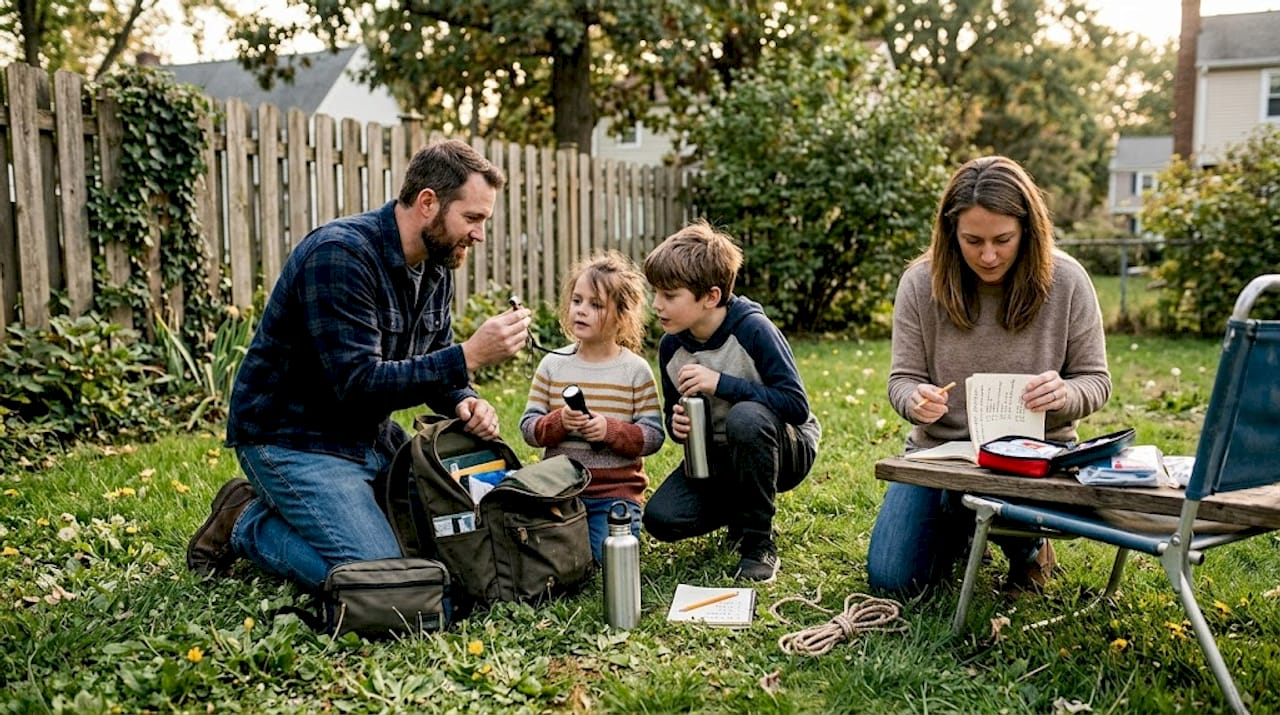
Pro Tip: Make emergency practice fun for kids by framing it as a game. Use a scavenger hunt format to teach them where gear is stored and what each item does. Children who feel involved stay calmer in real emergencies.
Staying aware and reacting calmly: Skills and mindset for emergencies
Being prepared is just as much about your mindset and actions during an emergency as it is about the gear you carry. Outdoor preparedness guidance consistently points to situational awareness and calm decision-making as the two factors that most determine outcomes in the backcountry.
Situational awareness means reading your environment before problems develop. Check the weather every morning. Note landmarks as you travel. Watch for signs of fatigue or dehydration in your group. The moment you feel something is off, stop and assess before the situation escalates.
When an emergency does happen, use the STOP method:
- Stop. Don't move. Panic makes people run in wrong directions and burn critical energy.
- Think. Take three slow breaths. Your brain works better when you slow your heart rate down.
- Observe. Look at your surroundings, your resources, and the condition of everyone in your group.
- Plan. Choose one clear action. Treat the most urgent problem first, then reassess.
Common mistakes to avoid:
- Assuming someone else has the emergency gear
- Waiting too long to signal for help because you feel embarrassed
- Splitting the group without a clear meeting plan
- Ignoring early warning signs of hypothermia or dehydration
Researchers consistently find that prepared outdoor groups resolve emergencies faster and require less intensive rescue support than unprepared ones. Reviewing outdoor first aid steps before your trip gives your STOP response a solid foundation to build on.
Statistic callout: Studies on search and rescue operations show that groups carrying the Ten Essentials are significantly more likely to self-rescue or be found quickly, reducing both risk and rescue resource demand.
Why real-world practice beats packing lists every time
Here's our honest take: packing lists are a starting point, not a safety net. We've seen plenty of hikers with perfectly stocked kits freeze up the moment something actually went wrong, simply because they had never practiced using the gear. A folded space blanket is useless if your hands are shaking and you've never opened one before.
The bigger risk is overconfidence. Gear creates a feeling of security that isn't always earned. The people who navigate emergencies best aren't those with the most expensive packs. They're the ones who have made mistakes in low-stakes situations and learned from them. They've practiced fire-starting in the rain. They've run their kids through the lost-hiker drill twice a year.
Ongoing skill-building is what converts a checklist into real capability. Developing outdoor skills through consistent practice makes your preparedness real rather than theoretical. Do the drills. Use the gear before you need it. That's the difference that matters most.
Find the right gear for your emergency preparedness journey
Ready to take the next step? Ensure your safety with the right gear and expert resources. At Life Camp Adventure, we've built our product lineup around real-world outdoor needs, so you spend less time guessing and more time exploring with confidence.
Start with our full outdoor survival checklist to confirm you have every essential covered. From there, browse our detailed guides to compare camping gear side by side, or explore our breakdown of the best options when you compare camping tents for your next trip. Whether you're heading out solo or leading a family expedition, we have the tools and resources to make sure you're ready for whatever the trail delivers.
Frequently asked questions
What are the Ten Essentials for outdoor emergencies?
The Ten Essentials are navigation, sun protection, insulation, illumination, first aid, fire, repair tools, food, shelter, and water. These core items form the foundation of outdoor preparedness for any trip.
How often should I update my emergency kit?
Check and update your emergency kit before each outing or every three months. Replace expired items and adjust contents for seasonal changes, following the emergency kit guidelines to stay current.
How can I prepare my kids for outdoor emergencies?
Practice emergency drills at home, assign each child a simple role, and include kid-friendly signaling tools like whistles. Family disaster planning recommends rehearsing these steps before every trip.
What should I do if I get lost during an outdoor adventure?
Stay calm and use the STOP method: Stop, Think, Observe, Plan. Use your navigation tools and signal for help with a whistle or mirror. The Ten Essentials framework gives you the tools to self-rescue in most situations.
