TL;DR:
- Outdoor skills like navigation, fire-making, shelter building, and first aid are essential for safety and self-sufficiency.
- Practicing skills in low-stakes environments builds confidence and enhances safety during trips.
- Gear supports skills but cannot replace the knowledge required to handle wilderness situations effectively.
Gear fills your pack, but skills fill the gaps. Too many campers head into the backcountry loaded with equipment they barely know how to use, only to find out the hard way that a quality tent means nothing if you can't read the weather or a map. The good news is that outdoor skills are learnable, and practicing them before you hit the trail makes every outing safer and more enjoyable. This guide breaks down the most important outdoor skills with real examples, pro tips, and practical frameworks so you can build genuine confidence, not just a gear list.
Key Takeaways
| Point | Details |
|---|---|
| Master the basics | Navigation, shelter, and first aid are must-have outdoor skills for safety and enjoyment. |
| Be prepared | Packing essentials and practicing skills before your trip reduce risk and stress on any adventure. |
| Adapt to conditions | Ability to respond to weather, terrain, and emergencies lets you explore confidently and safely. |
| Continuous learning | Real skill comes from practicing outdoors, reviewing lessons, and adapting as you go. |
Understanding essential outdoor skills: What really matters
Not every skill you could learn in the wild is equally important. The ones that matter most share four qualities: they keep you safe, support self-sufficiency, improve comfort, and protect the environment. That's the lens we use at Life Camp Adventure when we talk about being truly prepared.
Two frameworks stand out as the gold standard for outdoor preparedness. The first is the Ten Essentials, originally developed to help hikers and campers handle emergencies and spend a night out safely. The second is the Seven Principles of Leave No Trace, which guide how you interact with the land around you. Together, they form a checklist and a mindset.
Here's what the Ten Essentials for Outdoor Trips include:
- Navigation tools (map, compass, GPS)
- Sun protection (sunscreen, sunglasses, hat)
- Insulation (extra layers, rain gear)
- Illumination (headlamp, spare batteries)
- First aid supplies
- Fire starting tools
- Repair tools and a knife
- Nutrition (extra food)
- Hydration (extra water and treatment options)
- Emergency shelter
"The Ten Essentials aren't just a packing list. They're a skill framework. Owning them means nothing if you don't know how to use them when it counts."
Think of each essential as a skill category, not just a piece of gear. A compass is useless without navigation knowledge. A first aid kit won't help if you freeze under pressure. Start with our hiking essentials list to cross-reference your gear, and pair it with the beginner hiking skills guide to start building the skills behind each item.
Navigation skills: Map, compass, and route-finding in action
With the essentials in mind, let's zoom in on one of the most frequently overlooked: navigation. It's the skill most people assume their phone will handle. That assumption gets people lost.
Core navigation tools every camper should carry include:
- Topographic (topo) map of your area
- Baseplate compass
- GPS unit with downloaded offline maps
- Backup batteries or a power bank
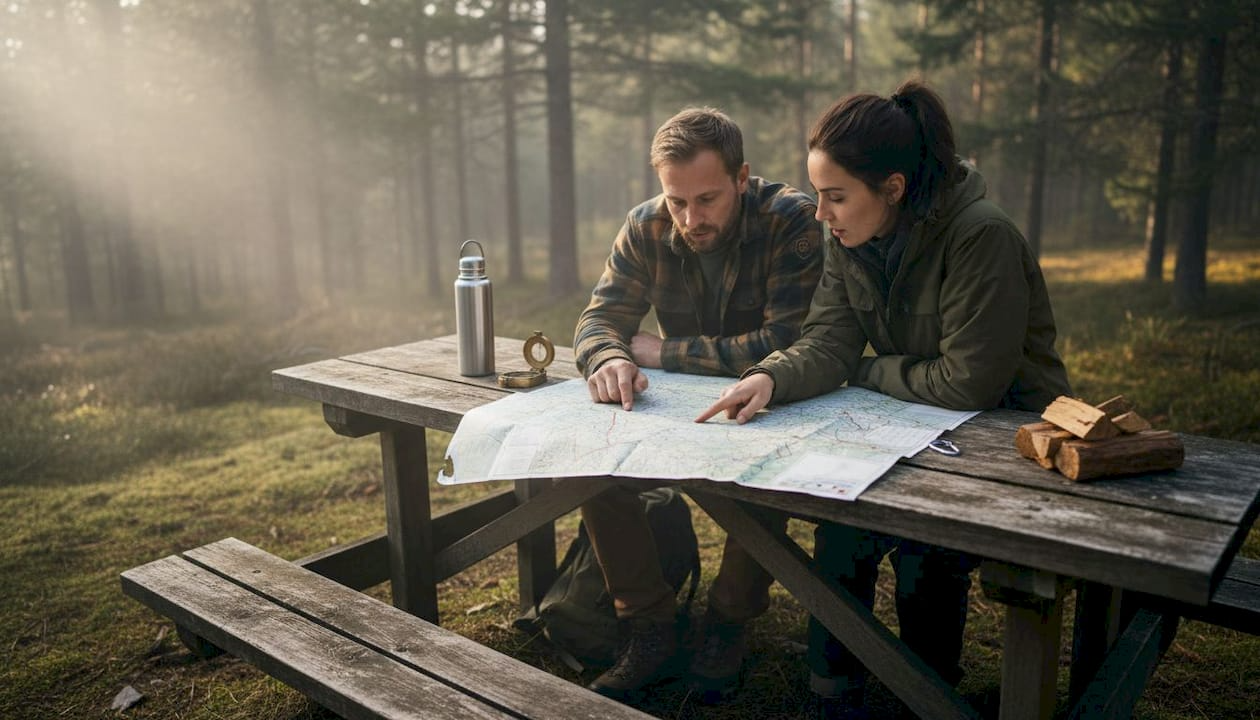
Here's a real-world example. You're on a trail and hit a fork with no signage. Visibility is dropping because of fog. Your phone is at 12% battery. This is where a topo map earns its place. You orient the map to your compass, identify the ridge to your left, and confirm which fork leads toward your campsite. That's a skill, not luck.
The Ten Essentials list navigation first for a reason. It's the foundation everything else builds on. Without knowing where you are, every other skill becomes harder to apply.
Common mistakes include relying solely on a phone GPS (no signal, dead battery, cracked screen), not downloading offline maps before leaving, and carrying a compass but never learning to use it.
Pro Tip: Practice triangulating your position using a topo map and compass in your local park before your first backcountry trip. Do it until it feels automatic.
For a deeper breakdown of navigation basics for beginners, we've put together a full guide that walks you through the fundamentals step by step.
Shelter, fire, and warmth: Protection from the elements
Solid navigation can get you where you need to go, but once you're there, shelter and warmth keep you safe and comfortable. These two skills together prevent the most dangerous backcountry outcomes: exposure and hypothermia.
Shelter options by situation:
- Tent: Best for planned overnight trips. Practice pitching it at home first.
- Emergency tarp: Lightweight, versatile. Learn the lean-to and A-frame configurations.
- Windbreak: Use natural features like boulders or dense brush to block wind fast.
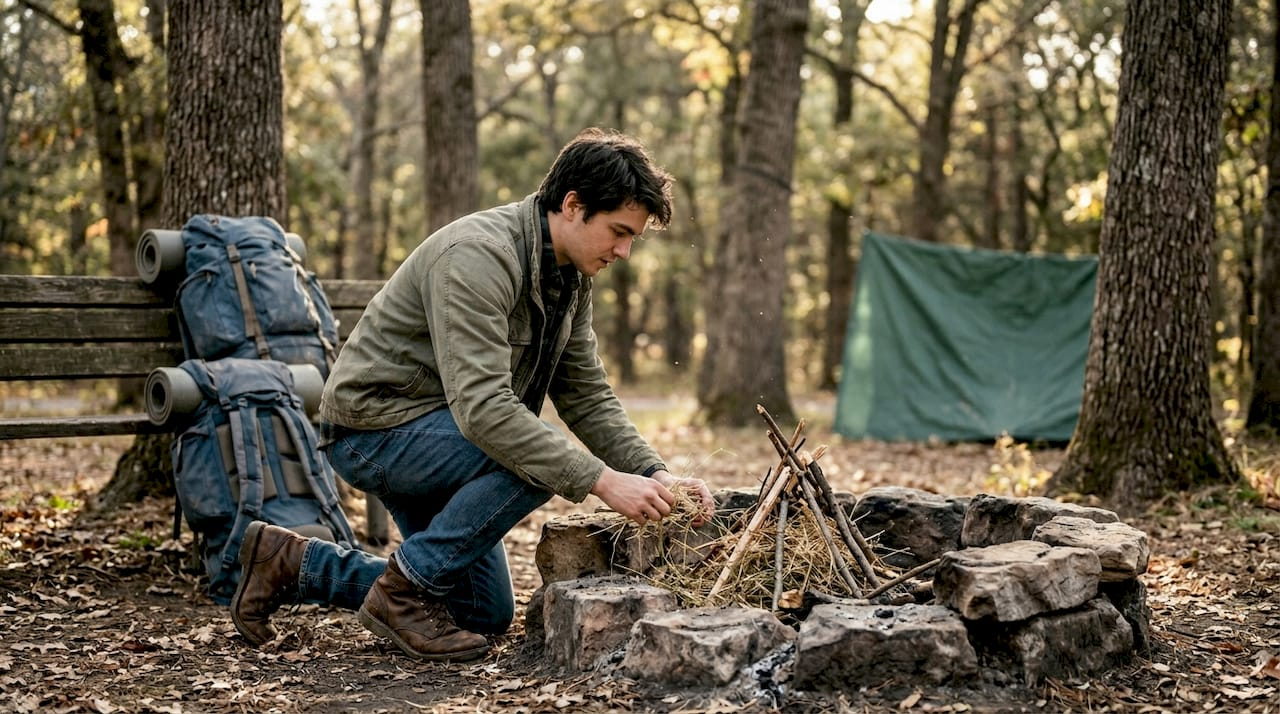
For fire building, the teepee method works well in most conditions. Arrange small tinder in the center, lean kindling around it like tent poles, then add fuel wood on the outside. The feather stick method, where you shave curls into a dry stick without detaching them, creates excellent tinder from a single piece of wood.
| Fuel source | Best conditions | Reliability |
|---|---|---|
| Dry grass and leaves | Dry, calm weather | High |
| Feather sticks | Damp conditions | Medium-High |
| Damp wood | Wet weather | Low |
| Commercial fire starter | Any condition | Very High |
Always follow camping shelter essentials and review outdoor survival basics before any trip. The Ten Essentials include both fire and shelter for this exact reason.
For warmth, layer up using the base-mid-shell system. Keep your base layer dry at all costs. Wet cotton against your skin is one of the fastest paths to hypothermia.
Pro Tip: Always carry a backup fire starter. A lighter, waterproof matches, and a ferro rod together weigh almost nothing and give you three independent options.
Outdoor first aid: Smart responses to common injuries
Staying sheltered is half the battle. Knowing how to handle mishaps and injuries is the other half. Wilderness first aid differs from what you'd do in a city, and understanding that gap could save a life.
Here are the numbered steps for handling three of the most common backcountry injuries:
- Blisters: Clean the area, drain with a sterile needle if large, apply moleskin with a donut-shaped cutout to relieve pressure.
- Bleeding cuts: Apply firm, direct pressure with a clean cloth. Elevate the limb. Keep pressure on for at least 10 minutes without peeking.
- Shock: Lay the person flat, elevate their legs if no spinal injury is suspected, keep them warm, and monitor breathing.
| Scenario | Urban first aid | Wilderness first aid |
|---|---|---|
| Broken bone | Call 911, immobilize | Improvise splint, plan evacuation |
| Severe bleeding | Apply pressure, wait for EMS | Apply pressure, assess evacuation |
| Unconscious patient | Call 911 immediately | Patient assessment system, monitor vitals |
The NOLS Wilderness First Aid course teaches a structured patient assessment system that works when help is hours away. It's a weekend investment that pays off on every remote trip after.
For practical guidance, check our first aid steps outdoors guide and browse our recommended first aid kits outdoors to make sure your kit is actually trail-ready.
Food, water, and packing: Smart preparation for any outing
Effective response to emergencies also depends on how well you prepare before you ever step outside. Food and water planning is where preparation becomes a skill of its own.
For food, aim for 2,500 to 3,500 calories per day on active trips. Prioritize calorie-dense, lightweight options like nuts, jerky, freeze-dried meals, and energy bars. Avoid heavy canned goods unless you're car camping.
For water, the Ten Essentials list extra water and treatment options as non-negotiable. Your treatment methods should include:
- Boiling: Most reliable. Bring water to a full rolling boil for at least one minute.
- Filter: Removes bacteria and protozoa. Great for stream and lake water.
- Chemical treatment (iodine or chlorine tablets): Lightweight backup. Takes 30 minutes to work.
- UV purifier: Fast and effective but requires batteries.
Packing smart is its own skill. Put rain gear and your first aid kit near the top. Heavy items go close to your back and centered vertically. Snacks go in a hip belt pocket. Check our full packing list for campers and our guide on efficient backpack packing for a system that actually works on the trail.
Also review this outdoor safety checklist for a broader pre-trip preparation framework.
Pro Tip: Pre-pack your trail snacks into small zip bags the night before. One bag per planned break. It keeps you fueled without digging through your pack mid-hike.
Our take: Skills beat gear every single time
Here's something the outdoor industry doesn't say loudly enough: most gear is a substitute for a skill you haven't learned yet. A $400 GPS unit is a crutch if you never learned to read a topo map. A four-season tent won't save you if you pitch it in a drainage and wake up soaked.
We've seen it happen. Campers with premium kits who couldn't start a fire in damp conditions. Hikers with brand-new boots who got blisters because they never broke them in. The gear is only as good as the person using it.
The most confident outdoors people we know carry less than you'd expect. They've replaced weight with knowledge. They know two or three fire-starting methods, not just one. They've practiced their shelter setup in the backyard. They've done a navigation drill in a familiar park before taking it remote.
That's the mindset we want you to carry into every trip. Gear supports skills. Skills don't substitute for gear, but they make every piece of gear more effective. Start with the basics, practice them until they're boring, then build from there.
Gear up with Life Camp Adventure
Knowing your skills is step one. Having the right gear to back them up is step two. At Life Camp Adventure, we've built our product line around the exact skills covered in this guide: navigation, shelter, fire, first aid, and smart packing.
Whether you're gearing up for your first overnight trip or your fiftieth, our camping equipment and survival essentials are designed to perform when it matters. Every product we carry is tested for durability, ease of use, and real trail conditions. Browse our full collection and find the gear that matches your skill level and adventure goals. Because the best trip you'll ever take is the one you're actually prepared for.
Frequently asked questions
What are the most important outdoor skills for beginners?
Core skills include navigation, building shelter, starting a fire, treating water, and basic first aid. The Ten Essentials framework maps directly to these skill areas and makes a great starting checklist.
How can I practice outdoor skills before my camping trip?
Practice navigation, shelter setup, and fire building at home or in local parks using your planned gear. Repetition in low-stakes settings builds real confidence before you need it in the field.
Do I need advanced wilderness first aid for every trip?
Basic first aid knowledge is essential for any outing, but remote or multi-day trips benefit significantly from wilderness-specific training that covers patient assessment and evacuation decisions.
What's the best way to keep food safe outdoors?
Use bear-proof containers or hang food at least 200 feet from camp, keep all items sealed and dry, and never store food inside your tent.
How much water should I carry for a day hike?
Plan for at least 2 liters per person and know where you can treat additional water along your route, as the Ten Essentials recommend carrying both water and treatment options.
Recommended
- Outdoor Survival Basics: Essential Steps for Beginners
- 7 Essential Types of Camping Gear Every Explorer Needs
- 7 Essential Family Camping Tips for Safe Outdoor Fun
- Master camp safety procedures for secure outdoor trips
- Stay cool and protected in the Australian sun without sunscreen
- Camping comfort: how accessories elevate every outdoor trip – Sitpack
