TL;DR:
- Proper planning and understanding survival priorities prevent most outdoor emergencies.
- The Ten Essentials cover core items needed for safety, navigation, and survival in any trip.
- Adapt your checklist based on weather, terrain, trip duration, and special needs for effective safety.
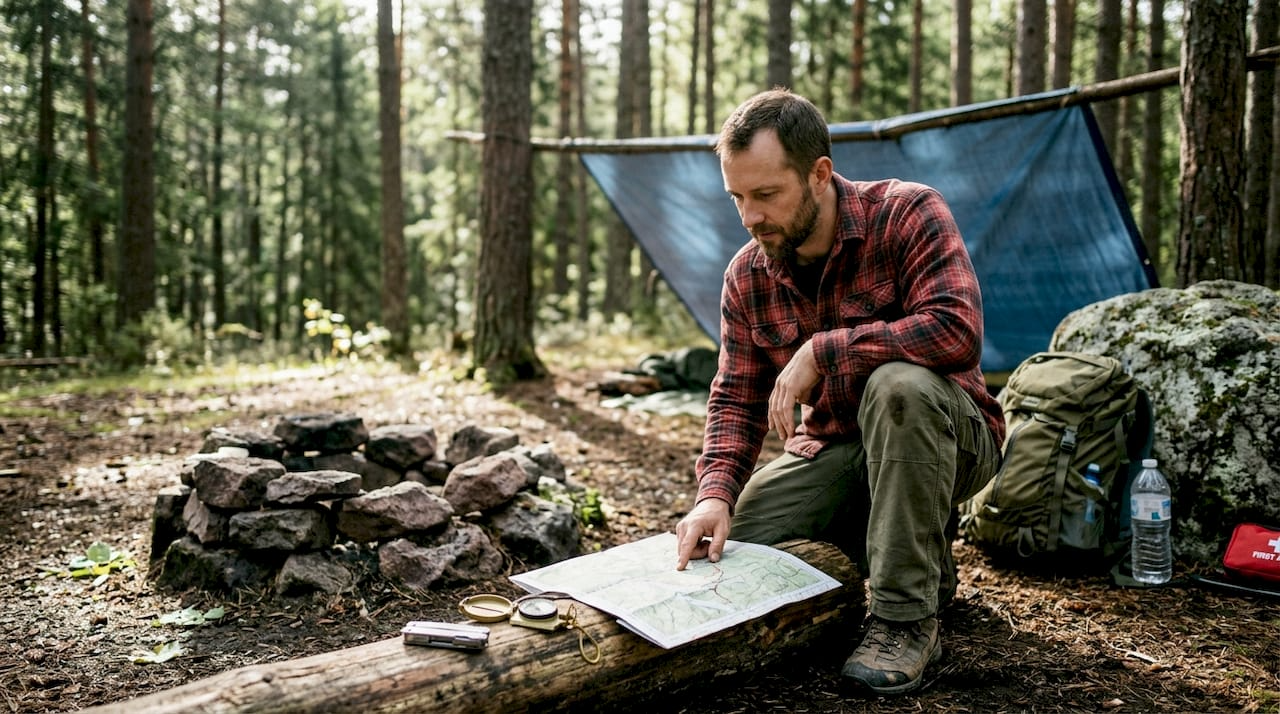
Every year, hikers and campers end up in serious trouble not because the wilderness is unforgiving, but because they left the trailhead without the right plan. A twisted ankle three miles from camp, a sudden drop in temperature, or a wrong turn at dusk can turn a fun weekend into a life-threatening situation fast. The good news is that most outdoor emergencies are preventable. A solid survival checklist gives you the framework to think clearly, pack smart, and respond confidently when things go sideways. In this guide, we'll walk through survival priorities, the Ten Essentials, specialized gear for tough conditions, and how to adapt your checklist for any group or scenario.
Key Takeaways
| Point | Details |
|---|---|
| Survival priorities first | Focus on mindset, shelter, water, and fire before food or gear to handle emergencies effectively. |
| Master the Ten Essentials | Packing the Ten Essentials covers most outdoor emergency needs and can save your life. |
| Adapt for every trip | Adjust your checklist for climate, terrain, duration, and group needs for best preparedness. |
| Mindset beats equipment | Staying calm and planning ahead is more important than carrying the most gear. |
Understanding survival priorities: The foundation of any checklist
Before you throw gear into a bag, you need to understand why certain items matter more than others. Survival isn't just about having the right stuff. It's about knowing what to do first when everything goes wrong.
The best starting point is the Rule of 3s, a framework used by survival instructors worldwide. You can survive roughly 3 minutes without air, 3 hours without shelter in harsh weather, 3 days without water, and 3 weeks without food. That order tells you exactly how to rank your priorities. The wilderness survival priorities go even further, listing seven steps: positive mental attitude, first aid, shelter, fire, water, signaling, and food last.
Here's why that order matters in practice:
- Positive mental attitude (PMA): Panic kills. Before you do anything else, stop and breathe. A calm mind makes better decisions.
- First aid: Treat any injuries immediately. An untreated wound can become life-threatening quickly.
- Shelter: Exposure to cold, wind, or rain is the fastest killer outdoors. Hypothermia can set in within hours.
- Fire: Warmth, signaling, water purification, and morale all depend on fire in a survival situation.
- Water: Three days is your hard limit. Finding and purifying water is urgent but not as immediate as shelter.
- Signaling and navigation: Once your immediate needs are met, focus on getting found or finding your way out.
- Food: Your body can go three weeks without it. Food is last on the list, always.
"Exposure causes the majority of wilderness fatalities, accounting for 75 to 80 percent of deaths. Shelter is the most urgent physical need after maintaining a positive mental attitude." — Wilderness Survival Merit Badge
Understanding outdoor survival basics helps you see that a checklist isn't just a shopping list. It's a decision-making tool. When you know the essential survival steps, you can prioritize what to grab, what to build, and what to do first under pressure. That mental clarity is worth more than any single piece of gear in your pack.
The Ten Essentials: Must-have items for outdoor survival
With a clear sense of your survival priorities, the next step is to know exactly what to pack. The Ten Essentials system from The Mountaineers is the gold standard for outdoor preparedness, updated into 10 categories that cover every core need.
Here's what each category includes:
- Navigation: Map, compass, and GPS device. Never rely on your phone alone.
- Sun protection: Sunscreen, sunglasses, and a hat. Sunburn and snow blindness are real risks.
- Insulation: Extra layers, a rain shell, and a hat and gloves even in summer.
- Illumination: A headlamp with fresh batteries, plus a backup light source.
- First aid supplies: A full outdoor first aid kit with blister care, wound closure, and any personal medications.
- Fire: Waterproof matches, a lighter, and fire-starting tinder.
- Repair tools and knife: Duct tape, a multi-tool, and cordage for gear fixes.
- Extra food: At least one extra day's worth of high-calorie, non-perishable snacks.
- Extra water: A water filter or purification tablets plus a backup water bottle.
- Emergency shelter: A lightweight bivy, space blanket, or emergency tarp.
Here's a quick comparison of how the Ten Essentials scale with trip type:
| Essential category | Day hike | Overnight trip | Multi-day expedition |
|---|---|---|---|
| Navigation | Map and compass | Map, compass, GPS | Full navigation kit |
| Insulation | Light layer | Full sleep system | Layered system plus backup |
| Food | One extra meal | Two extra days | Resupply plan |
| Water | Filter plus bottle | Filter plus purification tabs | Full filtration system |
| Emergency shelter | Space blanket | Lightweight bivy | Four-season shelter option |
The hiking essentials you need for a three-hour trail walk look very different from what you need for a five-day backcountry trip. Knowing why packing survival gear matters helps you make smarter swaps and cuts without leaving yourself exposed.
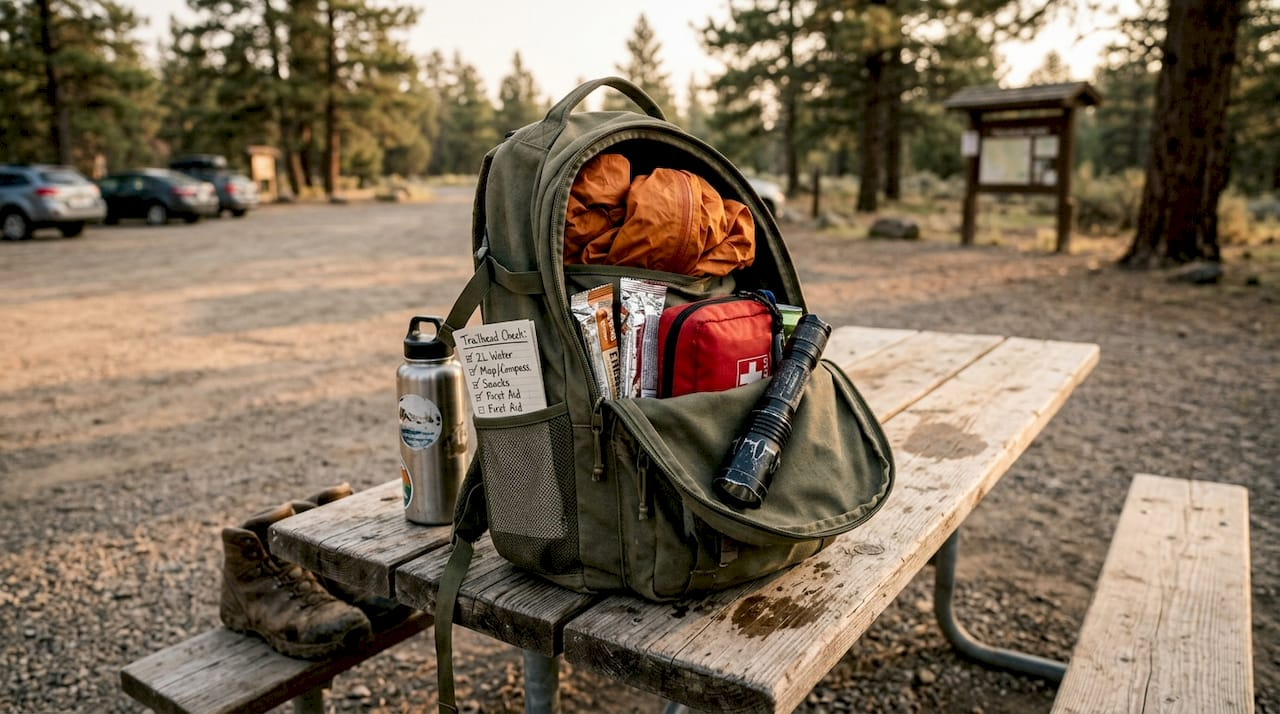
Pro Tip: Review your Ten Essentials before every single trip, not just once a season. Batteries die, food expires, and gear wears out. A quick five-minute check before you leave the car can save your life.
Beyond the basics: Specialized items for weather, terrain, and duration
The basics set you up for safety in most circumstances, but the wild can surprise you. A checklist that works perfectly for a fall hike in the Appalachians may leave you dangerously underprepared for a winter trip in the Rockies or a desert crossing in August.
For cold and wet conditions, add:
- Insulated base layers made from wool or synthetic materials that retain warmth when wet
- Waterproof outerwear including a hardshell jacket and pants
- Heat-reflective emergency blankets that pack down to the size of a deck of cards
- Hand warmers for quick heat when fine motor skills start to fail
- Gaiters to keep snow and water out of your boots
For hot and dry environments, your priorities shift:
- Extra water capacity because dehydration sneaks up fast in the heat
- Electrolyte packets to replace what you sweat out
- Sun-protective clothing with a UPF rating
- A wide-brim hat and neck gaiter for shade
For technical terrain, consider:
- Traction devices like microspikes for icy trails
- Trekking poles for stability on loose ground
- Insect netting for high-bug environments
- Water filtration rated for the specific contaminants in your region
The six scouting essentials cover first aid, water, a flashlight, trail food, sun protection, and a whistle as a starting point, with the recommendation to expand for longer trips by adding extra clothing, rain gear, a pocketknife, and a map and compass. That expansion logic applies to every checklist you build.
For multi-day trips, also factor in hygiene items like biodegradable soap, a trowel for waste disposal, and a resupply strategy if you're going beyond five days. Knowing outdoor first aid steps and outdoor navigation tips becomes even more critical the farther you get from help.
Pro Tip: Build a "base kit" that never changes, then create add-on modules for cold, heat, and long duration. Swap modules in and out rather than rebuilding your list from scratch every time.
Checklists for special scenarios: Family trips, emergencies, and disasters
Whether you're adventuring with others or bracing for the unexpected, a checklist isn't one-size-fits-all. A solo overnight trip and a family camping weekend require very different gear decisions.
For family trips with kids, you'll need to add:
- Child-specific medications including antihistamines, fever reducers, and any prescriptions
- Extra snacks and comfort food because kids burn energy fast and morale matters
- A kid-sized first aid kit with smaller bandages and child-safe antiseptic
- Glow sticks or a small personal light for each child so they're visible at night
- A written emergency plan with a meeting point every child can remember
If you're bringing pets, your checklist needs a pet module too. Pack collapsible water bowls, a leash and backup leash, pet-safe first aid supplies, and enough food for one extra day. Dogs in particular need booties for rough terrain and a cooling vest in summer heat.
For disaster preparedness, the FEMA basic disaster kit is the benchmark. It includes one gallon of water per person per day for at least three days, three days of non-perishable food, a battery-powered radio, a flashlight, a first aid kit, a whistle, a dust mask, sanitation items, a manual can opener, and local maps. That's a strong foundation you can build on for any outdoor emergency.
One gallon of water per person per day is the minimum standard. In hot weather or with high activity, plan for more. A family of four needs at least 12 gallons for a three-day emergency kit.
Here's a simple process for adapting your checklist on the fly:
- Start with your base Ten Essentials kit.
- Add scenario-specific modules (cold, heat, family, pets, disaster).
- Review medications, dietary needs, and physical limitations for every person in your group.
- Check local conditions and hazards for your specific destination.
- Run a final weight check. If you can't carry it comfortably, something has to go.
Learning wilderness first aid skills rounds out your preparation and ensures you can act on what's in your kit, not just carry it.
Rethinking checklists: Why mindset and adaptation matter more than gear
Here's an uncomfortable truth most gear guides won't tell you: the checklist is your starting point, not your safety net. We've seen experienced campers show up with $2,000 worth of gear and freeze up the moment something unexpected happened. And we've seen minimalist hikers navigate serious situations with a knife, a lighter, and a clear head.
The STOP method is what separates people who survive from people who spiral. Stop moving. Think about your situation. Observe your surroundings. Plan your next action. That four-step pause costs you nothing and saves everything.
Overpacking is its own risk. A pack that's too heavy slows you down, increases injury risk, and drains your energy before you even reach camp. Sometimes the best survival decision is leaving something behind. Knowing why you pack each item forces you to justify every ounce, which makes you a smarter, faster, and more adaptable outdoorsperson. Learn from your past trips. That thing you packed and never used? Question it. That thing you wished you had? Add it. A living checklist beats a perfect one every time.
Prepare with confidence: Expert gear and resources for your next adventure
You now have the framework to build a survival checklist that actually works for your specific trip, group, and conditions. The next step is putting it into action with gear you can trust.
At Life Camp Adventure, we've done the testing so you don't have to. Explore our guide to compare camping tents for your shelter needs, browse the full breakdown of essential camping gear types to fill every category on your list, and use our outdoor survival basics guide to sharpen your skills before you head out. Whether you're gearing up for a weekend trip or a serious backcountry expedition, we have the resources and products to help you leave prepared and come back safe.
Frequently asked questions
What are the absolute essentials for outdoor survival?
The Ten Essentials cover navigation, sun protection, insulation, illumination, first aid, fire, repair tools, extra food, extra water, and emergency shelter. These ten categories form the baseline for any outdoor trip.
How do I adjust a survival checklist for winter or severe weather?
Add insulation layers, waterproof outerwear, and emergency heat sources, and increase your food and water supply. Longer or colder trips always require more calories and hydration than you expect.
How much water should I carry for an outdoor trip?
FEMA recommends at least one gallon of water per person per day as a minimum. In hot climates or with high activity levels, plan for more and always carry a filtration method as backup.
What mindset or skills matter most if I get lost?
Use the STOP method: Stop, Think, Observe, and Plan before taking any action. Staying calm and thinking clearly is the most important survival skill you can develop.
Should I always pack extra food for a survival situation?
Yes, always bring at least one extra day's worth of food. But remember that shelter and water outrank food in any emergency. The human body can survive weeks without food but only hours without shelter in extreme conditions.
