
Choosing lightweight gear that is both comfortable and eco-friendly can feel like a challenge for Pacific Northwest campers who care deeply about the environment. Hammock camping offers a unique way to sleep off the ground while treading lightly on fragile local ecosystems. By embracing minimal impact camping and innovative suspended sleep systems, you can elevate your outdoor experience and help protect the wild places you love exploring.
Key Takeaways
| Point | Details |
|---|---|
| Hammock Camping Benefits | Provides a lighter, more portable sleeping option that minimizes environmental impact compared to traditional tent camping. |
| Essential Gear | A successful setup requires lightweight and durable equipment, including hammocks, tree straps, and insulation layers. |
| Environmental Stewardship | Promotes eco-friendly practices by reducing ground disturbance and supporting Leave No Trace principles. |
| Comfort and Stability | Achieving an optimal hanging angle and using insulation is critical for maintaining comfort during sleep. |
Defining Hammock Camping and Core Concepts
Hammock camping represents a revolutionary approach to outdoor sleeping, transforming traditional camping experiences by elevating adventurers quite literally off the ground. Originating in Pre-Columbian Latin America, this camping technique involves suspending a lightweight fabric sleeping platform between two secure anchor points, typically trees, instead of pitching a conventional ground tent.
The core concept of hammock camping centers on several fundamental principles:
- Suspension Sleeping: Resting completely off the ground, creating a unique sleeping environment
- Minimalist Gear: Using lightweight, compact equipment that reduces environmental impact
- Terrain Adaptability: Enabling camping in areas with uneven, rocky, or wet ground surfaces
- Enhanced Comfort: Providing a more ergonomic sleeping position compared to ground-based alternatives
Unlike traditional tent camping, hammock systems require specialized equipment designed for aerial suspension. Hammock campers utilize specially engineered hammocks made from durable, lightweight materials like parachute nylon, which offer remarkable strength-to-weight ratios. Ultralight camping techniques complement these systems, allowing adventurers to minimize their gear weight while maximizing outdoor mobility.
The environmental advantages of hammock camping are substantial. By eliminating ground contact, campers significantly reduce their ecological footprint, preventing soil compaction, protecting ground vegetation, and minimizing landscape disruption. This approach aligns perfectly with principles of leave no trace outdoor ethics, making it an attractive option for environmentally conscious adventurers.
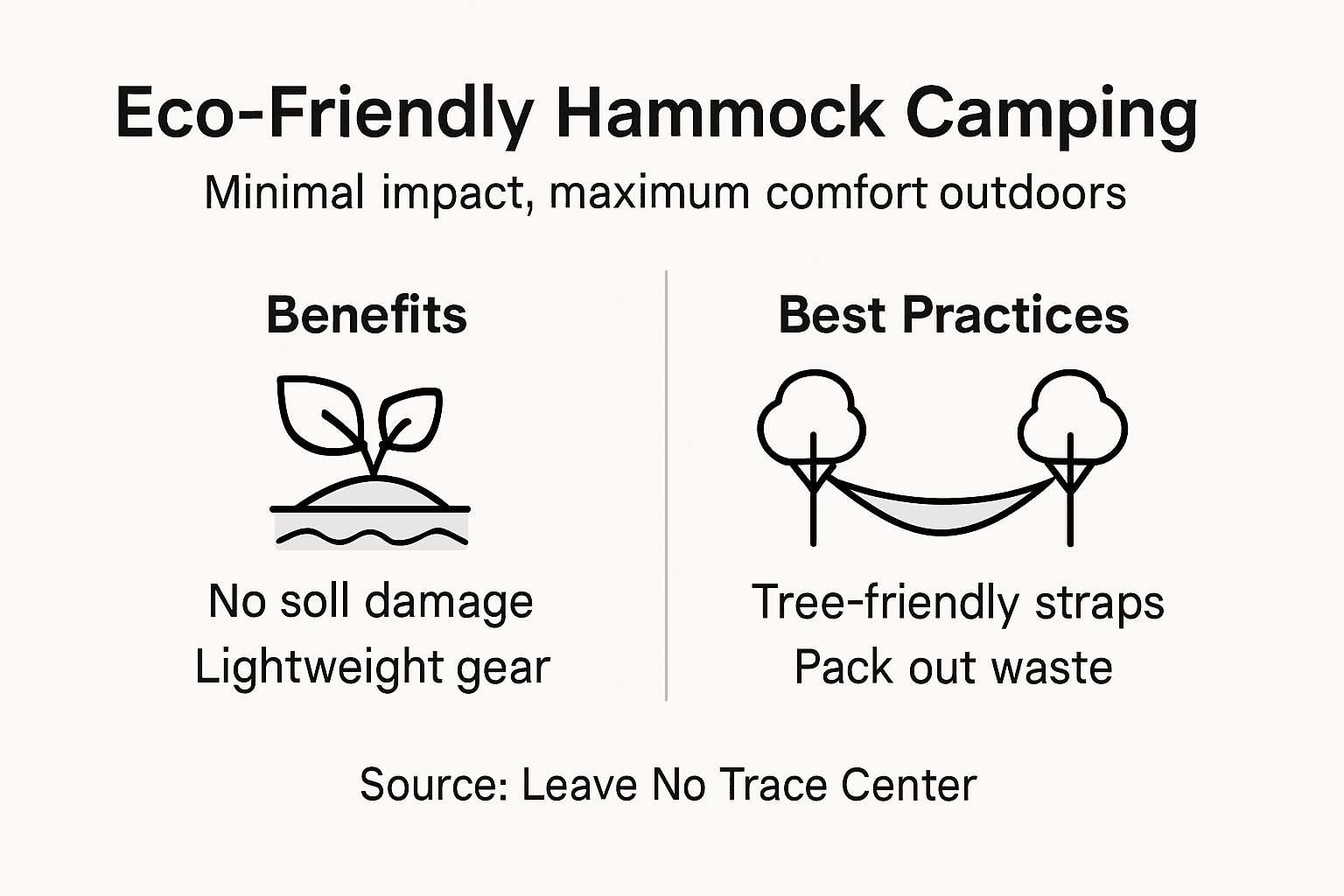
Pro tip: Always select strong, healthy trees spaced 12-15 feet apart and use tree-friendly straps that distribute weight evenly to protect bark and prevent tree damage.
Hammock Styles, Accessories, and Variations
Hammock camping offers an incredible array of styles and configurations designed to meet diverse outdoor needs and environmental conditions. Multi-person hammocks and specialized designs have revolutionized traditional camping approaches, providing options for solo adventurers and group expeditions alike.
The primary hammock variations include:
- Single Hammocks: Lightweight, compact designs ideal for solo travelers
- Double Hammocks: Wider models supporting multiple people or providing extra sleeping space
- Expedition Hammocks: Robust models designed for challenging weather conditions
- Ultralight Hammocks: Minimalist options perfect for backpackers and weight-conscious travelers
Critical accessories transform basic hammock setups into comprehensive sleeping systems. Hammock accessories typically include:
- Bug nets for insect protection
- Waterproof rain tarps
- Suspension straps
- Underquilts for temperature regulation
- Gear storage attachments
Environmental adaptability is a key strength of modern hammock designs. Specialized camping hammocks now feature innovations like flat-bottomed configurations that reduce back strain, integrated bug protection, and weather-resistant materials that enable camping in diverse terrain and climate conditions.
Pro tip: Select a hammock system that matches your specific environment, considering factors like temperature range, potential insect activity, and expected precipitation to ensure maximum comfort and protection.
Here's how popular hammock types differ in use and features:
| Hammock Type | Best For | Durability Level | Weather Resistance |
|---|---|---|---|
| Single Hammock | Solo adventures | Moderate, lightweight | Limited without add-ons |
| Double Hammock | Couples or more space | Strong, spacious | Increased with tarp |
| Expedition Hammock | Harsh conditions | Very high, rugged | Excellent with accessories |
| Ultralight Hammock | Backpackers, minimalists | High for weight class | Low, best for fair weather |
Essential Gear and Setup Techniques Explained
Hammock camping requires a strategic approach to gear selection and setup that goes beyond traditional tent camping. Essential camping gear becomes even more critical when your entire sleeping system depends on precise equipment and technique.
The core gear for a successful hammock camping setup includes:
- Hammock: Lightweight, durable fabric designed for outdoor suspension
- Tree Straps: Wide, adjustable straps that protect tree bark and provide secure attachment
- Suspension System: Robust ropes or webbing capable of supporting your body weight
- Rain Tarp: Waterproof cover to protect against unexpected weather
- Insulation Layer: Underquilt or sleeping pad to prevent heat loss
Setup techniques demand precision and careful attention to detail. Hammock positioning involves finding two sturdy trees approximately 12-15 feet apart, ensuring they can support your weight without damage. The optimal hanging angle is typically between 30-45 degrees, which prevents uncomfortable sagging and provides maximum comfort.

Environmental considerations play a crucial role in successful hammock deployment. Survival gear preparation becomes paramount when selecting your campsite, focusing on factors like ground moisture, wind exposure, and potential hazards that could compromise your sleeping system.
Pro tip: Practice your hammock setup at home before your trip, ensuring you understand how to adjust straps, position your rain fly, and create a comfortable sleeping angle in various conditions.
Environmental Impact and Leave No Trace Ethics
Hammock camping emerges as a powerful approach to minimizing ecological disruption in wilderness environments. By elevating campers off the ground, this method dramatically reduces the environmental footprint compared to traditional ground camping techniques.
Key principles of ecological responsibility in hammock camping include:
- Minimal Ground Disturbance: Avoiding soil compaction and vegetation damage
- Tree Protection: Using wide, padded straps that distribute weight evenly
- Selective Campsite Selection: Choosing robust, healthy trees without compromising ecosystem integrity
- Zero Trace Philosophy: Leaving no visible signs of human presence after departure
- Habitat Preservation: Minimizing disruption to local wildlife and plant systems
Leave No Trace ethics represent more than guidelines—they're a comprehensive philosophy of environmental stewardship. By choosing hammock camping, outdoor enthusiasts actively participate in conservation efforts, demonstrating respect for natural landscapes and minimizing human impact on delicate wilderness ecosystems.
Pro tip: Always carry tree-friendly straps at least one inch wide and inspect your campsite thoroughly before and after your stay to ensure you've left absolutely no trace of your presence.
Common Challenges, Safety, and Comfort Tips
Hammock camping presents unique challenges that require strategic preparation and technical knowledge. Survival gear expertise becomes crucial when navigating the complexities of suspended sleeping systems that differ dramatically from traditional ground camping approaches.
Key challenges hammock campers must anticipate include:
- Temperature Management: Preventing heat loss through bottom insulation
- Proper Suspension: Achieving correct hanging angle and weight distribution
- Weather Protection: Securing effective rain coverage
- Stability: Maintaining balance and reducing swing motion
- Ergonomic Positioning: Preventing uncomfortable sleeping angles
Safety considerations demand meticulous equipment selection and deployment techniques. Structural integrity relies on several critical factors: selecting trees capable of supporting your weight, using robust suspension systems, and understanding weight limits for both hammock and attachment points. Campers must consistently inspect equipment for signs of wear, checking straps, carabiners, and fabric for potential structural weaknesses before each use.
Comfort optimization requires a multi-layered approach to sleeping systems. Experienced hammock campers recommend using underquilts, sleeping pads, and strategic positioning techniques to create a stable, supportive sleeping environment that mimics the ergonomic benefits of a traditional bed while maintaining the lightweight mobility of suspended camping.
Pro tip: Practice your hammock setup and sleeping techniques in controlled environments before attempting overnight wilderness trips to build confidence and identify potential comfort adjustments.
Comparing Hammock Camping With Tents
Outdoor sleeping systems represent a critical decision for adventurers, with camping shelter options presenting unique advantages and limitations. Comparing hammock and tent camping reveals nuanced differences that can dramatically impact your outdoor experience.
Key comparative factors include:
Weight and Portability
- Hammocks: Ultralight, compact, minimal pack size
- Tents: Heavier, more bulky, require additional ground space
Setup Complexity
- Hammocks: Rapid deployment, minimal gear required
- Tents: More complex setup, multiple components
Environmental Adaptability
- Hammocks: Require trees, limited terrain options
- Tents: Versatile across diverse landscapes
Terrain flexibility determines the most appropriate sleeping system. Hammocks excel in forested environments with sturdy trees, offering elevated sleeping positions that protect against ground moisture and uneven surfaces. Tents provide more comprehensive shelter, especially in exposed or treeless landscapes where hammock deployment becomes challenging.
Comfort considerations extend beyond mere sleeping arrangements. Tents offer more interior space for gear storage and group accommodation, while hammocks provide superior ergonomic support for individual sleepers. Temperature management differs significantly: tents trap heat more effectively, whereas hammocks require specialized insulation layers to prevent heat loss.
This table summarizes key differences between hammock and tent camping beyond setup and weight:
| Aspect | Hammock Camping | Tent Camping |
|---|---|---|
| Ground Disturbance | No soil impact, preserves vegetation | May cause soil compaction |
| Wildlife Interaction | Elevated, limits animal disruption | More susceptible at ground level |
| Climate Suitability | Ideal in mild to humid forests | Adaptable to cold, open environments |
| Group Accommodation | Designed for individuals or pairs | Accommodates large groups easily |
Pro tip: Consider your specific trip environment, group size, and personal comfort preferences when selecting between hammock and tent camping to optimize your outdoor sleeping experience.
Elevate Your Outdoor Experience With Expert Hammock Camping Gear
Hammock camping offers an eco-friendly way to sleep comfortably above the ground while preserving nature. If you want to avoid common challenges like temperature regulation, tree protection, and reliable suspension, having the right gear is essential. At Life Camp Adventure we understand these needs and provide durable equipment that supports your minimalist outdoor lifestyle, from tree-friendly straps to weather-resistant rain tarps.
Explore our carefully selected products designed specifically for hammock camping and embrace the freedom of elevated rest without compromising comfort or environmental ethics. Start elevating your adventures today by visiting Life Camp Adventure to find all the essentials that make hammock camping safer and more enjoyable. Discover how our survival essentials and essential camping gear can transform your outdoor sleep system and help you leave no trace with confidence.
Frequently Asked Questions
What is hammock camping?
Hammock camping is an outdoor sleeping method that involves suspending a lightweight fabric sleeping platform between two secure anchor points, typically trees, rather than using a conventional ground tent.
What are the benefits of hammock camping compared to traditional tent camping?
Hammock camping offers several advantages, including reduced environmental impact, minimal gear weight, the ability to camp on uneven or wet ground, and enhanced comfort due to an ergonomic sleeping position.
How do I set up a hammock for camping?
To set up a hammock, find two sturdy trees spaced 12-15 feet apart. Use tree-friendly straps to attach the hammock at a 30-45 degree angle to prevent sagging and ensure comfort. Don’t forget to include a rain tarp for weather protection.
What accessories are essential for a hammock camping setup?
Essential accessories for hammock camping include bug nets for insect protection, waterproof rain tarps, suspension straps, underquilts for insulation, and gear storage attachments to enhance your sleeping system.
Recommended
- Single & Double Hammock with Mosquito Net Tree Straps Waterproof Portable and Li
- Tassel Cotton Hanging Rope Hammock Chair Swing Round Indoor Outdoor Home Garden
- Eco-Friendly Camping: Reducing Your Outdoor Impact
- 7 Essential Types of Camping Shelters Explained for Campers
- How Hiking Trails Can Build Lean Leg Muscles? - LeanAndFit
- Geeignete Matte für Yoga – Nachhaltigkeit und Sicherheit – Just Mats
- Festival Season - Log Cabin Kits to Buy Online
