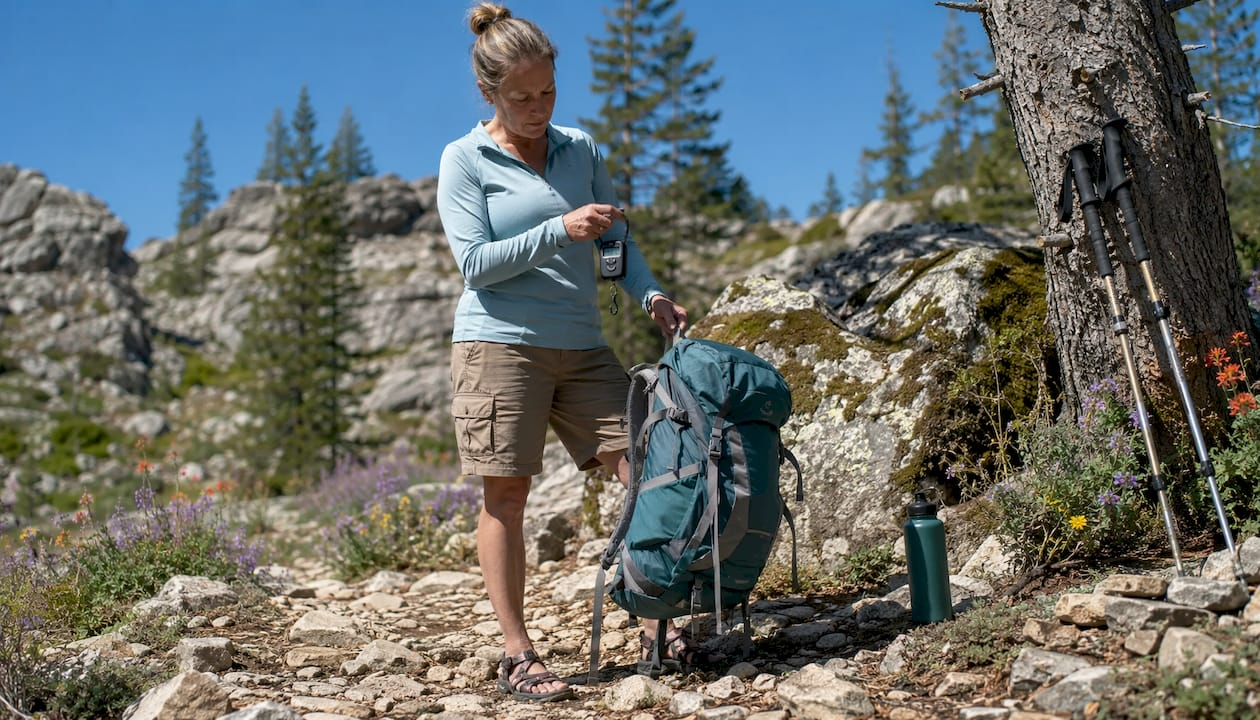
What is pack weight, and how much should you carry?
Pack weight is the total load on your back at any given moment on the trail. It includes everything inside your pack plus the pack itself: your shelter, sleep system, clothing, food, water, and fuel. Think of it as the number your knees feel on every downhill step, not just the number you jotted on a gear list.
Two terms trip up hikers constantly: pack weight and base weight. They are not the same thing. Base weight is everything in your pack except consumables like food, water, and fuel. It stays constant from trip to trip. Pack weight equals base weight plus those consumables, so it changes daily as you eat and drink. By day four of a five-day trip, your pack can be noticeably lighter than it was at the trailhead.
Here is a quick breakdown of the key terms:
- Base weight: All gear in your pack, excluding food, water, and fuel. Fixed across trips.
- Pack weight: Base weight plus consumables. Your actual load at any moment.
- Worn weight: Clothes, shoes, and gear on your body, not in your pack.
- Total weight (skin-out): Everything, worn and carried combined.
The 20% of body weight guideline is the most widely recommended cap for safe backpacking. A hiker should aim to keep total pack weight at or below 20% of their body weight. For day hiking, the target drops to under 10% of body weight including water. Weekend trips target 20% or less, ideally somewhat lower. Multi-day trips follow the same 20% cap, but base weight matters more because consumables vary with trip length.
Carrying too much strains your knees, hips, and lower back, and raises the risk of falls on uneven terrain. Getting the number right before you leave the trailhead parking lot is one of the most practical safety decisions you can make.
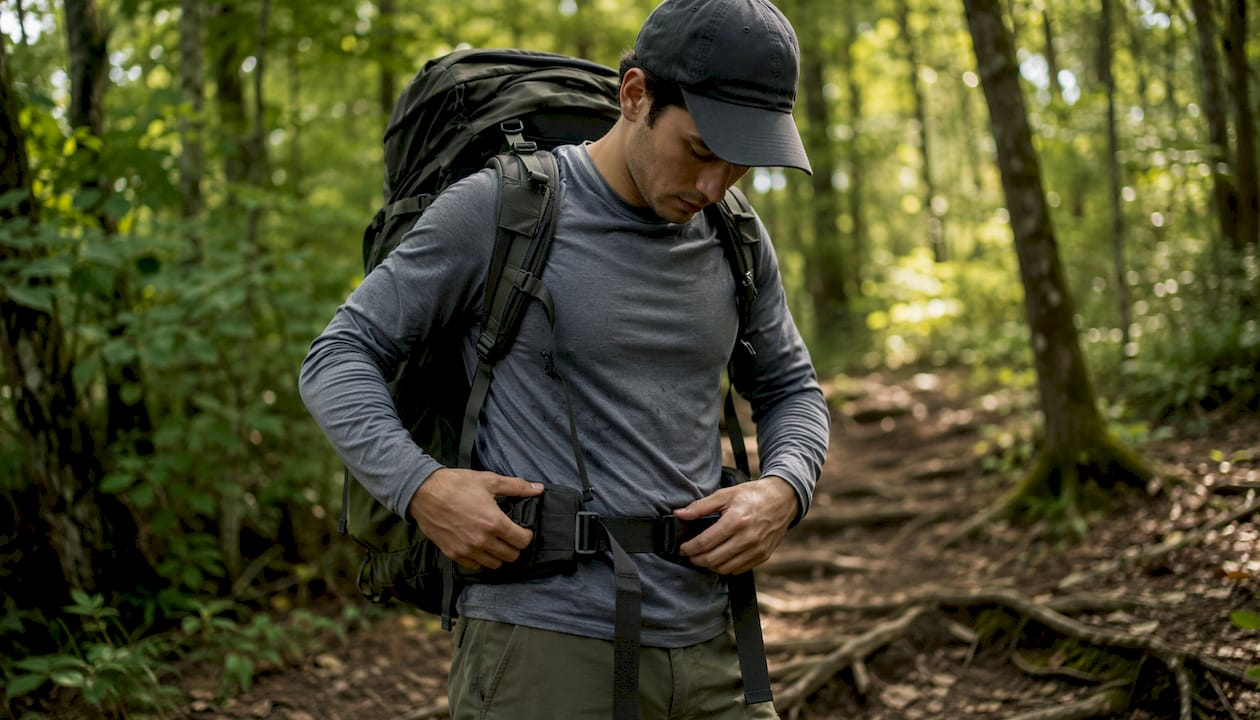
How to measure your pack weight accurately
Accuracy matters more than most hikers realize. A bathroom scale gives a usable estimate: weigh yourself first, then weigh yourself holding the loaded pack, and subtract. This method is accurate to about 0.5 lbs, which is fine for a rough check but not precise enough for serious gear optimization.
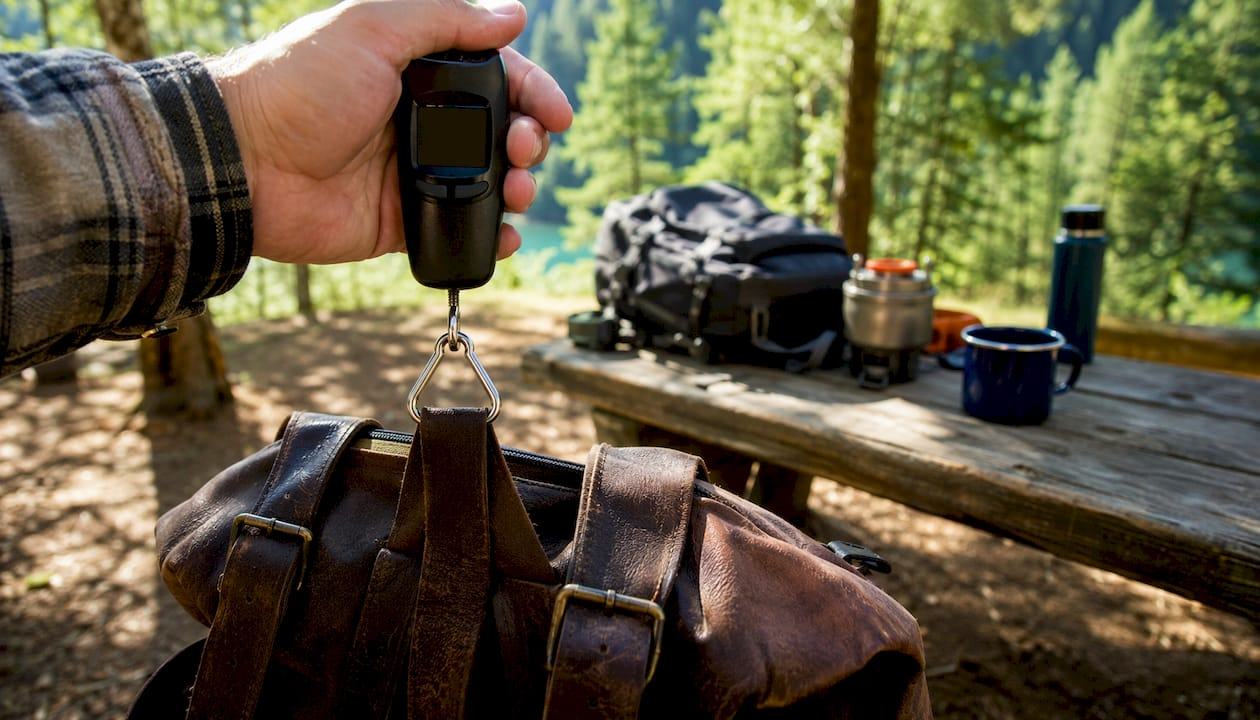
For tighter numbers, a digital luggage scale or hanging fish scale is the better tool. These are accurate to 0.1 lbs, and you can hang your loaded pack from a closet rod or tree branch for a clean reading. The real precision method, though, is weighing items individually.
| Method | Accuracy | Best for |
|---|---|---|
| Bathroom scale (subtract method) | ±0.5 lbs | Quick full-pack check |
| Digital luggage/hanging scale | ±0.1 lbs | Loaded pack verification |
| Digital kitchen or postal scale | ±0.1 g | Individual item weighing |
| Gear spreadsheet (summed items) | Exact base weight | Long-term optimization |
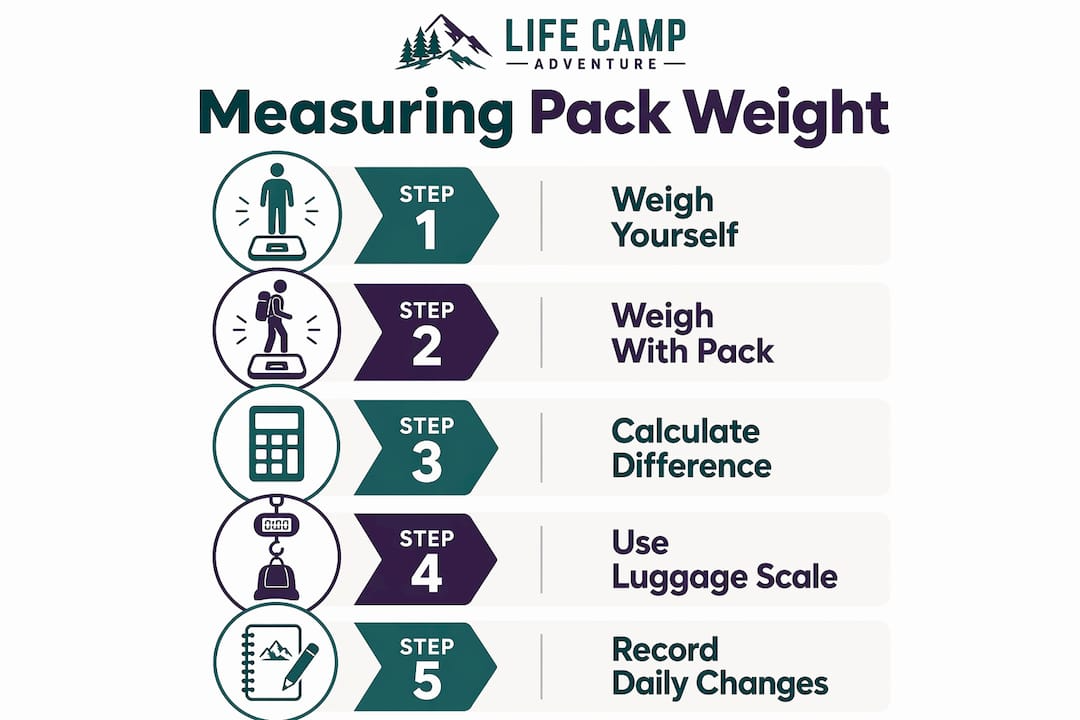
Experienced hikers weigh each item separately with a kitchen or postal scale, log the weights in a spreadsheet, and sum them to get an exact base weight. A common beginner mistake is weighing gear with its packaging still on, which inflates the number. Use the tare function on your scale to zero out any container before placing the item inside.
Here is a step-by-step process for a reliable pack weight calculation:
- Gather every item you plan to carry, including the empty pack.
- Weigh each piece of gear individually on a digital scale with the tare function active.
- Log each weight in a spreadsheet (apps like LighterPack work well for this).
- Sum all non-consumable items to get your base weight.
- Add your planned food weight (roughly 1.5–2 lbs per person per day is a common field estimate), water, and fuel to get total pack weight.
- Compare the total against 20% of your body weight to check whether you are within the safe range.
Consumables shift your pack weight every day. On a five-day trip, your heaviest moment is the first morning at the trailhead. Plan for that peak load, not the comfortable weight you will carry on day four.
Pro Tip: Before your next trip, do a full shakedown weigh-in with your pack loaded exactly as you would carry it on day one, water included. That number, not your spreadsheet estimate, is what your body will actually feel.
How to reduce pack weight without sacrificing safety
Base weight is where the real gains live. Cutting food and water is not the answer; you need those to function. The gear you carry on every single trip is where permanent weight savings compound over time.
Practical tactics for reducing your load include considering cycling equipment durability factors to guide your gear choices and cut weight without sacrificing safety.
- Audit your gear list ruthlessly. Pull everything out and ask whether each item has been used on the last three trips. If not, leave it home.
- Choose multipurpose items. A trekking pole that doubles as a tent pole, or a rain jacket that serves as your wind layer, cuts duplicate weight fast. Lifecampadventure's multi-use gear guide covers the best options for this approach.
- Go packable where possible. Down jackets, packable rain gear, and ultralight shelters compress small and weigh little. See Lifecampadventure's guide on packable gear benefits for specifics.
- Plan food precisely. Overpacking food is one of the most common sources of extra weight. Match calories to your actual daily burn, not a rough guess. A solid meal prep guide for backpacking helps you hit the right quantities.
- Shift weight to worn gear strategically. Heavier items like a fleece or rain shell can ride on your body rather than in your pack. This lowers your official pack weight without changing your total physical load, but it can improve pack balance and reduce back strain.
- Weigh before you buy. Manufacturer listed weights are sometimes optimistic. Weigh new gear on your own scale before committing to it as part of your kit.
Traditional backpackers typically carry a base weight of 25–35 lbs. Lightweight backpackers target 15–20 lbs. Ultralight hikers push below 10 lbs. You do not need to chase ultralight to see real benefits; dropping even a few pounds from your base weight saves you that weight on every future trip.
Expert insights on pack weight distinctions and measurement accuracy
The biggest source of confusion in pack weight discussions is comparing numbers that are not actually measuring the same thing. A common error among backpackers is treating base pack weight, total pack weight, total base weight, and total weight as interchangeable. They are not.
| Term | What it includes | Changes during trip? |
|---|---|---|
| Base pack weight | Pack plus all gear, no consumables | No |
| Total pack weight | Base pack weight plus food, water, fuel | Yes, daily |
| Total base weight | Base pack weight plus worn clothing and gear | No |
| Total weight (skin-out) | Everything carried and worn | Yes, daily |
Skin-out weight is the most complete picture of what your body is actually working against. It adds worn clothing, shoes, and any gear in your pockets to your total pack weight. Experienced hikers use it to gauge true exertion, especially on long routes where worn gear weight is significant. For a casual weekend trip, base pack weight is usually enough to work with.
Measurement accuracy matters for gear decisions. Weighing items individually and logging them in a spreadsheet gives you an exact base weight you can compare across trips and gear swaps. Weighing only the full loaded pack introduces error from inconsistent consumable amounts and packaging. When you swap a tent for a lighter one, you want to see exactly how many ounces you saved, not a fuzzy number clouded by how much water you happened to have that day.
The worn weight distinction also affects how you interpret pack weight comparisons online. Two hikers can report very different pack weights for the same route because one is wearing heavy boots and a fleece while the other has those items inside the pack. Specifying which definition you are using makes any comparison meaningful.
How trip duration and terrain change your target pack weight
A single-day hike and a two-week wilderness traverse call for completely different weight targets, even for the same hiker on the same body.
For day hikes, the goal is under 10% of body weight including water. Most well-planned day packs come in well under that target. The day hike preparation checklist from Lifecampadventure walks through exactly what belongs in that load.
Weekend backpacking (two to three nights) targets 20% of body weight or less, ideally somewhat lower. Total pack weight varies widely depending on packing style and gear choices. The 20% rule sets the upper limit; the actual goal is to stay well below it.
Multi-day and long-distance trips require more food and water between resupply points, which pushes total pack weight up on day one. The base weight cap matters more here because you cannot control how much food you need, but you can control how heavy your shelter and sleep system are. Resupply strategy directly affects peak pack weight: a three-day carry versus a seven-day carry between towns can add 10 lbs or more to your starting load.
Terrain shifts the calculus too. Desert routes with long water carries demand extra water capacity, adding real weight. High alpine terrain may require heavier insulation and safety gear. Technical routes sometimes call for gear that has no lightweight substitute. Adjusting your base weight targets to account for terrain-specific requirements is part of planning any serious trip, not an afterthought.
For a deeper look at how gear selection affects your total load across different trip types, Lifecampadventure's best camping gear comparison covers the options worth considering.
Key Takeaways
Pack weight is your base weight plus consumables, and keeping it at or below 20% of your body weight is the most widely recommended guideline for safe backpacking.
| Point | Details |
|---|---|
| Pack weight vs. base weight | Pack weight includes consumables; base weight does not and is the real optimization lever. |
| Safe load guideline | Keep total pack weight at or below 20% of body weight for backpacking; under 10% for day hikes. |
| Most accurate measurement | Weigh items individually with a digital scale and log them in a spreadsheet for exact base weight. |
| Where to cut weight | Focus on base weight reductions through gear choices, not on skimping on food or water. |
| Trip duration affects load | Longer trips and remote terrain increase starting pack weight; plan resupply to manage peak load. |
