TL;DR:
- Survival kits are essential for ensuring safety during the critical 72-hour rescue window.
- They contain key items like water, food, first aid, shelter, and signaling tools.
- Customizing and reviewing your kit regularly improves preparedness for specific terrains and conditions.
Most outdoor adventurers believe their experience and packed gear are enough to handle whatever the wilderness throws at them. That assumption gets people killed. Even seasoned hikers and campers can find themselves stranded, injured, or disoriented in minutes, and the gap between that moment and when help actually arrives is often 24 to 72 hours or more. A dedicated survival kit is not a luxury for beginners. It is the single most reliable tool for bridging that dangerous gap. This article breaks down exactly why survival kits matter, what they should contain, and how they perform when real emergencies hit.
Key Takeaways
| Point | Details |
|---|---|
| Preparedness saves lives | A well-stocked survival kit bridges the gap until help arrives, especially in remote locations. |
| 72-hour kits are essential | Following the 72-hour standard aligns with emergency response timelines and real rescue windows. |
| Tailor your kit | Customize your kit to your activity, season, and location for optimal safety and comfort. |
| Core items matter most | Pack food, water, first aid, shelter, and signaling devices as absolute essentials. |
| Mindset matters | Viewing a survival kit as basic insurance means you’re serious about adventure safety—not just convenience. |
Survival kits: What they are and why they matter
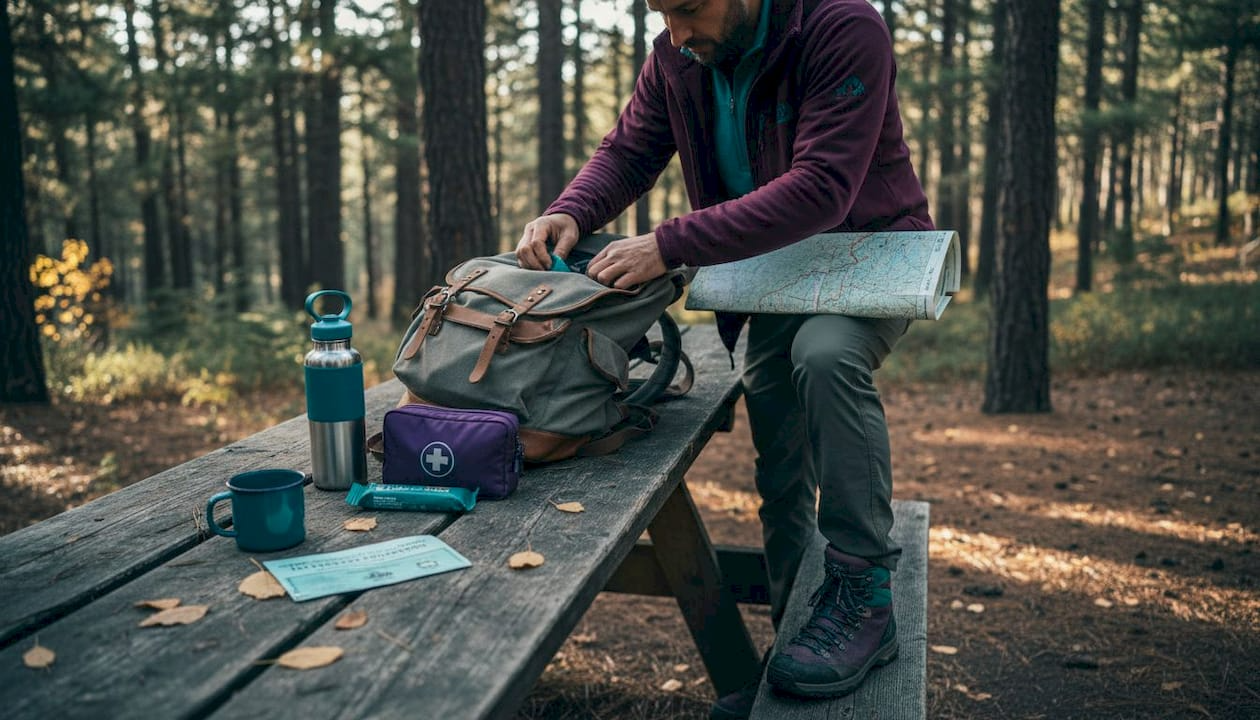
A survival kit is a purpose-built collection of supplies designed to keep you alive and functional during an emergency until you can reach safety or help arrives. This is not the same as a loaded backpack or a first aid pouch. A true survival kit addresses five critical survival needs: food, water, first aid, shelter, and signaling. Each element serves a specific function, and removing any one of them creates a dangerous gap in your preparedness.
Many outdoor enthusiasts underestimate this. They trust that their experience with trail navigation or their ability to start a fire will carry them through. But skills alone require energy, materials, and physical capability. If you are injured, hypothermic, or exhausted, improvising is not a reliable strategy. A kit removes the need to improvise at your worst moment.
Authorities are not subtle about this. Official guidance recommends building kits stocked for at least 72 hours of food, water, and essentials, both for natural disasters and outdoor emergencies. FEMA and the Red Cross both emphasize that no one should assume emergency services will reach them within hours. The data consistently shows that response times vary dramatically based on terrain, weather, and available resources.
"A disaster supply kit is a collection of basic items your household may need in the event of an emergency." — Ready.gov, Federal Emergency Management Agency
This framing matters because it positions survival kits as a baseline, not a bonus. For outdoor adventurers, the stakes are even higher than for urban households because you are often outside cell coverage, hours from the nearest trailhead, and exposed to environmental conditions that change fast.
Here is what a solid outdoor survival kit covers:
- Water and purification: At minimum one liter per person, plus water purification tablets or a filter
- Food: High-calorie, non-perishable bars or pouches requiring no preparation
- First aid: Bandages, antiseptic wipes, blister care, and any personal medications
- Shelter: Emergency mylar blankets, a lightweight bivy, or a compact tarp
- Signaling: A whistle, signal mirror, and ideally a personal locator beacon
- Navigation: Waterproof map, compass, and a backup fire starter
Following good outdoor preparedness tips means thinking through each of these categories before you leave the trailhead, not after something goes wrong.
72-hour survival: The science behind rescue windows
The 72-hour standard is not arbitrary. It reflects real-world data on how long it typically takes search and rescue teams to locate, reach, and extract a lost or injured person from outdoor terrain. Understanding this number changes how you approach packing.
Search and rescue (SAR) operations face enormous logistical challenges. Teams must be assembled, terrain must be assessed, and deployment takes time even under ideal conditions. Weather delays, limited daylight, complex terrain, and resource availability all push timelines outward. Many SAR missions in mountainous or remote environments extend well past the 48-hour mark, and some stretch into multiple days. Kits designed for 72-hour self-sufficiency align directly with these SAR realities, giving you the supplies to function until extraction.
What happens to the human body during that window matters. Without water, cognitive function drops significantly within 24 hours. Without adequate shelter from wind or rain, hypothermia can set in within just a few hours depending on temperature. Without a way to signal rescuers, even a visible search team may pass right by you. A survival kit addresses all three threats simultaneously.
Here is a realistic comparison of SAR timelines versus what a 72-hour kit provides:
| Scenario | Average SAR response | Kit coverage |
|---|---|---|
| Day hike, local trail, clear weather | 6 to 24 hours | 72-hour kit covers 3x margin |
| Remote backcountry, complex terrain | 24 to 72 hours | Kit covers minimum window |
| Severe weather event, search suspended | 72 hours or more | Kit may be your only resource |
| Off-grid camping, no trip plan filed | 48 to 96 hours | Kit critical for full window |
The takeaway is direct: even in the best-case scenario, rescue is not instant. In the worst case, your kit is the only thing standing between you and a severe outcome.
Pro Tip: When choosing survival gear, base your decisions on actual SAR response times for the specific terrain you plan to explore. A kit suited for a local trail is not adequate for a multi-day backcountry route. Research your region's average rescue response times and pack accordingly, just like you would when packing for day hikes.
Key components: What every survival kit should contain
Understanding the timeframe is only part of the equation. What you actually pack inside that kit determines whether you survive comfortably or barely hold on. Let us break down each category with specifics, because vague advice like "bring food and water" is not enough when you are actually building a kit.
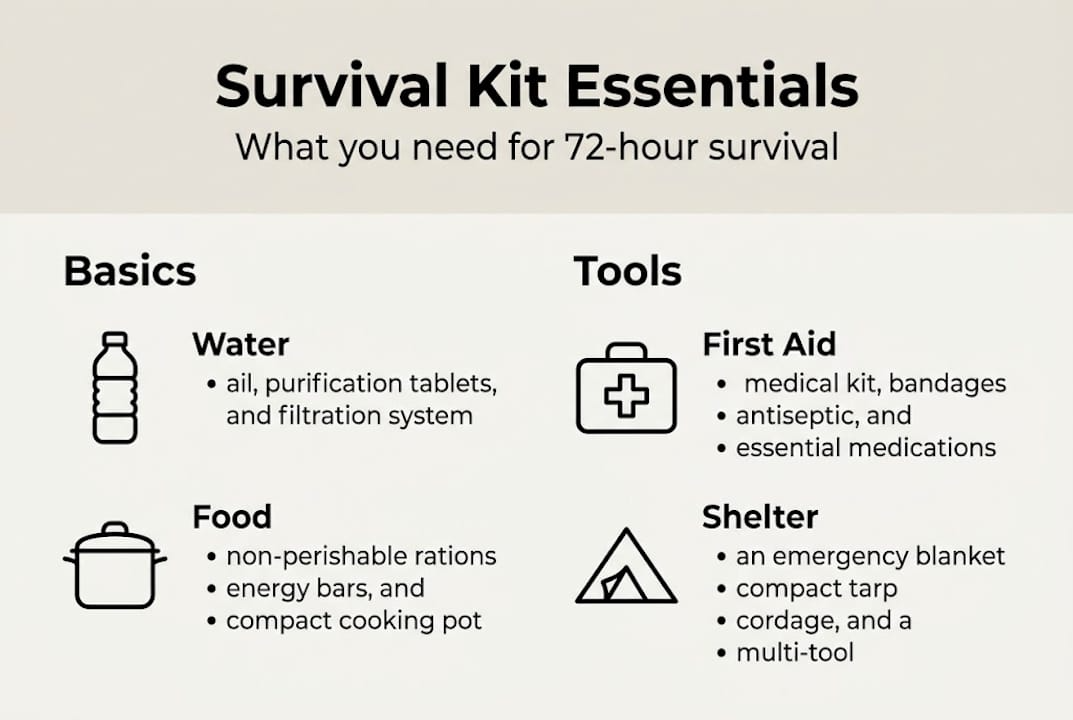
Water and hydration come first, without debate. FEMA recommends one gallon of water per person per day for both drinking and basic hygiene. For a 72-hour kit, that means three gallons minimum per person. In an outdoor context where weight matters, you balance stored water with purification tools. Carry at least one liter of clean water plus a quality filter like the Sawyer Squeeze, plus iodine tablets as a backup. Never rely on just one method.
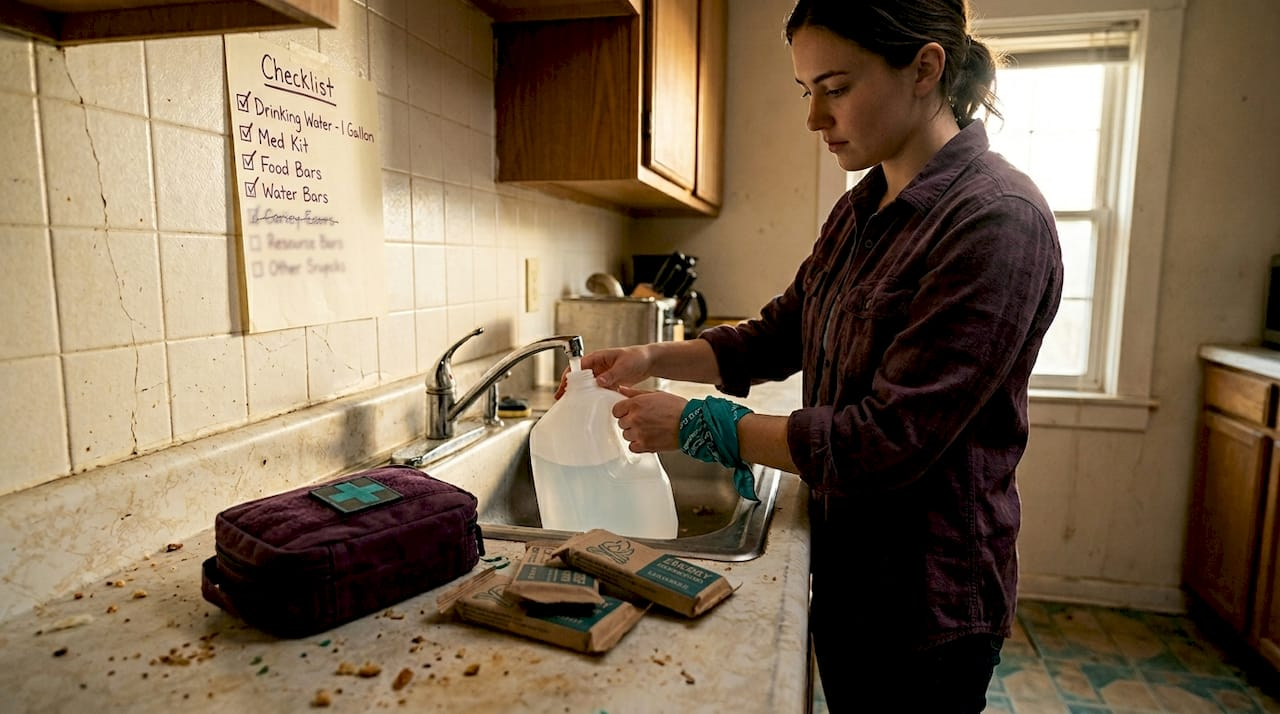
Food should be high-calorie, compact, and require zero preparation. Emergency food bars rated at 3,600 calories are ideal because they do not need cooking, water, or utensils. Include items with protein and healthy fats to sustain energy under physical and mental stress. Avoid foods that increase thirst, like heavily salted snacks.
First aid is non-negotiable. A basic kit should include sterile gauze pads, adhesive bandages in multiple sizes, antiseptic wipes, medical tape, blister care products, a tourniquet, and pain relievers. If you have personal medical needs, including allergy medications or prescription drugs, they belong in the kit, stored properly for temperature changes.
Shelter and warmth often get underestimated in weight savings. An emergency mylar blanket weighs almost nothing and reflects up to 90 percent of body heat. A compact bivy bag goes further for overnight situations. A lightweight tarp with paracord gives you weather protection in almost any environment.
Signaling and navigation close the loop. Rescue is only possible if responders can find you. A loud whistle carries farther than a voice and costs almost nothing. A signal mirror works in direct sunlight and can be seen for miles. A personal locator beacon (PLB) is the gold standard for remote trips and should be considered essential for any expedition beyond day-hike distance. Pair these with a waterproof map and baseplate compass, since GPS devices fail when batteries die.
Here is your core essential gear checklist for any outdoor survival kit:
- One gallon of water per person per day (72-hour minimum)
- Emergency food bars (3,600 calories minimum)
- Complete first aid kit with tourniquet
- Emergency mylar blanket and compact bivy
- Lightweight tarp and paracord (550 cord)
- Whistle, signal mirror, and personal locator beacon
- Waterproof map and baseplate compass
- Fire starter (lighter, waterproof matches, and a ferro rod)
- Multi-tool or fixed-blade knife
- Headlamp with extra batteries
Survival kits in action: Real scenarios and practical applications
Theory is useful, but seeing how kits perform in actual situations reveals their true value. Real outdoor emergencies rarely look like planned training exercises. They are fast, disorienting, and often involve one or more compounding factors.
Consider a common scenario: a day hiker on a moderately technical trail twists an ankle and loses the trail in fading light. Without a kit, this person is limping with no shelter, no signaling device, and no way to communicate position. With a kit, they can stabilize the injury with first aid supplies, signal with a whistle, wrap themselves in a mylar blanket for the night, and deploy a PLB if available. The physical outcome is entirely different.
Storm scenarios are equally instructive. A group of campers caught in an unexpected mountain storm may see their planned shelter destroyed. A tent that fails in 60-mph gusts leaves you exposed. A properly packed survival kit with a bivy and tarp means you can build emergency shelter and survive a brutal night. Understanding hiking trip safety tips includes recognizing that weather can change faster than your ability to descend.
Here is a direct comparison of outcomes with and without a survival kit in three common emergencies:
| Situation | Without a kit | With a kit |
|---|---|---|
| Lost hiker, overnight | Hypothermia risk, no signaling capability | Warmth secured, signaling active, calm and organized |
| Sudden injury on trail | Unable to treat wound, forced movement worsens damage | Wound stabilized, position held safely, rescue called |
| Flash storm, shelter failure | Exposure to cold and wind, high physical stress | Emergency shelter established within minutes |
Three real-world scenarios where preparedness made a documented difference:
- A hiker in a remote mountain region filed a trip plan and carried a PLB. When a rockslide blocked the trail and caused injury, the beacon was activated and rescue arrived within 18 hours. Without the beacon, search efforts would have started days later.
- A family camping in a forest caught in a wildfire evacuation used their emergency food and water kit to sustain themselves for 36 hours while roads were blocked. They did not need to risk driving through smoke.
- A trail runner who got disoriented during a solo run used their whistle and signal mirror to attract attention from a passing helicopter, which would not have been possible without dedicated signaling tools.
A seasoned adventurer's take: What most people miss about survival kits
Here is what years of outdoor experience teaches you: people do not fail in the wilderness because they lack skills. They fail because they underestimate how quickly conditions change and how fast their physical and mental resources deplete under stress. Conventional wisdom says bring experience and trust your instincts. Reality says even experts break ankles, get caught in whiteouts, and make navigation errors.
A survival kit is not an admission of weakness. It is the insurance policy that lets you take bigger, bolder adventures with genuine confidence. The mindset shift matters. When you know your kit covers 72 hours, you stop second-guessing every decision and stay clearer under pressure.
The other thing most people miss is customization. A generic kit bought off a shelf is a starting point, not a finished product. Your kit should reflect your specific adventure, season, terrain, and group size. Winter camping demands extra chemical heat packs, extra insulation layers, and more calories. Desert travel demands doubled water capacity and electrolyte supplements. Learning about packing survival gear with intentionality is the difference between a kit that sits in your bag and one that actually saves your life when it counts.
Never treat your kit as static. Review it before every major trip. Replace expired items. Swap out gear as your adventures evolve.
Explore top gear and expert guides
Ready to move from reading to actually building your kit? At Life Camp Adventure, we put together curated resources that go beyond generic advice.
Whether you are comparing camping tent comparisons for your next backcountry setup or working through a step-by-step survival steps guide built for real outdoor scenarios, we have you covered. Our guides are written by adventurers for adventurers, and our gear selections are tested against the demands of actual wilderness use. Use our survival checklist to audit your current pack or build your first complete kit. Every product we recommend meets the 72-hour standard and is chosen for durability, weight, and real-world performance.
Frequently asked questions
Why is the 72-hour kit standard recommended by experts?
The 72-hour standard matches average search-and-rescue timelines across most terrain types, as confirmed by official guidelines, ensuring you have the supplies to survive until help reaches you.
What is the most essential item for a survival kit?
Water is the most critical item. Official recommendations set the minimum at one gallon per person per day, covering both hydration and basic hygiene needs.
How do survival kits benefit campers and hikers?
Survival kits give campers and hikers immediate access to food, water, first aid, shelter, and signaling tools during emergencies, providing self-sufficiency when rescue timelines extend beyond a few hours.
Should survival kits change with the season or location?
Absolutely. A kit for winter backcountry travel needs extra insulation and heat sources, while a desert kit demands significantly more water and sun protection. Adapt your kit every time your environment changes.
