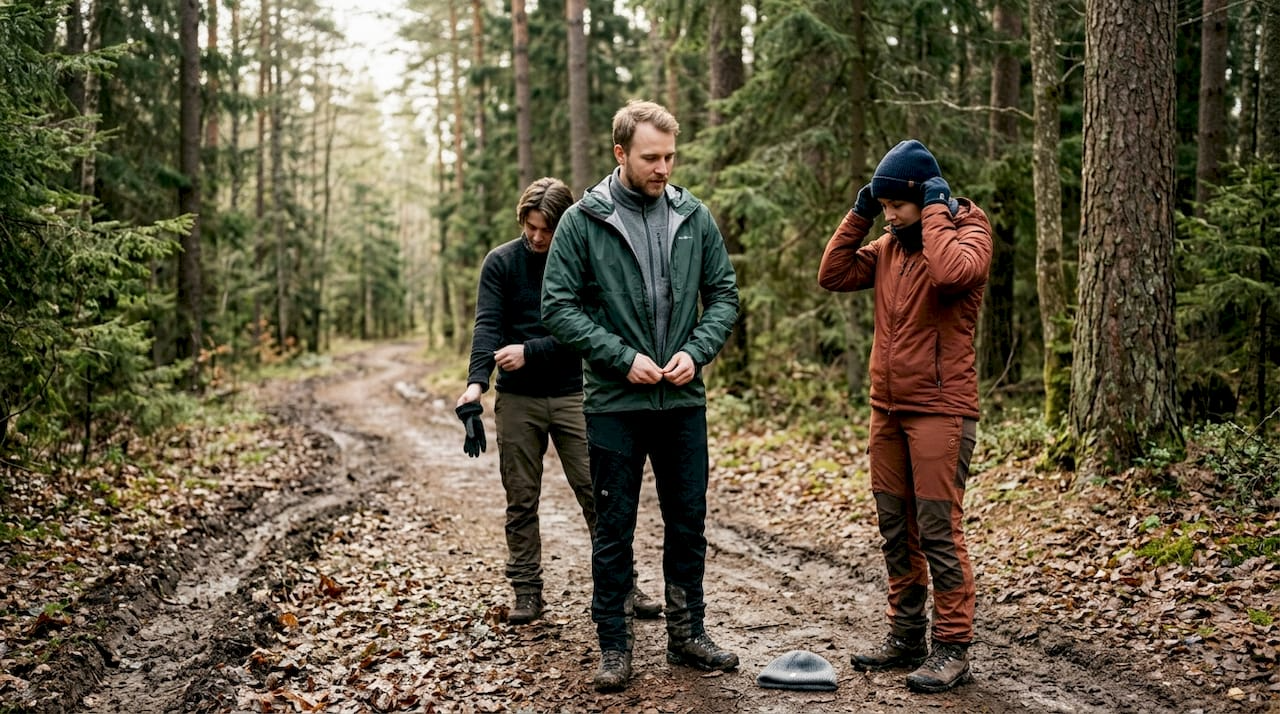
You might think throwing on a thick jacket is enough for outdoor adventures, but that single layer approach often leaves you either sweating during uphill climbs or shivering when you stop to rest. The truth is, layering consists of base, insulation, and outer layers that regulate moisture, warmth, and protection respectively, creating a dynamic system that adapts to your body's changing needs. Whether you're hiking mountain trails, setting up camp in unpredictable weather, or pushing through a multi-day backpacking trip, mastering layering transforms your outdoor experience from uncomfortable endurance to confident enjoyment. This guide breaks down each layer's specific role and shows you how to adjust your clothing system for maximum comfort and performance in any outdoor scenario.
Key Takeaways
| Point | Details |
|---|---|
| Layering basics | Base insulation and outer layers form a dynamic system that regulates moisture, warmth, and protection to adapt to changing conditions. |
| Base layer function | Your base layer sits against the skin and wicks sweat away to keep you dry, reducing heat loss when you stop moving. |
| Insulation function | The insulation layer creates dead air spaces that trap body heat, using fleece, down, or synthetic fills to match activity and weather. |
| Outer shell function | The outer layer blocks wind and moisture while allowing internal moisture to escape, with breathable shells preventing the sauna effect. |
Understanding layering: base, insulation, and outer layers
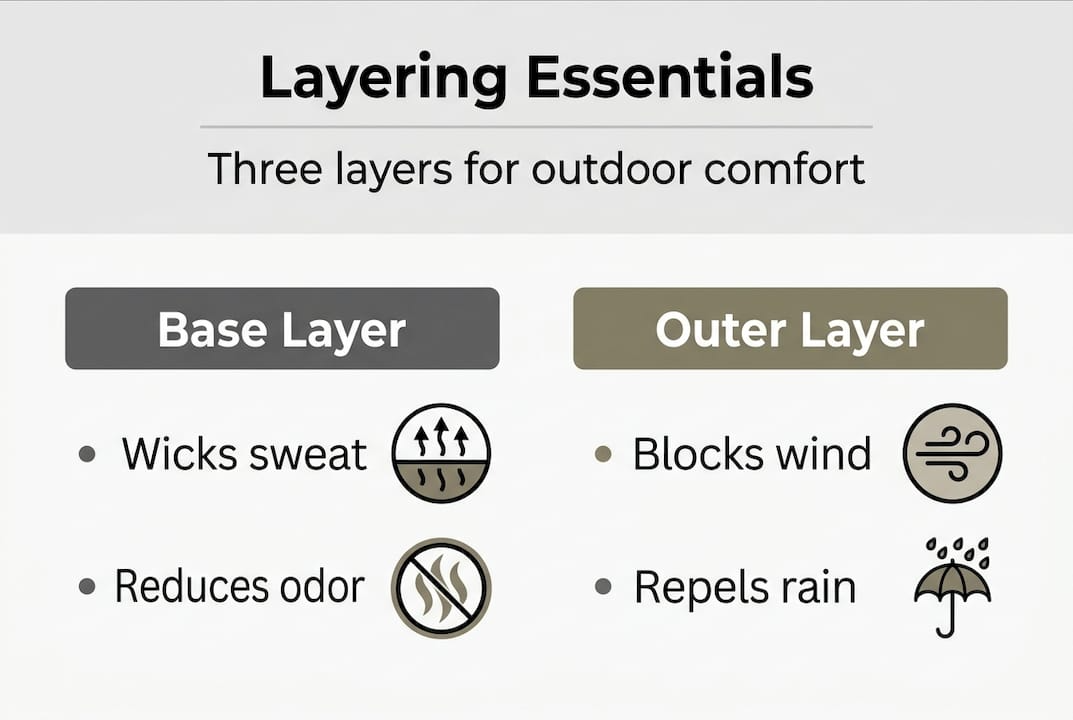
The foundation of effective outdoor clothing starts with understanding what is layering in camping and how each component serves a distinct purpose. Your base layer sits directly against your skin, functioning as your moisture management system. This layer pulls sweat away from your body through capillary action, keeping you dry even during intense activity. Without proper wicking, moisture accumulates against your skin, causing rapid heat loss when you stop moving.
Your insulation layer creates dead air space that traps body heat. Think of it as your personal heating system. Fleece, down, and synthetic fills work by creating thousands of tiny air pockets that prevent warm air from escaping. The thickness and loft of this layer determine how much warmth you retain. During moderate activity, you might wear a lightweight fleece, while stationary activities in cold conditions demand thicker insulation.
The outer layer serves as your shield against wind, rain, and snow. This protective barrier prevents external moisture from soaking through while allowing internal moisture vapor to escape. Modern shell fabrics use microscopic pores that block liquid water droplets but permit water vapor molecules to pass through. This breathability prevents the sauna effect that older waterproof materials created.
Layering order matters tremendously for system effectiveness. Placing insulation over your base layer and under your shell creates a pathway for moisture to move outward while heat stays trapped. Reversing this order or skipping a layer disrupts the entire system. Each layer amplifies the performance of the others when properly sequenced.
Material selection for each layer depends on your specific needs:
- Base layers: Merino wool offers natural odor resistance and warmth when wet, while synthetic fabrics like polyester dry faster and cost less
- Insulation: Down provides maximum warmth for minimal weight but loses effectiveness when wet, fleece maintains insulation even in damp conditions
- Outer shells: Hard shells offer complete waterproofing for extended rain exposure, soft shells provide better breathability for high-output activities
Pro Tip: Always pack your base layer in merino wool for multi-day trips. You can wear it for several days without developing odor, reducing the number of clothing items you need to carry.
The synergy between these three layers creates a microclimate around your body that responds to both internal heat production and external weather conditions. This adaptable system outperforms any single-layer solution because it addresses multiple environmental challenges simultaneously.
How layering adapts to outdoor conditions and activity levels
Your body generates vastly different heat levels depending on whether you're setting up camp or climbing a steep trail. Layering allows outdoor enthusiasts to easily modify clothing to handle variable weather and activity intensity, making it the most versatile approach to outdoor comfort. Recognizing when to adjust your layers prevents both overheating and dangerous chilling.
Watch for these signs that indicate layering adjustments:
- Feeling moisture accumulate on your skin during activity means you're wearing too many layers for your current output level
- Experiencing chills within minutes of stopping movement signals insufficient insulation for stationary periods
- Noticing wind penetrating your outer layer suggests you need a more protective shell or need to zip vents closed
- Sensing dampness on your outer layer's interior indicates your base layer isn't wicking effectively or you're producing more moisture than your system can handle
Activity intensity dramatically affects your layering needs. During uphill hiking or other high-output activities, your body produces significant heat. Strip down to just your base layer and a light shell to prevent sweat accumulation. This seems counterintuitive when starting out in cold conditions, but you'll warm up within minutes. When you reach your destination and activity drops, immediately add your insulation layer before your body temperature falls.
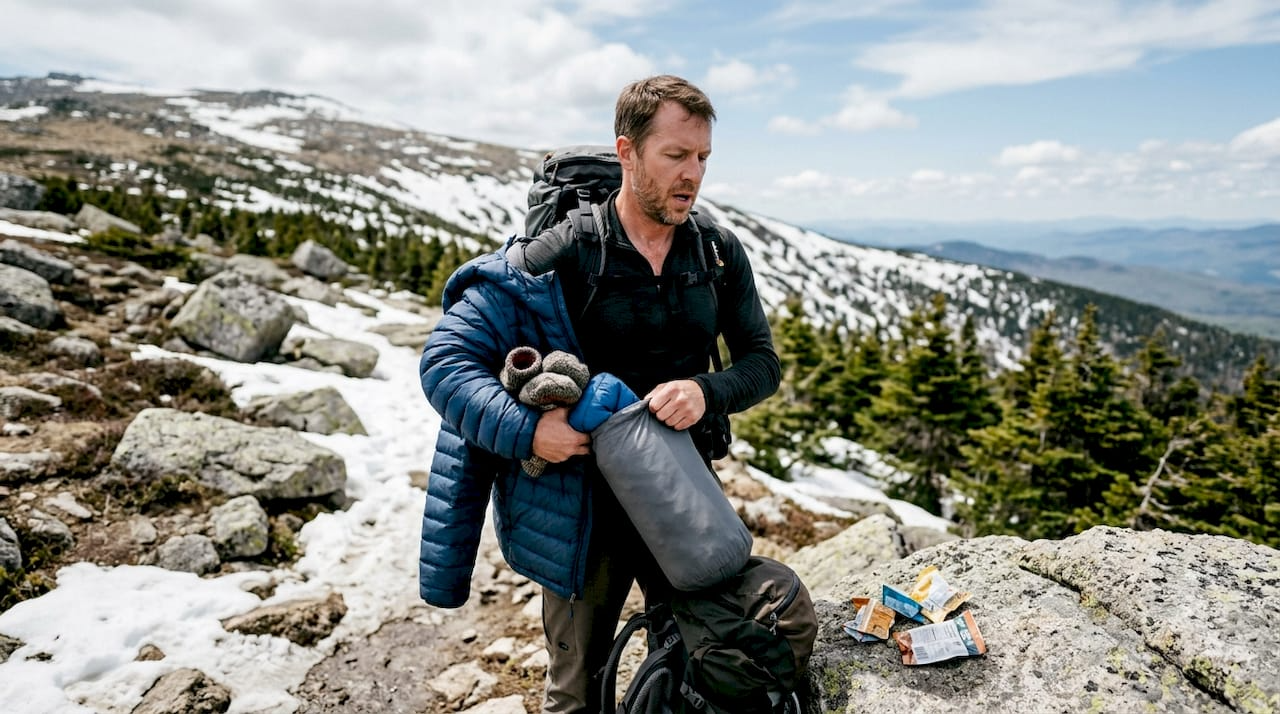
Packing and carrying extra layers efficiently makes adjustments practical rather than theoretical. Stuff sacks compress insulation layers to fraction of their lofted size. Keep your most frequently adjusted layer, usually your insulation piece, in an easily accessible spot like your pack's top pocket or side compression straps. Why choose packable gear 2026 outdoor adventures becomes clear when you can add warmth within seconds rather than unpacking your entire bag.
Weather changes demand proactive layering adjustments. Don't wait until you're soaked to add your rain shell. When you notice darkening clouds or feel the first drops, stop and layer up before conditions deteriorate. Similarly, remove layers before you start sweating rather than after moisture has already accumulated. This anticipatory approach maintains comfort and prevents the energy drain that comes from getting wet and cold.
Pro Tip: Monitor the small of your back during activity. This spot tends to show the first signs of sweat accumulation. If it feels damp, remove a layer immediately, even if you don't feel hot yet.
Versatile, packable layers offer the best balance between protection and pack weight. A lightweight down jacket that compresses to the size of a water bottle provides emergency warmth without the bulk of traditional insulation. Modern materials have made it possible to carry complete layering systems that weigh less than older single-layer solutions while offering far superior adaptability.
Comparing materials and layering systems for different outdoor activities
Different outdoor pursuits place varying demands on your clothing system, making material selection crucial for optimal performance. Outdoor gear materials explained reveals how fabric properties align with specific activity requirements. Natural fibers like merino wool regulate temperature exceptionally well and resist odor development, making them ideal for multi-day trips where washing isn't possible. Synthetic materials like polyester and nylon dry faster and maintain insulation when wet, perfect for high-moisture environments.
| Material type | Best for | Key advantage | Limitation |
|---|---|---|---|
| Merino wool base | Multi-day trips, cold weather | Natural odor resistance, warmth when damp | Slower drying time, higher cost |
| Synthetic base | High-output activities, wet conditions | Fast drying, durability, affordable | Odor retention after extended use |
| Fleece insulation | Variable conditions, active use | Breathable, maintains warmth when wet | Bulkier than down, less wind resistant |
| Down insulation | Cold, dry conditions, stationary time | Maximum warmth-to-weight ratio | Loses insulation when wet, requires care |
| Hard shell outer | Extended rain, snow, wind | Complete weather protection | Less breathable, heavier |
| Soft shell outer | High-output activities, light precipitation | Superior breathability, stretch mobility | Limited waterproofing |
Activity intensity fundamentally shapes your layering choices. High-output pursuits like trail running or fast-paced hiking generate tremendous body heat. These activities demand minimal insulation and maximum breathability. A lightweight synthetic base layer paired with a breathable soft shell often provides sufficient protection. Adding insulation during movement leads to overheating and excessive sweat production.
Low-intensity activities like guide to cold weather camping ultimate comfort require robust insulation since your body produces minimal heat. Stationary camping in winter conditions might demand a thick base layer, heavy fleece or down mid-layer, and a fully waterproof shell. The same temperature that feels comfortable during active hiking would cause dangerous heat loss during camp setup.
Insulation layer materials present distinct trade-offs:
- Down insulation provides unmatched warmth-to-weight performance and compresses extremely small for packing, but completely loses insulating properties when wet and requires careful maintenance
- Synthetic insulation maintains 80% of its warmth even when saturated, dries quickly, and costs significantly less, but weighs more and packs larger than equivalent down
- Fleece offers excellent breathability for active use, continues insulating when damp, and proves nearly indestructible, but provides less warmth per ounce and offers minimal wind resistance
Shell fabric technology has evolved dramatically, creating options for every weather scenario. Hard shells use waterproof-breathable membranes that block all external moisture while allowing vapor transmission. These excel in sustained rain or snow but sacrifice some breathability. Soft shells prioritize stretch and breathability over absolute waterproofing, making them ideal when light precipitation and high activity levels coincide.
Seasonal considerations also influence material selection. Summer hiking might require only a lightweight synthetic base and a packable wind shell, while winter mountaineering demands the full three-layer system in heavier-weight materials. Shoulder seasons present the biggest challenge since conditions can swing dramatically, requiring you to carry options for both warm and cold scenarios.
Practical tips for mastering layering and gear selection outdoors
Selecting the right layering pieces transforms theoretical knowledge into practical outdoor comfort. Why choose camping equipment that supports effective layering starts with understanding your specific needs and typical outdoor conditions. Your personal metabolism, activity preferences, and local climate should drive every gear decision.
Use this checklist when building your layering system:
- Assess your typical activity intensity and choose base layers that match your sweat production level
- Consider the coldest conditions you'll face and select insulation that provides adequate warmth with room for adjustment
- Evaluate precipitation patterns in your area and invest in shell protection appropriate for those conditions
- Test mobility by reaching overhead and bending forward, ensuring layers don't restrict movement or ride up
- Verify that each layer fits properly over the one beneath it without excessive bulk or binding
- Check that all layers use compatible fabrics that allow moisture transfer between components
Common layering mistakes sabotage even quality gear. Wearing cotton as a base layer ranks as the most frequent error. Cotton absorbs moisture and holds it against your skin, creating rapid heat loss. Once wet, cotton takes hours to dry and provides zero insulation. Always choose synthetic or wool base layers that actively move moisture away from your body.
Over-layering during activity causes excessive sweating that saturates your clothing system from the inside. This internal moisture accumulation proves just as problematic as external rain. Start your hike feeling slightly cool. Within 10 minutes of movement, you'll reach a comfortable temperature. If you begin warm, you'll soon be overheated and soaked with sweat.
Neglecting your outer layer until you're already wet defeats the purpose of having weather protection. Put on your shell at the first sign of precipitation, not after you're soaked. Similarly, remove it promptly when rain stops to prevent moisture buildup from reduced breathability.
| Gear component | Performance attribute | Typical weight | Pack size | Durability rating |
|---|---|---|---|---|
| Merino base layer | Excellent moisture wicking, odor control | 6-8 oz | Very small | Moderate |
| Synthetic base layer | Fast drying, affordable | 4-6 oz | Very small | High |
| Fleece mid-layer | Breathable, wet-weather performance | 10-16 oz | Medium | Very high |
| Down jacket | Maximum warmth-to-weight | 8-14 oz | Small | Moderate |
| Hard shell | Complete weather protection | 12-20 oz | Medium | High |
| Soft shell | Breathability, mobility | 14-18 oz | Medium | High |
Pro Tip: Wash your technical layers according to manufacturer instructions to maintain their performance properties. Base layers need washing after each trip to remove body oils that reduce wicking. Insulation and shells require less frequent cleaning but benefit from periodic treatment with DWR (durable water repellent) to restore weather resistance.
Layering works best when combined with complementary accessories. Hats prevent massive heat loss through your head, often eliminating the need for an additional clothing layer. Gloves protect extremities that cool quickly due to reduced blood flow. Neck gaiters seal the gap between your jacket collar and chin, preventing wind from infiltrating your layering system.
Invest in versatile pieces that serve multiple functions rather than highly specialized items with narrow applications. A quality soft shell can function as both insulation and outer layer in many conditions, reducing the total pieces you need to carry. Essential backpacking trip tips successful 2026 adventure emphasizes gear versatility as key to reducing pack weight while maintaining preparedness.
Test your complete layering system before committing to extended trips. Take short day hikes in various conditions to identify gaps in your setup. You might discover your base layer causes chafing, your insulation lacks sufficient warmth, or your shell restricts arm movement. These issues become critical problems on multi-day adventures but remain minor inconveniences during testing phases.
Explore top outdoor gear for effective layering
Building an effective layering system requires reliable gear that performs consistently across changing conditions. Life Camp Adventure specializes in outdoor equipment designed for real-world adventures, from base layers that wick moisture efficiently to shells that stand up to mountain weather. Our curated selection focuses on durability and practical performance rather than unnecessary features.

Explore detailed comparisons in our camping tents compared guide to understand how shelter choices complement your clothing system. Discover why why choose camping equipment that integrates seamlessly with your layering approach enhances every outdoor experience. Check out our best camping gear 2025 comparison to find pieces that work together as a complete system. Quality gear paired with proper layering technique ensures you stay comfortable and focused on the adventure rather than fighting your equipment.
Frequently asked questions about layering outdoors
How does layering regulate temperature during outdoor activities?
Layering creates adjustable insulation by trapping air between fabric layers while allowing moisture vapor to escape outward. You add or remove layers as your activity level and external conditions change, maintaining optimal body temperature without overheating or chilling. This dynamic system responds to both your internal heat production and external weather factors.
What makes layering more effective than single-layer clothing?
What is layering in camping demonstrates that multiple thin layers trap more insulating air than one thick garment while offering adjustment flexibility. Single-layer solutions force you to choose between too hot or too cold, while layering adapts to changing conditions. The ability to fine-tune your insulation level maintains comfort across varying activity intensities and weather patterns.
Which materials work best for each layering component?
Base layers perform best in merino wool for odor resistance or synthetic fabrics for fast drying. Insulation layers excel in fleece for wet conditions or down for maximum warmth-to-weight in dry environments. Outer layers require waterproof-breathable fabrics like Gore-Tex for complete weather protection or stretchy soft shells for high-output activities. Material choice depends on your specific activity and expected conditions.
How does proper layering improve safety during outdoor adventures?
Effective layering prevents hypothermia by maintaining core body temperature even when conditions deteriorate unexpectedly. The system allows you to adapt quickly to weather changes, activity shifts, or emergencies without carrying excessive gear weight. Staying dry and warm preserves energy, maintains decision-making ability, and reduces injury risk from cold-related impairment.
When should I add or remove layers during outdoor activities?
Add layers before you feel cold, typically when stopping for breaks or when activity intensity decreases. Remove layers before sweating begins, usually within the first few minutes of increased exertion. Monitor moisture accumulation on your skin and adjust proactively rather than reactively. This anticipatory approach maintains comfort and prevents the energy drain associated with getting wet and chilled.
