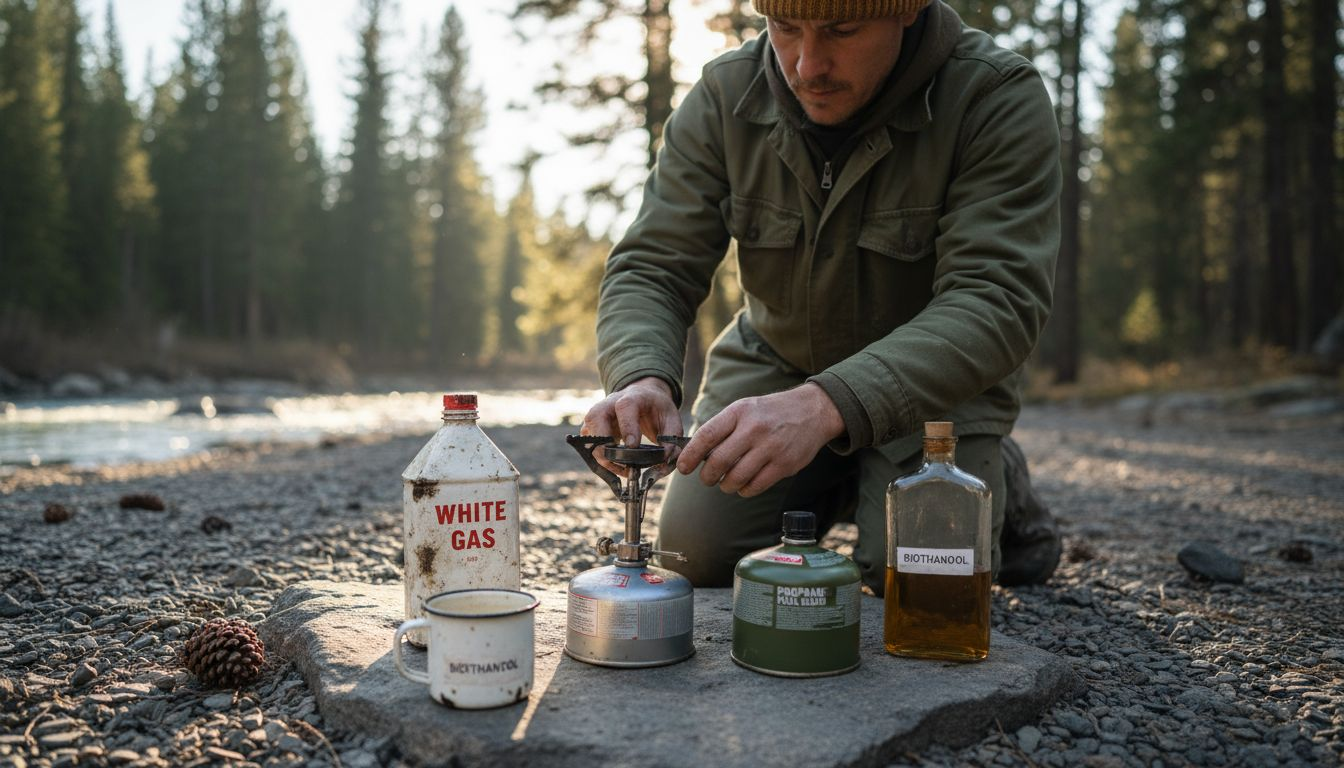
Many campers believe white gas reigns supreme as the ultimate outdoor stove fuel. Common myths about stove fuels reveal a more complex reality: white gas usability drops sharply without proper care, and canisters actually perform better for trips under one week in warm climates. This article explains the strengths and limitations of all main stove fuel types, helping you select fuel for your specific camping needs with confidence.
Key Takeaways
| Point | Details |
|---|---|
| Fuel types have distinct advantages | Liquid fuels, gases, solid fuels, and biofuels each excel in specific conditions and trip lengths. |
| Climate drastically affects efficiency | Propane fails below 40°F while white gas performs well in freezing temperatures. |
| Safety protocols vary by fuel | Proper storage in approved containers reduces fire hazards and prevents fuel degradation. |
| Biofuels offer environmental benefits | Bioethanol cuts toxic emissions by approximately 60% compared to traditional fossil fuels. |
| Legal restrictions impact availability | Several U.S. parks limit certain fuel canisters to reduce wildfire risk and pollution. |
Introduction to Outdoor Stove Fuels
Selecting the right outdoor stove fuel determines whether you cook efficiently or struggle with sputtering flames at crucial moments. Understanding fuel properties is essential for efficiency and safety during outdoor cooking. The basic stove fuel categories fall into four main types: liquid fuels like white gas and kerosene, compressed gases such as propane and butane, solid fuels including hexamine tablets, and renewable biofuels like bioethanol.
Each fuel type affects stove heat output, burn time, and ease of use differently. White gas produces intense heat ideal for melting snow in winter conditions. Propane canisters offer convenience with simple screw-on connections. Solid fuel tablets provide lightweight backup options. Biofuels deliver moderate power with significantly reduced environmental harm.
Safety and environmental consequences vary dramatically by fuel choice. Liquid fuels require careful handling to prevent spills and fires. Gas canisters demand proper disposal to avoid explosions. Understanding these fundamental differences enables better field decisions when conditions change unexpectedly. Your fuel choice impacts everything from pack weight to cooking speed to wilderness preservation.
Pro tip: Match your fuel to the coldest temperature you expect, not the average forecast.
Fuel Types and Their Efficiency Characteristics
Energy density separates high-performance fuels from adequate ones. Liquid fuels offer superior energy density and cold weather reliability compared to gas canisters, making them the choice for serious winter expeditions. White gas delivers approximately 20,000 BTUs per pound with burn times exceeding two hours per 20-ounce bottle under optimal conditions.
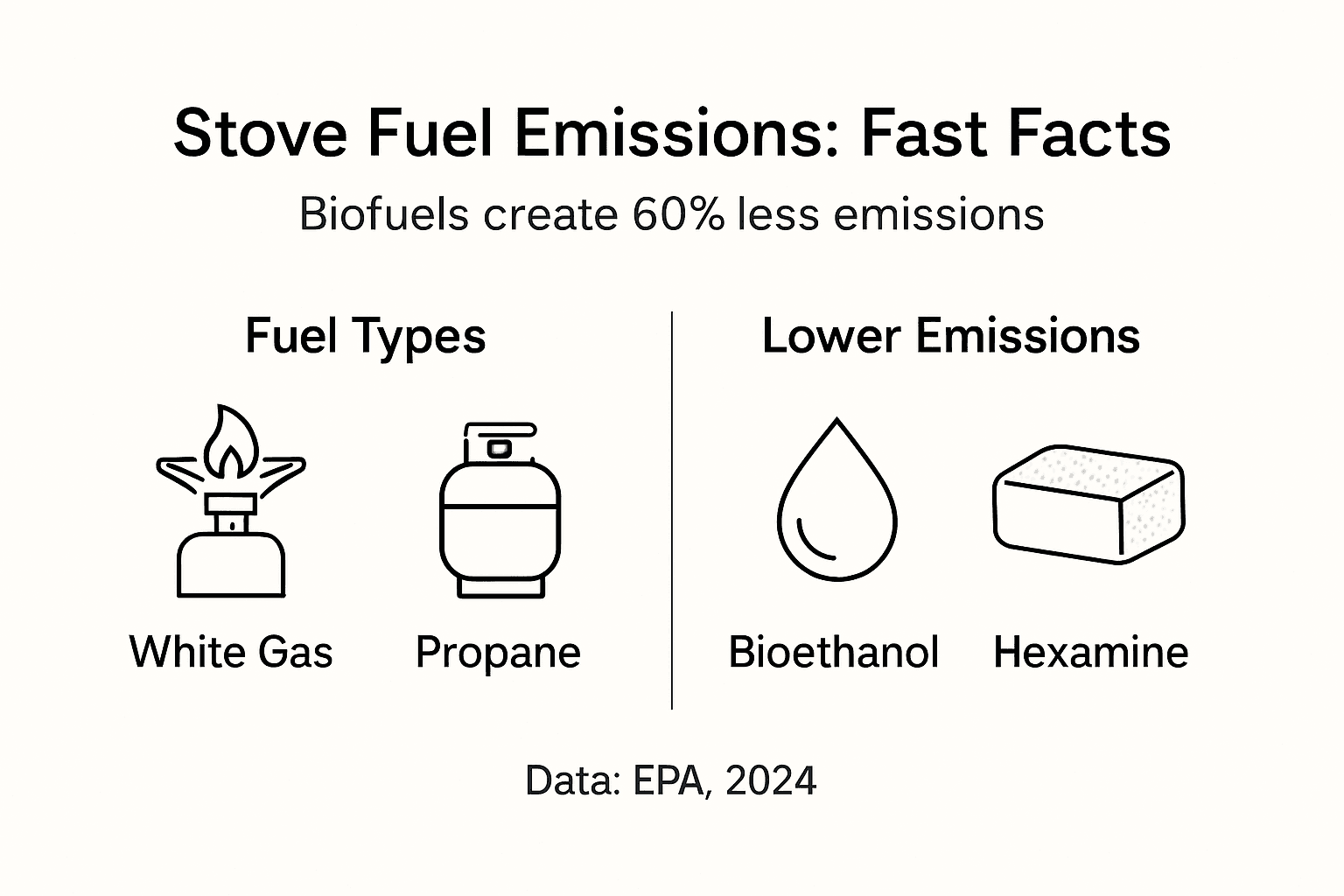
Propane canisters are convenient but lose efficiency dramatically below 40°F as gas pressure drops. Butane stops vaporizing entirely at 32°F, rendering it useless for winter camping. Isobutane blends extend the usable range to around 10°F but still underperform in extreme cold. These fuel efficiency comparisons matter when planning trips in variable climates.
Hexamine tablets burn briefly, typically 10 to 15 minutes per tablet, making them suited for emergency heating or boiling single cups of water. Bioethanol offers moderate energy output around 8,500 BTUs per pound with much lower toxic emissions. Altitude reduces all stove efficiency because decreased air pressure affects combustion chemistry, requiring 10% more fuel per 5,000 feet of elevation gain.
Fuel Performance by Temperature:
| Fuel Type | Optimal Range | Cold Limit | Energy (BTU/lb) |
|---|---|---|---|
| White Gas | All temps | -40°F | 20,000 |
| Propane | 40°F+ | 0°F | 21,500 |
| Butane | 50°F+ | 32°F | 21,200 |
| Isobutane | 30°F+ | 10°F | 20,400 |
| Bioethanol | 40°F+ | 20°F | 8,500 |
| Hexamine | Emergency | N/A | 7,000 |
Pro tip: Carry a small amount of backup solid fuel regardless of your primary choice.
Safety, Storage, and Handling Practices
Fuel accidents ruin trips and endanger lives. Liquid fuels require leak-proof metal containers stored away from direct heat sources and open flames. Proper storage in approved containers reduces fire hazards and fuel degradation significantly. Following fuel storage and handling recommendations prevents most common accidents.
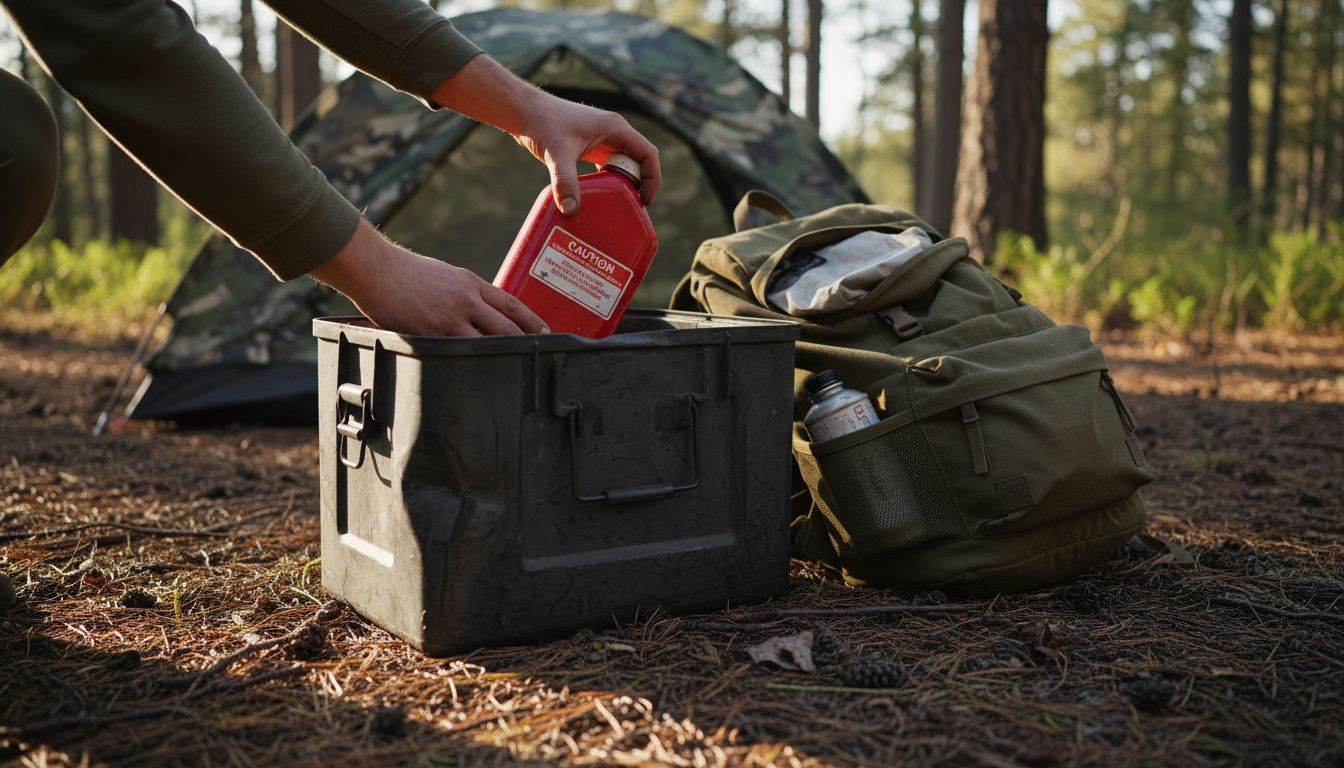
Gas canisters must remain upright during transport and storage to prevent valve damage. Never puncture or incinerate used canisters; take them to proper recycling facilities. Check canisters for dents or rust before each trip. Even minor damage compromises pressure seals and creates explosion risks.
Solid fuels should stay dry and secured in waterproof containers to prevent accidental ignition from friction or moisture exposure. Keep all fuels away from children and pets in clearly labeled containers. Fire safety protocols become critical in dry environments where a single spark can trigger devastating wildfires.
Safe Fuel Handling Steps:
- Inspect containers for leaks or damage before packing
- Store fuels in original or approved containers only
- Keep fuels separate from food and water supplies
- Transport canisters upright and secured against movement
- Refuel stoves outdoors away from ignition sources
- Allow stoves to cool completely before handling fuel
- Dispose of expired or damaged fuel at hazardous waste facilities
Pro tip: Mark fuel containers with purchase dates and inspect annually for degradation.
Common Myths and Misconceptions About Outdoor Stove Fuels
The belief that white gas always outperforms other fuels ignores practical realities. White gas excels in cold weather but proves less convenient than canisters for short trips where weight and simplicity matter more than extreme performance. The fuel myths explained here help campers make evidence-based decisions.
Another widespread misconception claims propane works well year-round. Propane fails below 40°F, contrary to popular belief that it maintains consistent output in all conditions. This cold weather stove fuel performance reality surprises many first-time winter campers who bring the wrong fuel.
Some dismiss biofuels as lacking sufficient power for serious cooking. Modern bioethanol formulations provide adequate heat for boiling water and preparing meals while offering genuine ecological advantages. The performance gap has narrowed substantially as manufacturers improve biofuel formulations and stove designs.
Common Fuel Myths Debunked:
- Myth: White gas is universally best Reality: Only optimal for extended cold weather trips
- Myth: Propane handles freezing well Reality: Performance drops sharply below 40°F
- Myth: Canister fuels cannot work in winter Reality: Isobutane blends function to 10°F
- Myth: Biofuels lack cooking power Reality: Adequate for most camping needs with eco benefits
- Myth: All liquid fuels perform identically Reality: Kerosene burns cooler than white gas
Environmental and Regulatory Considerations for Stove Fuels
Fuel choices carry ecological consequences beyond immediate cooking needs. Bioethanol fuels cut toxic VOC emissions by about 60% compared to fossil fuels, protecting air quality in wilderness areas. The environmental benefits of biofuels extend to reduced carbon footprints and renewable sourcing.
Several U.S. parks restrict certain fuel canisters to reduce wildfire risk and pollution in sensitive ecosystems. These legal fuel restrictions vary by region and season, requiring advance research before trips. Natural impact reduction methods include choosing renewable fuel sources whenever practical.Sustainable camping practices align with using lower-emission fuels. Fragile alpine environments suffer from hydrocarbon residues left by traditional fuels. Choosing eco-friendly options protects water sources and reduces atmospheric pollution that degrades wilderness experiences for everyone.
Environmental Fuel Considerations:
- Biofuels produce significantly fewer particulates and carbon monoxide
- Renewable sourcing reduces dependence on fossil fuel extraction
- Lower toxicity protects wildlife and water sources near campsites
- Some parks mandate alcohol-based fuels in high fire danger zones
- Proper disposal of fuel containers prevents long-term contamination
Cost, Availability, and Practical Selection Framework
Budget constraints and supply access shape realistic fuel choices. Fuel cost per hour varies: white gas proves economical for long trips at roughly $0.30 per hour, propane costs about $0.50 per hour but offers convenience, and biofuels vary widely from $0.40 to $0.80 per hour. This fuel cost and availability comparison helps budget-conscious campers plan expenses.
White gas costs least for extended use but requires carrying bottles and maintaining pressure pumps. Canisters appear in virtually every U.S. outdoor store, making them ideal for spontaneous trips. Biofuel availability increases annually but remains limited in rural areas, requiring advance purchasing.
Fuel Cost Comparison:
| Fuel Type | Cost per Hour | Availability | Convenience |
|---|---|---|---|
| White Gas | $0.30 | Moderate | Low |
| Propane | $0.50 | High | High |
| Isobutane | $0.60 | High | High |
| Bioethanol | $0.40-$0.80 | Low | Moderate |
| Hexamine | $1.20 | Moderate | High |
Fuel Selection Framework:
- Identify expected minimum temperature for your trip
- Calculate total cooking hours needed based on meal plans
- Check local regulations for fuel restrictions at destination
- Assess transport convenience versus performance needs
- Balance environmental priorities with practical requirements
- Verify fuel availability at destination or plan to carry sufficient supply
Pro tip: Buy fuel locally at your destination when possible to reduce transport weight and comply with airline restrictions.
Matching Stove Types with Fuel Choices
Stove designs optimize for specific fuels to maximize combustion efficiency. Integrated stove fuel systems improve safety and burn efficiency by minimizing user error through matched components. Understanding stove and fuel compatibility prevents performance problems and safety hazards.
White gas stoves feature pressure pumps and preheating tubes incompatible with canister fuels. Canister stoves use threaded valve connections that cannot accommodate liquid fuel bottles. Multi-fuel stoves offer flexibility through interchangeable jets and fuel lines but add complexity and weight.
Using incompatible fuel types reduces heat output, increases fuel consumption, and may damage stove components. Some fuels produce residues that clog jets designed for cleaner-burning alternatives. Camp stove and cookware considerations extend beyond fuel to include pot materials and sizes.
Stove-Fuel Compatibility Points:
- Liquid fuel stoves require field maintenance and spare parts
- Canister stoves offer simplicity but lack cold weather reliability
- Integrated systems limit fuel choice but maximize efficiency
- Multi-fuel stoves provide flexibility at cost of added weight
- Always verify manufacturer fuel recommendations before use
Conclusion and Practical Tips for Outdoor Campers
Selecting optimal outdoor stove fuel balances performance requirements with practical constraints. Review environmental conditions before choosing fuel, prioritizing cold tolerance for winter trips and convenience for short summer outings. Balance safety protocols, cost efficiency, and convenience factors against your specific trip duration and cooking needs.
Always follow safe storage and handling guidelines to prevent accidents that endanger you and fellow campers. Respect park regulations protecting nature and avoiding fines that ruin otherwise successful adventures. Consider biofuels for eco-friendly camping whenever supply and performance requirements align.
Essential Fuel Selection Checklist:
- Research destination temperature ranges and altitude
- Verify local fuel regulations and restrictions
- Calculate fuel quantity needed with 20% safety margin
- Inspect storage containers for damage before packing
- Pack fuel separately from food and water
- Bring appropriate stove maintenance tools
- Plan fuel disposal or return logistics
Pro tip: Test your complete stove and fuel system at home before relying on it in the backcountry.
Explore Quality Outdoor Gear for Your Next Adventure
Equipping yourself with reliable camping gear transforms outdoor experiences from stressful to memorable. After understanding fuel options, explore essential types of camping gear that complement your stove and fuel choices. Quality reliable camping cookware maximizes fuel efficiency through better heat distribution.
Discover why serious campers choose camping equipment designed for durability and performance in challenging conditions. Find stoves and fuels suited to your specific environment and cooking style. Shop trusted gear that enhances your camping safety and efficiency for every outdoor challenge.
Frequently Asked Questions About Outdoor Stove Fuel Types
Which fuel is best for winter camping?
White gas performs best in freezing temperatures because it maintains pressure and vaporizes reliably down to -40°F. Isobutane blends work adequately to 10°F but require canister warming techniques below that threshold.
How do I safely transport liquid stove fuel?
Use only approved metal fuel bottles with secure caps and store them upright in external pack pockets away from food. Check airline regulations if flying, as most carriers prohibit liquid fuels in checked or carry-on luggage.
Are biofuels easy to find in U.S. camping stores?
Bioethanol availability increases in major outdoor retailers but remains limited compared to traditional fuels. Order online before trips to remote areas or verify local stock at destination stores.
Can I use stove fuel inside a tent?
Never cook with any fuel inside a tent due to carbon monoxide poisoning and fire risks. Even well-ventilated vestibules create dangerous conditions; always cook in open air at least 10 feet from shelter.
How do altitude changes affect fuel performance?
Higher elevations reduce air pressure, requiring approximately 10% more fuel per 5,000 feet of gain. Water boils at lower temperatures at altitude, paradoxically increasing cooking time despite faster boiling.
What should I do with empty fuel canisters?
Never puncture or burn empty canisters. Many outdoor retailers and municipal recycling centers accept empty canisters if completely depressurized through proper use.
Recommended
- Why Invest in Camp Stoves for Outdoor Cooking
- What Is a Camp Stove? Essential Choices for Beginners
- Eco-Friendly Camping: Reducing Your Outdoor Impact
- Master Camp Cooking Workflow for Easy Outdoor Meals
- Biodegradable Containers: Impact on Foodservice Sustainability – The Ocean Straw
- Cozee Bay - Compostable vs Biodegradable – Choosing Better for Sustainability
