TL;DR:
- Layering clothing with base, mid, and shell layers enhances comfort, moisture management, and adaptability during outdoor activities. Using moisture-wicking fabrics like merino wool and synthetics, hikers can regulate temperature and stay dry across variable conditions. Proper packing and proactive adjustment of layers improve performance and reduce pack weight in unpredictable weather.
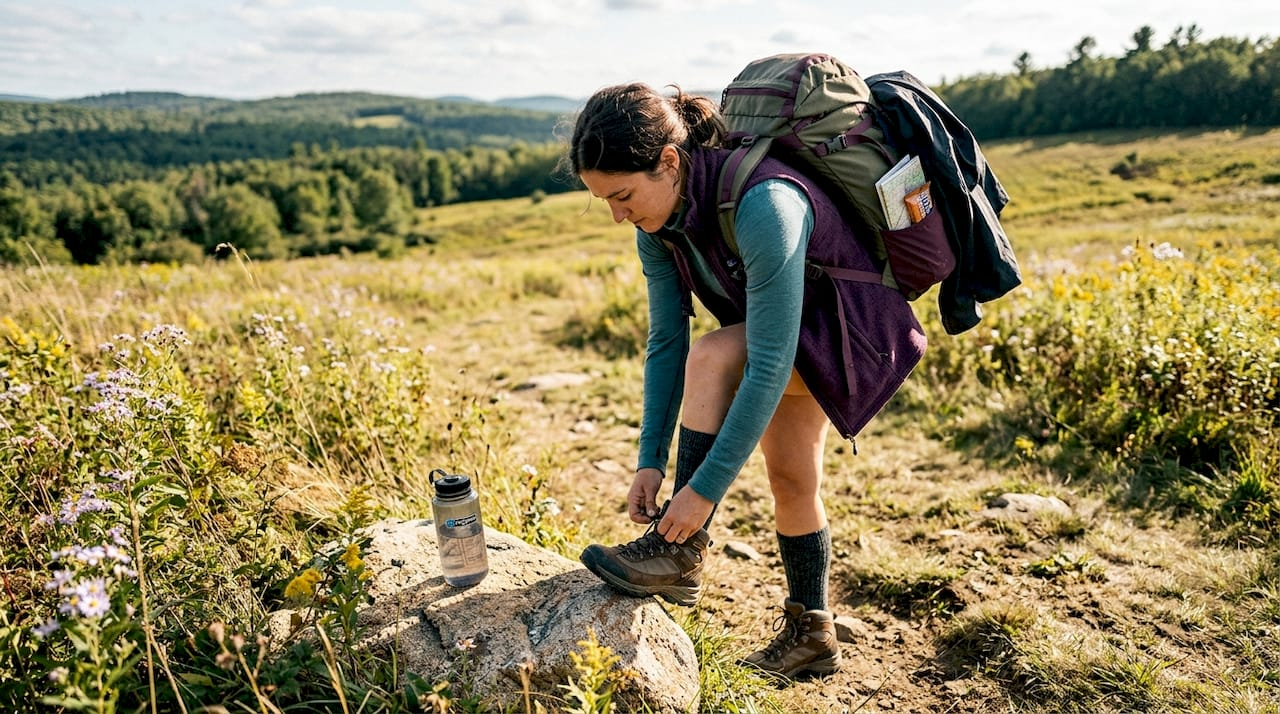
Most people solve the "what to wear" problem by stuffing a heavier jacket into their pack and calling it done. That logic falls apart the moment you start sweating on a climb, stop for lunch in a cold wind, or hit unexpected rain at elevation. Understanding why pack layering clothing matters is the difference between a miserable outing and one where you stay comfortable no matter what conditions throw at you. Layering gives you a flexible system rather than a single-garment gamble, and it works because it separates three distinct jobs that no one piece of clothing can do equally well.
Key takeaways
| Point | Details |
|---|---|
| Three-layer system | Base, mid, and shell layers each handle a separate job: moisture, heat, and weather protection. |
| Fabric choice is critical | Avoid cotton entirely; choose moisture-wicking synthetics or merino wool to stay dry and warm. |
| Pack for activity cycles | Start slightly under-layered, vent while moving, and add insulation when you stop. |
| Shell ventilation matters | A rain jacket with pit zips or vents outperforms an ultralight shell for real exertion comfort. |
| Layering beats bulk | Multiple light layers weigh less, dry faster, and adapt better than one heavy garment. |
Why pack layering clothing: the three-layer system explained
Layering separates three roles: moisture management, heat retention, and weather protection. Each layer handles one job, and together they create a system you can tune in real time.
Base layer. This is the layer touching your skin, and its only purpose is to move moisture away from your body. When you sweat during a climb, a good base layer pulls that moisture outward so it can evaporate. Merino wool and synthetic fabrics like polyester or nylon do this well. Cotton absorbs moisture and conducts heat rapidly when wet, making it genuinely dangerous in cold conditions. Wearing cotton in the mountains is not a style choice. It's a risk.
Mid layer. Once moisture leaves your skin, the mid layer's job is to trap warm air close to your body. Fleece, down, and synthetic insulation all work here. The key feature to prioritize:
- Full-zip mid layers that vent quickly
- Packable construction for easy storage in your pack
- Weight appropriate to your coldest expected conditions
- Synthetic fill if wet conditions are likely (down loses insulation value when soaked)
A full-zip mid layer for quick venting plays a bigger role in comfort than chasing the warmest possible insulation weight. You want to be able to open it up fast.
Shell layer. The outer layer does not need to be warm. Its job is to block wind and rain so your mid layer can keep doing its work. A shell blocks wind and rain, preserving mid-layer insulation, and a lightweight rain jacket can affect warmth more than adding another fleece. The shell is what holds the system together.
Real benefits of packing layering clothing
There is a reason experienced hikers and travelers swear by the layering system. The benefits are practical, not theoretical.
Dynamic temperature regulation. Your body generates wildly different amounts of heat depending on whether you're ascending a steep trail or sitting at a summit. A single heavy jacket cannot account for that range. Layering lets you add or remove pieces as your output changes, keeping your core temperature stable throughout the day.
Moisture and heat control. Wet clothing increases heat loss and causes shivering once you slow down or stop. Layering specifically addresses this by wicking moisture outward before it can compromise your insulation. You stay dry, and staying dry means staying warm.
Lighter pack weight. Light layers absorb less moisture, dry faster, and feel more comfortable than bulky single garments. Three thin layers packed efficiently will often weigh less than one heavy jacket and give you far more versatility.
Flexibility for unpredictable weather. Mountain weather and travel days share one feature: they change without notice. Layering for adaptability means you are never caught underprepared when a sunny morning turns into an afternoon storm.
Pro Tip: Pack your mid layer at the top of your bag or in an external pocket. The moments you need it most, like a sudden wind or a rest stop, are exactly when you do not want to dig through your entire pack.
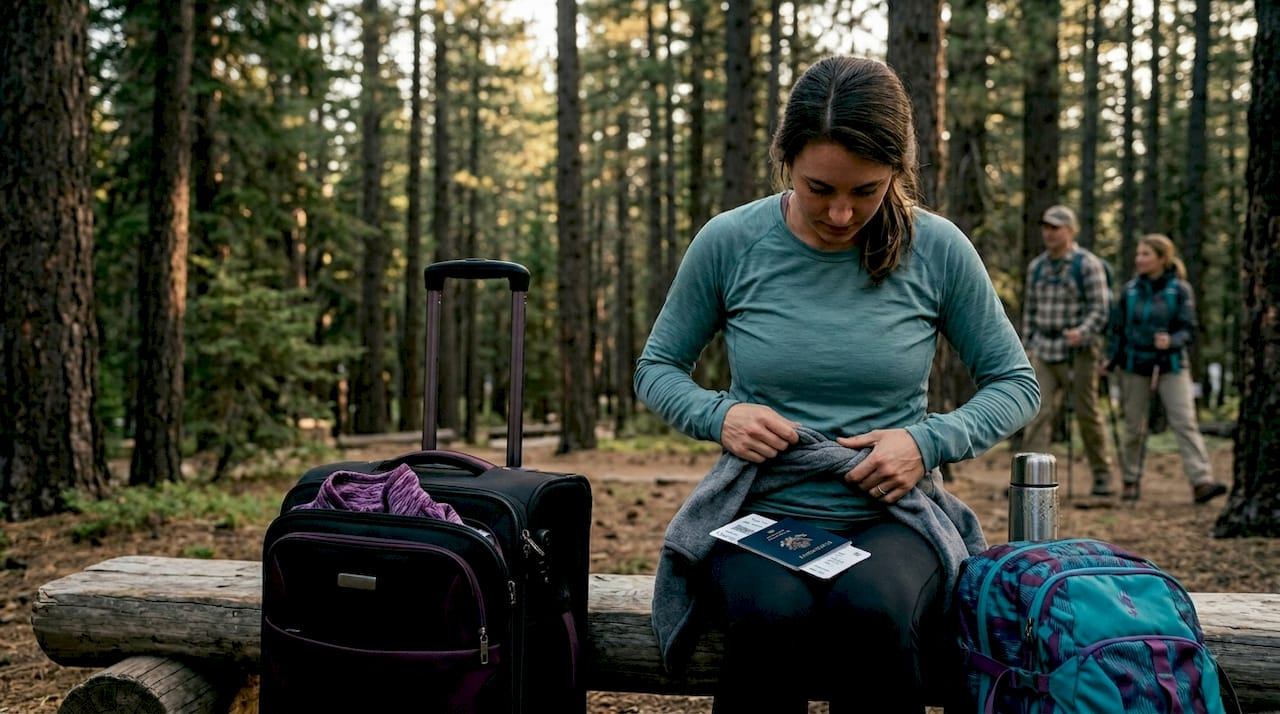
The importance of layering in travel extends beyond hiking. A long flight followed by an outdoor afternoon in an unfamiliar climate presents the same challenge as a trail day with variable weather. The layering approach handles both.
Practical packing tips for layering
Knowing the theory is one thing. Packing it correctly is where most people get it wrong.
Fabric selection
Avoid cotton entirely for any layer that sits next to your skin or insulates you. Your two best fabric categories are:
- Merino wool: Naturally odor-resistant, temperature-regulating, and moisture-wicking. Heavier than synthetics but exceptional for multi-day trips where laundry is limited.
- Synthetic fabrics (polyester, nylon): Dry faster than merino, hold some insulation even when wet, and typically cost less. Best for high-output activities where you will sweat heavily.
For packing tips for layering, fabric choice is the foundation. Get that wrong and even the best layering strategy cannot save you.
Packing order and accessibility
How you organize your pack matters as much as what you put in it. Place items in this order of accessibility based on how often you will reach for them:
- Shell layer: accessible from the top or a hip belt pocket (weather changes fast)
- Mid layer: top of the main compartment or a side pocket
- Spare base layer: mid-pack or compression bag (used at camp, not on trail)
- Gloves, hat, neck gaiter: hip belt pockets or lid pocket
Pro Tip: A neck gaiter like the TriEye Neckwear pulls double duty as a lightweight heat retention piece and a sun shield. It weighs almost nothing and fills a gap that even a well-chosen mid layer misses.
Comparing popular layering fabrics
| Fabric | Weight | Moisture-wicking | Insulation when wet | Best use case |
|---|---|---|---|---|
| Merino wool | Medium | Excellent | Good | Multi-day, odor control |
| Polyester fleece | Light | Good | Moderate | High-output day hikes |
| Down insulation | Very light | Poor | Poor | Cold, dry conditions |
| Synthetic insulation | Light | Moderate | Good | Wet or variable conditions |
| Cotton | Heavy | Poor | Very poor | Never for layering |
Experienced hikers pack for activity cycles, starting slightly under-layered, venting while moving, and adding insulation during rest stops. If you start warm, you will sweat within ten minutes and spend the rest of the day managing damp base layers.
Layering clothing for different climates
Once you understand the base system, you can tune it for specific conditions. This is where layering goes from useful to genuinely impressive.
Cold and dry conditions
This is where down insulation earns its reputation. Down offers the best warmth-to-weight ratio of any insulation material, and in dry, cold air, it performs flawlessly. A thin merino base layer, a down puffy as your mid, and a lightweight windshell can handle temperatures well below freezing at minimal pack weight.
Wet and cold conditions
Switch your mid layer from down to synthetic insulation. Synthetic fill retains a meaningful percentage of its insulation value even when damp, which matters on multi-day trips or shoulder-season hiking where your pack and clothes are rarely completely dry. For the shell, adding ventilation features to rainwear is worth the extra few ounces. A rain jacket with pit zips or chest vents keeps you from cooking inside a sealed-up shell during climbs.
Hot and variable conditions
Desert hiking and tropical travel present a different version of the same problem. A lightweight moisture-wicking base layer handles sweating. A thin wind layer protects against unexpected cold nights or high-altitude chill. Sun protection becomes your third layer, with lightweight long-sleeve shirts doing double duty as UV shields and temperature buffers.
Climate-specific layering overview
| Climate | Base layer | Mid layer | Shell layer |
|---|---|---|---|
| Cold and dry | Merino wool | Down jacket | Windshell |
| Cold and wet | Synthetic | Synthetic insulation | Waterproof with vents |
| Mild and variable | Lightweight synthetic | Thin fleece | Packable rain jacket |
| Hot and dry | Ultra-light synthetic | Optional wind layer | Sun shirt or none |
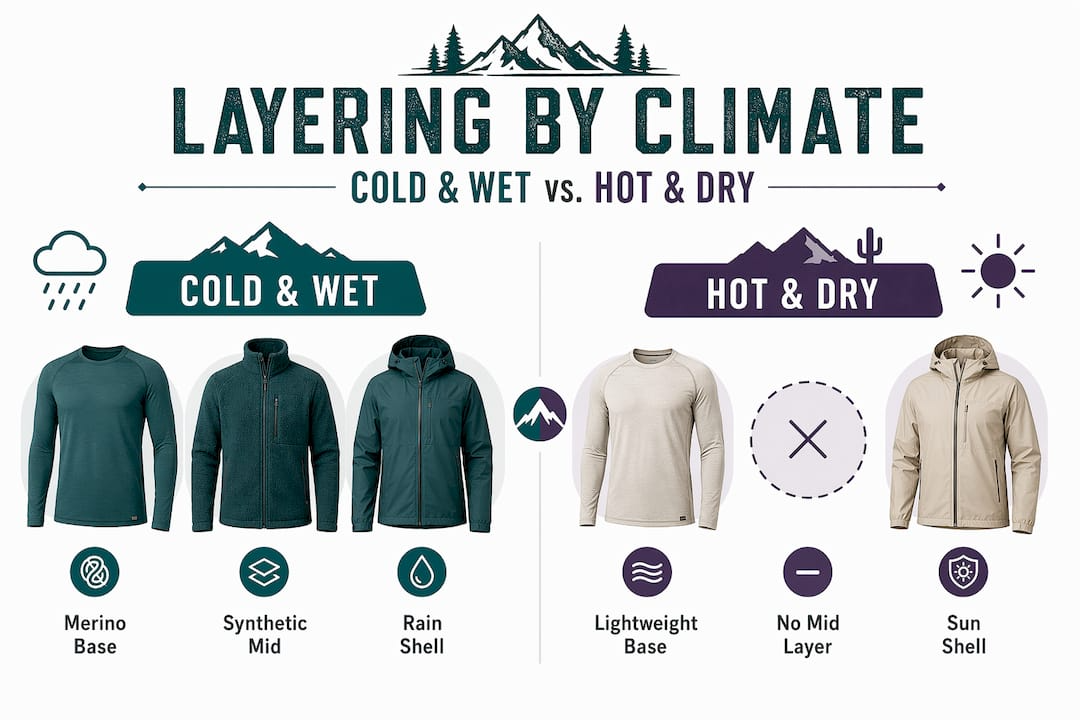
This approach to layering clothing for different climates keeps your pack weight reasonable while making sure you are covered for the actual conditions you will face, not just the best-case forecast.
My take on layering after years on the trail
I've watched a lot of hikers make the same mistake. They buy all the right layers, then refuse to stop and make adjustments because it feels like an inconvenience. They push through a steep section overheating, drenched in sweat, then wonder why they are shivering at the summit. The gear is not the problem. The timing is.
In my experience, the best layering practice is proactive, not reactive. You strip a layer before you start sweating, not after. You add insulation when you stop, not when you are already cold. That timing gap, waiting until you are uncomfortable to act, is where most people lose the benefit of the system entirely.
I have also seen expensive layering kits fail because someone packed a cotton base layer out of habit. A $15 moisture-wicking shirt will outperform a $200 merino mid over a cotton base every single time. The clothing layering system only works when every piece plays its role. One weak link breaks the chain.
The small details people overlook: your head and neck lose heat disproportionately fast. A thin beanie and a lightweight neck gaiter can change how a cold rest stop feels more than upgrading your insulation layer. Pack them. Always.
— Billy
Gear up smarter with Lifecampadventure

You now know why layering works, what fabrics to choose, and how to pack for any condition you might face on trail or on the road. The next step is putting the right gear in your hands. At Lifecampadventure, we carry adventure-ready outdoor equipment built specifically for the demands of variable weather and changing exertion levels. Whether you are building your first layering kit or optimizing what you already own, our camping gear comparison breaks down the top-rated options across every category so you can buy with confidence. For a full look at what your kit needs beyond clothing, the essential camping gear guide covers every piece worth packing. Gear smarter. Go further.
FAQ
What is the three-layer system for outdoor clothing?
The three-layer system uses a base layer for moisture management, a mid layer for insulation, and a shell layer for weather protection. Each layer handles one specific job, and together they let you adapt to changing conditions.
Why should I avoid cotton when layering?
Cotton absorbs moisture and conducts heat away rapidly when wet, which destroys your insulation strategy and creates a hypothermia risk. Merino wool or synthetic fabrics are always the better choice for any active layering system.
How many layers do I actually need?
Three layers cover most conditions: a base, a mid, and a shell. You adjust warmth by swapping the weight of your mid layer based on expected temperatures.
What does "packing for your activity cycle" mean?
It means starting a hike slightly under-layered so you stay comfortable while generating heat, then adding your mid layer or shell at rest stops to prevent rapid cooling. This keeps moisture from building up and avoids the dangerous cycle of getting wet then cold.
Is layering useful for travel, not just hiking?
Absolutely. The importance of layering in travel applies anywhere conditions change throughout a day, from air-conditioned airports to warm city streets to cool evenings. A packable mid layer and a lightweight shell take up minimal space and handle a wide range of situations.
