TL;DR:
- Packable clothing compresses into tiny sizes, saving space and weight on outdoor trips.
- Using high-quality breathable, durable fabrics enhances jacket longevity and performance.
- Rolling clothing instead of folding maximizes compression and optimizes packing efficiency.
Most outdoor adventurers spend more energy packing than actually planning their trip. You wrestle with overstuffed bags, debate which jacket to leave behind, and still arrive at the trailhead carrying more weight than you need. Traditional outdoor clothing is bulky, rigid, and designed without your pack space in mind. Packable clothing flips that script entirely. Designed to compress into tiny pouches or their own pockets, these garments free up space, cut weight, and give you more flexibility on the trail. This guide breaks down what packable clothing actually is, why it matters, what to look for, and how to use it to pack smarter on every adventure.
Key Takeaways
| Point | Details |
|---|---|
| Space-saving solution | Packable clothing lets you carry more gear by saving precious room in your pack. |
| Lightweight comfort | Less bulk and weight reduces fatigue during hiking or camping trips. |
| Versatile for all weather | Layering with packable clothing adapts easily to changing outdoor conditions. |
| Smarter packing strategies | With techniques like rolling, your gear fits better and stays more organized. |
What is packable clothing and how does it work?
Packable clothing is lightweight apparel engineered to compress or fold down into an extremely small size, often into a built-in stuff sack or pocket. When you pull it out, it functions like any high-performance outdoor garment. When you're done, it collapses back down to the size of a baseball or smaller. That's the magic of it.
The secret is in the materials. Most packable clothing uses technical fabrics like ripstop nylon, ultralight polyester, or treated woven synthetics. These materials are thin but tough, and they resist wrinkles, moisture, and abrasion. Unlike traditional fleece or heavy cotton, they don't need extra volume to perform. You get warmth, wind resistance, or waterproofing in a package that weighs almost nothing.
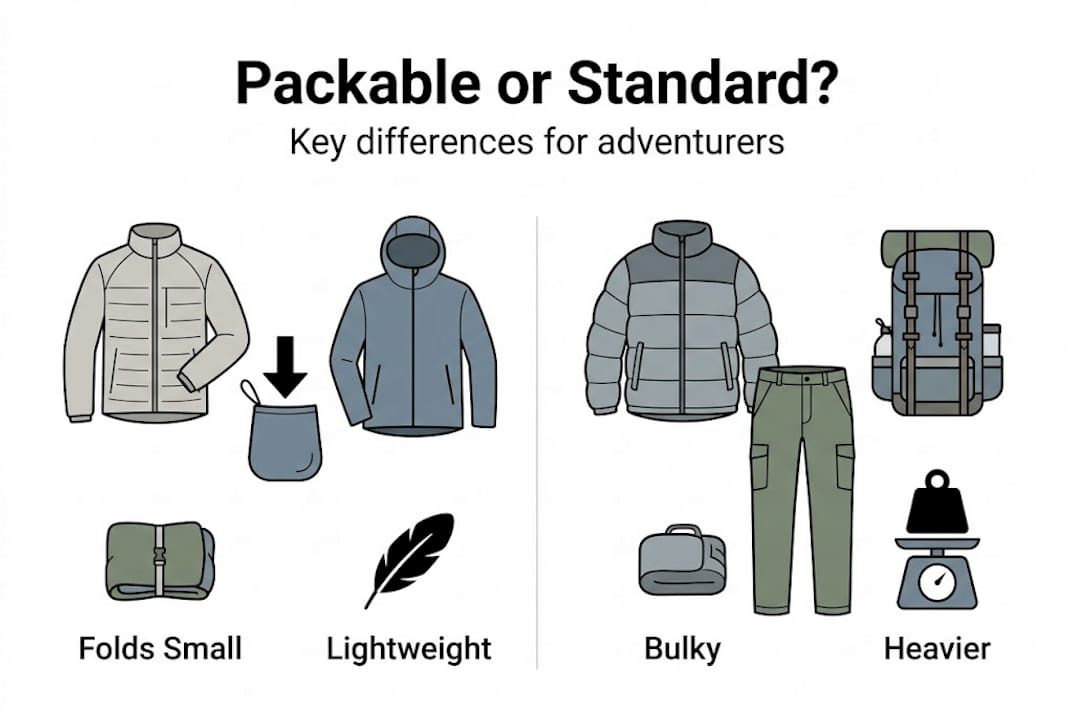
Design also plays a huge role. Packable garments often feature strategic seam placement to reduce bulk at fold points, elastic cuffs for a snug fit without extra material, and integrated stuff sacks sewn directly into a chest or side pocket. Some designs include adjustable hoods, underarm vents, and articulated elbows, all without adding meaningful weight.
Here's a quick look at how packable clothing compares to standard outdoor apparel:
| Feature | Packable clothing | Standard outdoor clothing |
|---|---|---|
| Packed size | Baseball to fist-sized | Bulky, takes full shelf space |
| Weight | 100g to 400g typical | 500g to 1,200g+ |
| Compression | Folds into own pocket | Requires separate stuff sack |
| Versatility | Multi-weather layering | Often single-purpose |
| Travel-friendly | Fits in carry-on easily | May require checked luggage |
Common packable items include rain shells, wind jackets, insulated vests, lightweight pants, and even packable down jackets. Understanding why choose packable gear can help you decide which pieces belong in your kit first.
The most popular packable items include:
- Rain shells that weigh under 200g and pack to fist-size
- Wind jackets ideal for summit layers or cool mornings
- Insulated packable jackets using synthetic or down fill
- Lightweight hiking pants that double as travel pants
- Packable vests for core warmth without arm bulk
Pro Tip: Rolling your packable clothing instead of folding it saves 25-35% space compared to traditional folding. Roll tightly from the hem up, then tuck into the built-in stuff sack for maximum compression.
Top benefits of packable clothing for outdoor adventurers
Knowing what packable clothing is sets the stage. But understanding what it actually does for your adventure is where things get interesting.
The most obvious win is space. Packable items compress into their own pockets or fit neatly into 7-9kg carry-ons, freeing up room for gear that can't compress, like cooking systems, shelter components, or first aid supplies. That recovered space isn't just convenient. It's strategic.
Weight reduction is the second major benefit, and it compounds over distance. Every gram you cut from your clothing load translates directly into less fatigue on long hikes. Shaving 600g to 800g off your clothing layer alone can make a meaningful difference by mile ten. Why packing light matters is something every experienced hiker eventually learns, usually after one trip that was harder than it needed to be.
Here's a side-by-side comparison of packable vs. traditional clothing weight:
| Clothing item | Traditional weight | Packable version weight |
|---|---|---|
| Rain jacket | 800g | 180g |
| Insulated jacket | 950g | 320g |
| Hiking pants | 650g | 220g |
| Wind layer | 500g | 120g |
| Total | 2,900g | 840g |
That's over 2kg saved on clothing alone. Imagine what you could carry instead.
The top benefits for outdoor adventurers, in order of impact:
- Space savings in your pack or luggage for essential gear
- Reduced fatigue from carrying less total weight over long distances
- Weather adaptability through layering shells and insulated pieces
- Carry-on compliance for air travel without checking bags
- Emergency readiness since a compact rain shell can always live in your daypack
"Packable items allow you to optimize for lightweight, versatile outfits while freeing up crucial space for gear." Minimalist Packing Guide, packsmartapp.com
For a complete look at what to bring on the trail, our hiking essentials guide pairs well with your packable clothing choices.
Key features to look for in high-quality packable clothing
Not all packable clothing is created equal. Some products marketed as "lightweight" are just thin, not actually packable or durable. Knowing what separates quality from compromise saves you money and frustration in the field.
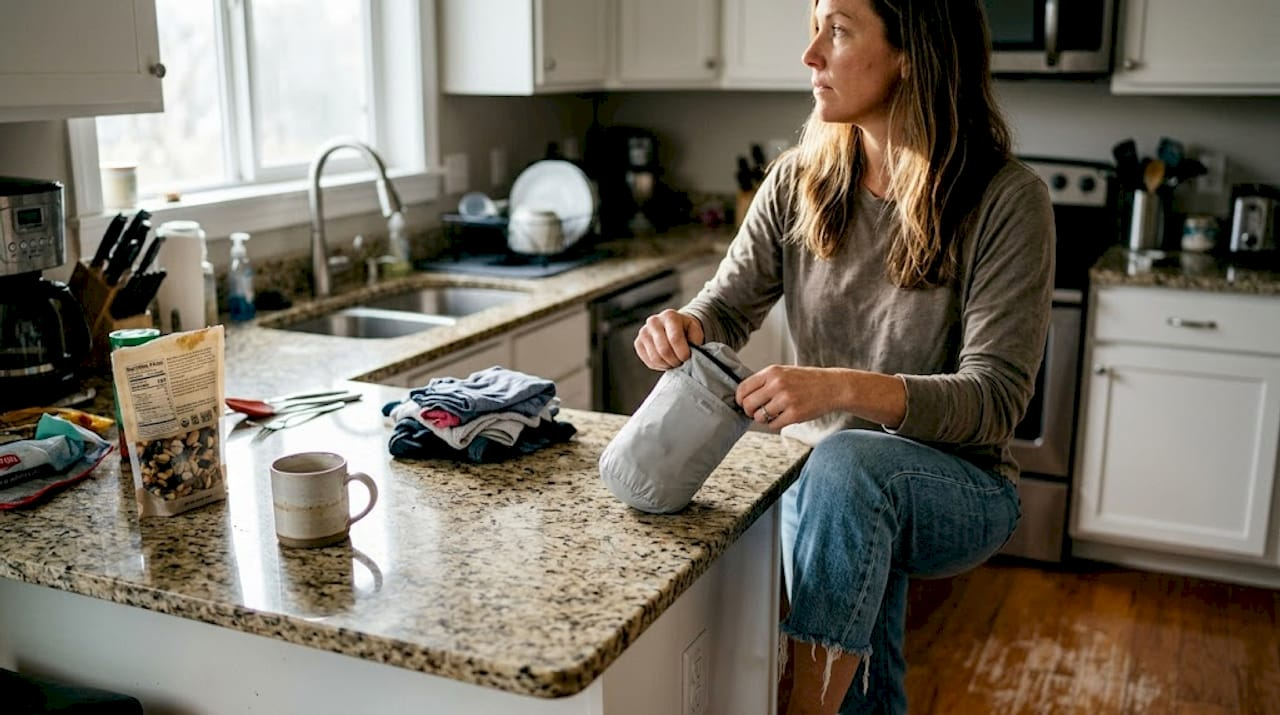
Start with the fabric. High-quality packable garments use technical fabrics with built-in stuff pockets that are hallmarks of genuinely packable items. Look for ripstop construction, DWR (durable water repellent) coatings, and a denier rating that balances weight with tear resistance. A 20D ripstop nylon is lighter but less durable than 40D. Choose based on your typical terrain.
Breathability matters just as much as water resistance. A jacket that keeps rain out but traps sweat inside defeats the purpose on a hard climb. Look for underarm vents, mesh-lined interiors, or moisture-wicking face fabrics.
Design features to prioritize:
- Self-stowing pockets that double as the stuff sack
- Adjustable hood, cuffs, and hem for a snug, wind-blocking fit
- Reinforced seams at stress points like shoulders and elbows
- Flatlock or taped seams for waterproof shells
- Packable size under 500ml when fully compressed
- Machine washable without special treatment
- Weight under 400g for jackets, under 250g for pants
Durability in outdoor settings is non-negotiable. A packable jacket that loses its DWR coating after two washes or develops seam failures after a season is not a good investment. Check reviews specifically for long-term durability, not just initial impressions.
For a broader look at what to carry, our outdoor survival checklist covers the full picture of adventure-ready gear.
Pro Tip: Before buying, stuff the garment into its own pocket in the store or at home. If it doesn't compress easily and stay compressed without force, it's not truly packable. Quality packable clothing should stuff and unstuff in under 30 seconds.
How to pack smart: Real-world packing strategies for adventurers
Having great packable clothing is only half the equation. Using it strategically is what separates a well-organized pack from a chaotic one.
Here's a step-by-step approach to building a smarter packing system:
- Plan your outfits by activity, not by day. Think in terms of a base layer, mid layer, and shell rather than separate outfits for each day. Three to four pieces can cover a week of varied conditions.
- Prioritize multi-use items. A packable insulated jacket works at camp, on the trail, and as a pillow in a stuff sack. Every item should serve at least two roles.
- Compress clothing first, then build around it. Pack your rolled, stuffed clothing pieces into the bottom or sides of your pack, then fill remaining space with rigid gear.
- Use your packable clothing as padding. Wrap fragile items like camp mugs or electronics in a rolled fleece or stuffed jacket for protection without adding dedicated padding material.
- Keep your rain shell accessible. Don't bury it. Weather changes fast. Your shell should be reachable in under 10 seconds.
Rolling techniques with packable clothing free up 25-35% more space compared to folding, and that margin adds up across a full kit.
Common packing mistakes to avoid:
- Folding instead of rolling packable items
- Packing duplicate layers "just in case" instead of trusting your shell system
- Ignoring weight distribution and putting heavy items at the top
- Bringing cotton base layers that absorb moisture and add weight when wet
- Forgetting to re-stuff clothing into its sack after each use
For more detailed strategies, our packing tips for campers guide goes deeper on organizing a full camp kit. And if you're building out a full backpacking setup, check our guide on must-have backpacking items to round out your system.
Why most adventurers underestimate the value of packable clothing
Here's an honest observation: most people don't invest in packable clothing until a bad trip forces the issue. They show up with a heavy, overstuffed pack, spend the first two miles regretting every extra item, and then start cutting weight on the next trip. Packable clothing is usually the first thing they add.
The real value isn't just space or weight. It's mental freedom. When your pack is light and organized, you make better decisions on the trail. You're less fatigued, more willing to take the longer route, and less stressed at the trailhead. That's a force multiplier for the entire experience.
We've seen it repeatedly. Someone switches from a bulky fleece and rain jacket combo to a single packable insulated shell and suddenly has room for a better sleeping pad or a real camp kitchen setup. Less clothing, better adventure. The adventure travel packing list we put together reflects this philosophy directly. Pack less, do more.
Ready to upgrade your outdoor experience?
Packable clothing is one of the fastest ways to improve every trip you take, whether it's a weekend trail run or a two-week backcountry expedition. Once you feel the difference of a light, organized pack, there's no going back.
At Life Camp Adventure, we've built out resources to help you make smart gear decisions at every level. Explore our best camping gear comparison to find the right packable pieces for your adventures. Or browse our guide on choosing camping equipment to build a complete outdoor kit that travels as efficiently as you do. Your next adventure deserves a smarter setup.
Frequently asked questions
What is the main advantage of packable clothing for hiking?
Packable clothing saves space and reduces weight, making it easier to carry all essentials on the trail. Packable items compress into their own pockets or fit into 7-9kg carry-ons, freeing up room for critical gear.
How can I make sure my packable jacket lasts multiple trips?
Choose jackets with durable fabrics, reinforced seams, and follow the manufacturer's folding or rolling instructions. Technical fabrics with built-in stuff pockets are the hallmarks of items built to last.
Is rolling better than folding for saving space?
Yes, rolling saves 25-35% more space than folding, making it the preferred method for packable clothing.
What types of packable clothing are best for changing weather?
Packable jackets, vests, pants, and rain shells offer versatile protection and layer easily as weather shifts. A good shell plus a lightweight insulated layer covers most conditions you'll encounter on the trail.
Recommended
- Why Pack Light? Save Energy and Maximize Adventures
- Role of Weatherproof Apparel – Enhancing Family Adventures
- Why Pack Survival Gear: Safety, Comfort, and Confidence
- Essential role of layering for comfort outdoors
- Retail trends in climbing gear: sustainable performance explained - Gripnatic
- The skiwear style guide | Fashion & Style Tips | Fashion Feed| Coveti
