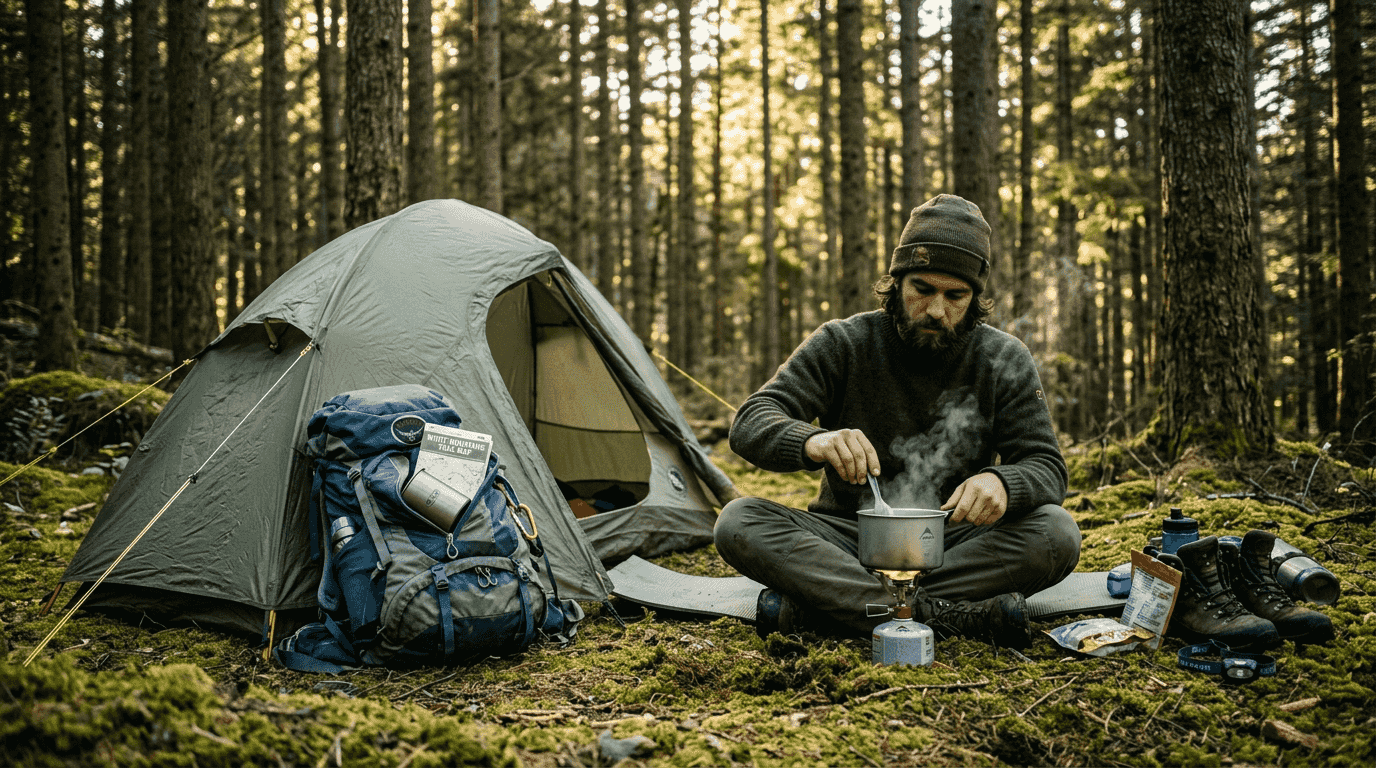
You've mastered setting up tents and packing the perfect backpack, but when mealtime arrives in the backcountry, relying solely on campfires can turn your adventure into a frustrating ordeal. Weather changes, fire bans, and unreliable conditions often leave campers struggling to prepare hot meals when they need them most. Portable stoves ensure hot meals boost morale in adverse weather, comply with regulations, and allow versatile cooking without environmental impact of fires. This guide reveals why portable stoves are essential gear for modern outdoor enthusiasts and how choosing the right model transforms your camping experience from unpredictable to consistently enjoyable.
Key takeaways
| Point | Details |
|---|---|
| Weather reliability | Portable stoves deliver consistent heat regardless of rain, wind, or temperature conditions that make campfires impossible. |
| Fuel efficiency | Heat exchangers and proper fuel selection reduce consumption by up to 30%, extending your cooking capability on extended trips. |
| Environmental responsibility | Stoves minimize habitat damage and fire scars while complying with increasingly common campfire restrictions in protected areas. |
| Safety advantages | Controlled flames reduce wildfire risk and provide safer cooking in crowded campsites or during dry seasons. |
| Trip optimization | Matching stove type to specific conditions ensures faster meal prep and better fuel economy for your adventure style. |
How portable stoves ensure reliable cooking in outdoor conditions
Campfires carry an undeniable romantic appeal, crackling flames under starlit skies creating memories that define outdoor adventures. Reality proves less poetic when sudden rainstorms drench your firewood or gusty winds scatter embers across your campsite. Weather variability makes campfires unreliable cooking tools, leaving you hungry and frustrated when conditions turn against you.
Many public lands and campsites now prohibit open fires entirely due to wildfire concerns and environmental protection policies. Fire bans during dry seasons protect forests and grasslands from devastating blazes, but they also eliminate traditional cooking methods for campers who haven't prepared alternatives. Portable stoves provide the solution, offering consistent performance regardless of precipitation, wind speed, or local regulations that might restrict your cooking options.
Portable stoves matter because they deliver controlled heat that boils water in minutes rather than the unpredictable timing of building and maintaining campfires. Modern canister stoves reach full power within seconds of ignition, while liquid fuel models perform reliably even in subfreezing temperatures where campfires struggle to start. This consistency means you can plan meal timing accurately instead of waiting indefinitely for coals to reach cooking temperature.
Environmental impact matters more than many campers realize. Campfires leave permanent scars on landscapes, kill beneficial soil organisms, and require gathering wood that provides habitat for insects and small animals. Stoves eliminate these concerns while reducing your Leave No Trace footprint to nearly zero. You'll cook efficiently without damaging the ecosystems you came to enjoy.
Hot meals provide more than sustenance during outdoor adventures. Warm food boosts morale when weather turns miserable, provides essential calories for energy intensive activities, and creates comfort that helps you recover from challenging days on the trail. Reliable cooking capability through a quality portable stove ensures you maintain nutrition and spirits regardless of what nature throws at you.
Pro Tip: Always carry backup fuel and a simple repair kit for your stove, as mechanical failures in remote locations can turn minor inconveniences into serious situations without contingency plans.
Understanding camp stove basics helps you select models that match your specific adventure style and environmental conditions.
Understanding stove fuel types and performance for varied environments
Fuel selection dramatically impacts your stove's performance across different environments and weather conditions. Canister stoves using isobutane blends offer exceptional convenience with twist and lock connections that require no priming or pumping. These models excel in moderate temperatures above freezing, providing efficient fuel consumption that boils 7 to 9 liters per 100 gram canister under ideal conditions.
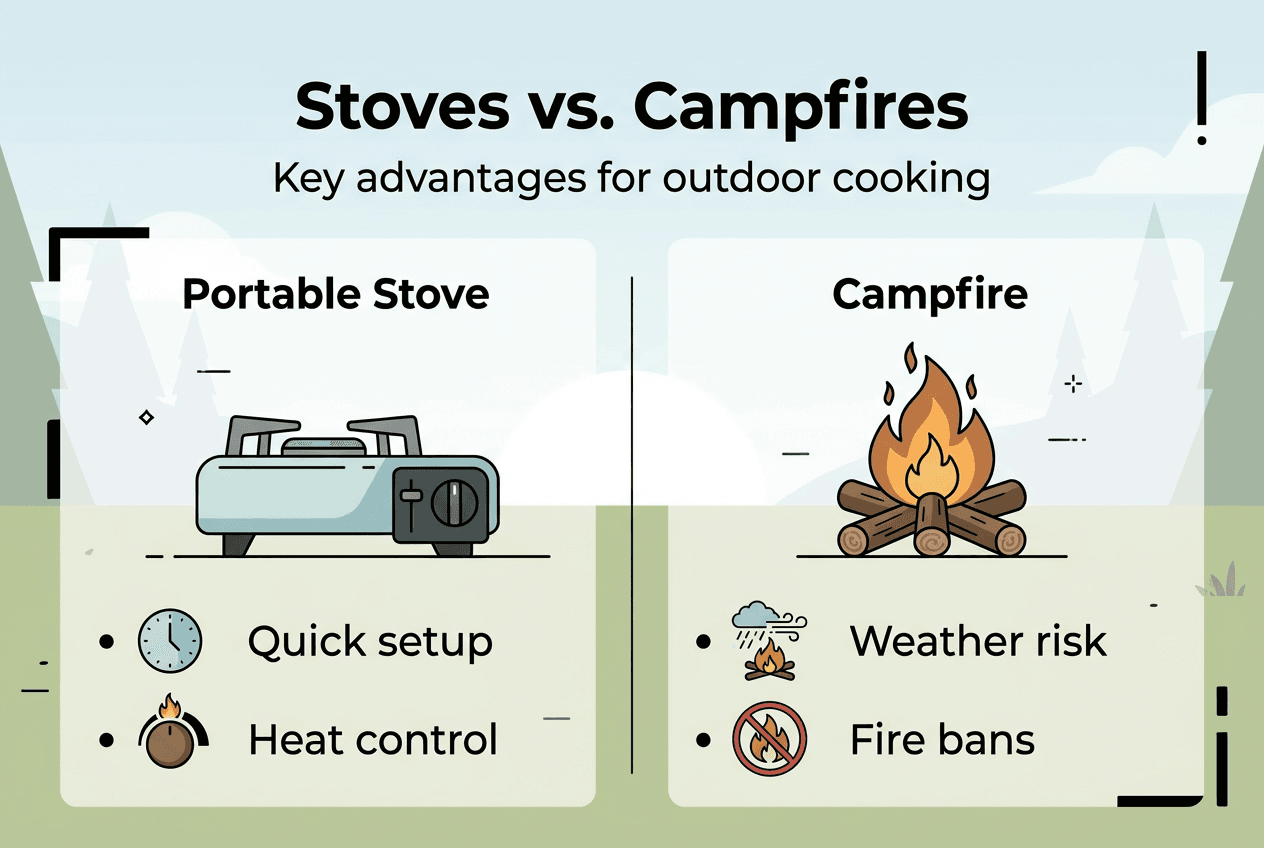
Temperature severely affects canister performance. Butane fails below 32°F as fuel pressure drops, leaving you unable to cook when temperatures plummet overnight. Isobutane blends extend this range somewhat, but extreme cold still reduces output significantly. Liquid fuel stoves burning white gas or kerosene solve this limitation, maintaining consistent performance in subzero conditions and high altitudes where canister pressure becomes unreliable.
Heat exchangers represent one of the most significant efficiency improvements available for portable cooking systems. These integrated pot designs capture and redirect heat that would otherwise escape around cookware sides, reducing fuel use by 20 to 30% compared to standard pots. The fuel savings add up quickly on extended trips, allowing you to carry less weight while maintaining the same cooking capability.
Wind protection makes enormous differences in real world performance. Unprotected stoves can experience doubled fuel consumption and boil times when exposed to even moderate breezes that disrupt flame contact with cookware. Integrated windscreens or separate shields create stable cooking environments that preserve heat and maintain efficiency regardless of conditions. Some canister stoves include built in wind protection, while others require separate accessories for optimal performance.
Comparing fuel types reveals clear performance distinctions:
| Fuel Type | Temperature Range | Efficiency | Weight | Best Use |
|---|---|---|---|---|
| Isobutane canister | Above 20°F | High with heat exchanger | Lightweight | Weekend trips, mild weather |
| Liquid fuel | Below 0°F to extreme heat | Moderate, refillable | Heavier system | Winter, high altitude, expeditions |
| Wood burning | Any | Variable, unlimited fuel | Lightest stove | Ultralight trips, fuel availability |
| Alcohol | Above 32°F | Lower BTU output | Ultralight | Solo hiking, simple meals |
Wood burning stoves offer unlimited fuel availability by using gathered sticks and twigs, appealing to ultralight enthusiasts who want to eliminate carried fuel weight. Performance proves inconsistent compared to gas options, requiring more time to boil water and producing less controllable heat for complex cooking. Wet conditions make wood stoves nearly unusable, highlighting why gas remains the preferred choice for reliability.
Pro Tip: Test your stove and fuel combination at home before trips to understand actual boil times and fuel consumption rates, as manufacturer specifications often reflect ideal laboratory conditions rather than real world performance.
Exploring outdoor stove fuel types reveals emerging options including biofuels that reduce emissions while maintaining performance standards.
Expert tips for selecting and using portable stoves on your trips
Matching stove characteristics to trip parameters ensures optimal performance and user satisfaction. Start by assessing your typical adventure profile: weekend car camping differs dramatically from week long backpacking expeditions in terms of weight constraints, fuel availability, and cooking complexity. Car campers can prioritize power and features over weight, while backpackers must balance capability against every ounce carried.
Weather expectations guide fuel type selection. Canister stoves work for warm trips and light packing needs, while liquid fuel handles cold and high altitude conditions where canister pressure becomes unreliable. Consider seasonal temperature ranges for your destination and choose accordingly. Spring and fall shoulder seasons often experience freezing overnight temperatures that compromise canister performance even when daytime conditions seem mild.
Windscreens and heat exchangers represent the most impactful efficiency accessories you can add to your cooking system. Quality windscreens cost minimal weight and pack space while dramatically improving fuel economy and reducing boil times in breezy conditions. Heat exchanger pots integrate fins or channels that capture escaping heat, translating directly into fuel savings that matter on extended trips where every gram of carried fuel adds pack weight.
Follow this selection process for optimal stove matching:
- Determine your typical group size and meal complexity to establish required cooking capacity and pot support stability.
- Identify temperature ranges and altitude levels for planned destinations to select appropriate fuel types.
- Calculate total trip duration and meals to estimate fuel requirements, then add 25% safety margin for unexpected delays.
- Weigh complete cooking systems including stove, fuel, pots, and accessories to compare actual pack weight across options.
- Practice setup and operation at home to build familiarity before relying on equipment in challenging field conditions.
- Research local fire regulations for planned camping areas to ensure your chosen stove complies with seasonal restrictions.
Maintenance extends stove lifespan and prevents field failures. Clean fuel jets regularly using proper tools, replace worn O rings and seals annually, and store stoves properly between trips to prevent corrosion. Liquid fuel stoves require more maintenance than canister models but reward proper care with decades of reliable service. Keep maintenance kits with spare parts in your repair supplies for quick fixes during extended adventures.
Pro Tip: Carry fuel bottles or canisters in insulated sleeves during cold weather trips to maintain fuel temperature and pressure, significantly improving performance in freezing conditions.
Understanding why invest in camp stoves helps justify quality equipment purchases that deliver years of reliable outdoor cooking capability. Pairing your stove with efficient meal prep for backpacking strategies maximizes the benefits of portable cooking systems.
Comparing portable stoves to traditional campfires: safety, convenience, and environmental impact
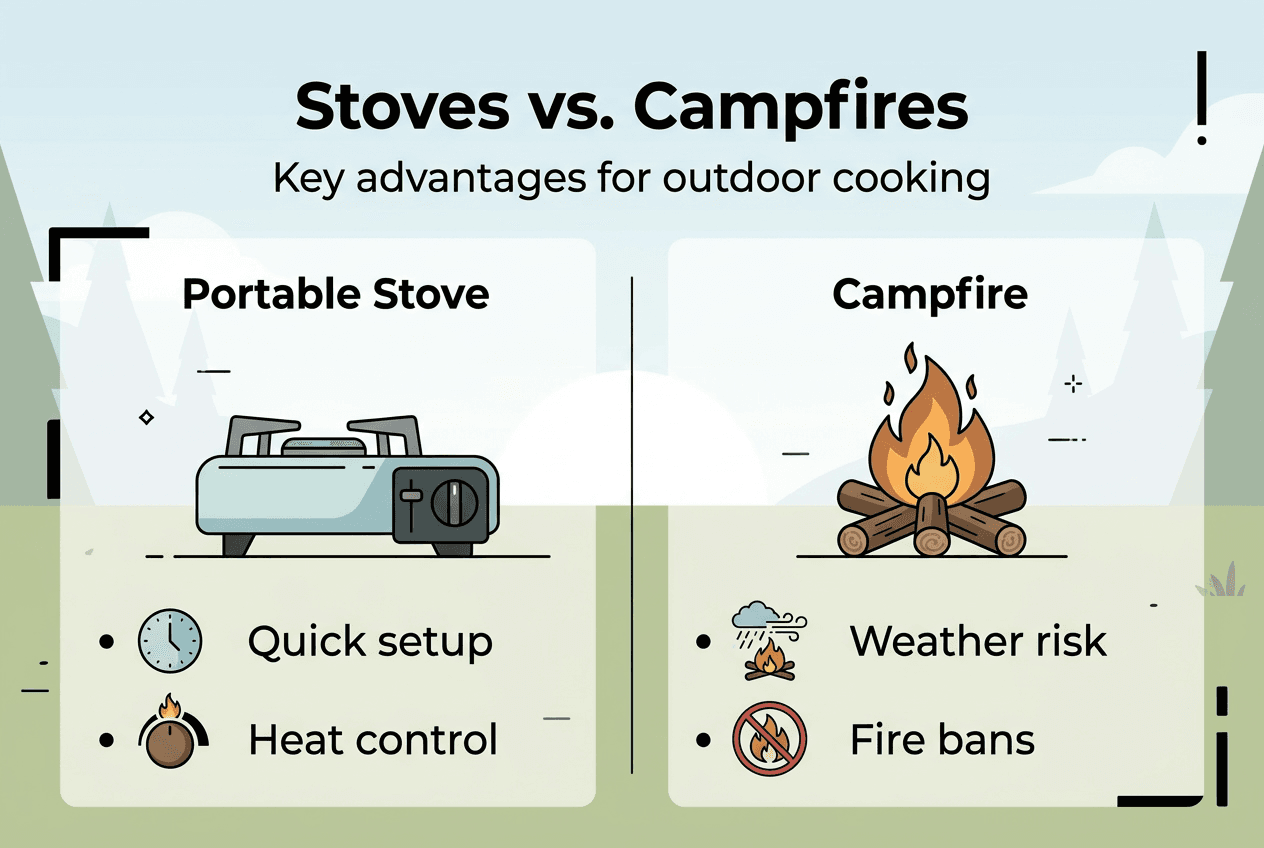
Campfires and portable stoves serve the same basic function but differ dramatically in practical performance and broader impacts. Campfires offer ambiance and flavor but carry safety risks and prove unreliable, while stoves prioritize convenience and consistent performance. Understanding these trade-offs helps you choose the right cooking method for specific situations and personal priorities.
Weather dependency represents campfires' most significant limitation. Rain soaks firewood and makes ignition nearly impossible without extensive preparation and ideal kindling materials. Wind scatters heat and embers unpredictably, creating both safety hazards and cooking frustration as flames refuse to maintain consistent temperatures. Stoves eliminate these variables, providing regulated heat output that responds instantly to adjustment regardless of atmospheric conditions.
Fire bans increasingly restrict campfire use across public lands during dry seasons and in high risk areas. These regulations exist for valid reasons, as human caused wildfires devastate millions of acres annually and cost billions in suppression efforts. Portable stoves remain legal during most fire restrictions because their contained flames and immediate shutoff capability pose minimal ignition risk to surrounding vegetation and landscapes.
Key differences between cooking methods:
| Factor | Campfire | Portable Stove |
|---|---|---|
| Setup time | 15 to 30 minutes | Under 2 minutes |
| Heat control | Difficult, variable | Precise, instant adjustment |
| Weather sensitivity | High | Minimal with windscreen |
| Environmental impact | Permanent scars, habitat damage | Nearly zero trace |
| Regulatory restrictions | Frequent seasonal bans | Rarely restricted |
| Fuel availability | Requires gathering | Carried or purchased |
Environmental considerations extend beyond immediate campsite impacts. Gathering firewood removes dead wood that provides essential habitat for insects, fungi, and small mammals while contributing nutrients back to soil as it decomposes. Popular camping areas experience significant ecological degradation from firewood collection, with campers stripping forests of available wood within expanding radiuses around heavily used sites. Stoves eliminate this pressure entirely.
Safety advantages favor stoves in most camping scenarios. Contained flames reduce wildfire ignition risk compared to open fires that produce floating embers and require constant monitoring. Crowded campgrounds benefit especially from stove use, as closely spaced sites make campfire management challenging and increase accident potential. Stoves also prevent burns from unexpected flame flare ups or shifting logs that characterize campfire cooking.
Cooking convenience matters for practical meal preparation. Stoves provide adjustable heat that allows simmering, rapid boiling, or anything between through simple valve control. Campfires require constant fuel management and offer limited temperature regulation, making complex recipes difficult and burning food common. You can also cook in vestibules or under tarps with proper ventilation when using stoves, impossible with campfires.
Meal quality and variety expand with reliable heat control. Stoves enable techniques like sautéing vegetables, simmering sauces, and precise temperature management that elevate camp cooking beyond basic boiling. Campfires excel at specific applications like roasting marshmallows and grilling over coals but limit your culinary options compared to versatile stove systems.
Pro Tip: Enjoy campfires for ambiance and socializing while relying on your portable stove for actual meal preparation, combining the best aspects of both approaches when conditions and regulations allow.
Exploring comprehensive backcountry cooking guide resources expands your outdoor culinary skills beyond basic survival meals.
Equip yourself with the right gear for your next outdoor adventure
You've learned how portable stoves transform outdoor cooking from unpredictable challenges into reliable meal preparation. Quality equipment makes the difference between struggling with inadequate gear and confidently enjoying your time in nature. Explore our best camping gear comparison to discover top rated stoves and complete cooking systems that match your adventure style.
Pairing your stove with appropriate cookware maximizes efficiency and expands meal options in the backcountry. Our camping cookware reviews compare heat exchanger pots, lightweight pan sets, and integrated cooking systems to help you build the perfect setup. Understanding why choose camping equipment from trusted outdoor brands ensures durability and performance when you need it most, mile after mile on the trail.
Why portable stoves matter: frequently asked questions
What fuel type lasts longest for extended trips?
Liquid fuel stoves offer the best economy for extended expeditions because white gas provides high energy density and comes in refillable bottles that eliminate canister waste. A single liter of white gas typically provides 60 to 90 minutes of burn time depending on stove efficiency, enough for a week or more of cooking for small groups. Canister stoves work well for shorter trips but require carrying multiple canisters on extended adventures, adding weight and bulk.
Are portable stoves allowed in all camping areas?
Most camping areas permit portable stoves even during fire bans that prohibit campfires, but regulations vary by jurisdiction and season. Always check current restrictions with land managers before your trip, as some extreme fire danger periods may prohibit all open flames including stoves. Designated wilderness areas and national parks typically allow stoves year round except during extraordinary circumstances, making them more reliable than campfires for trip planning.
How do I maintain my portable stove for safety and durability?
Regular cleaning of fuel jets and burner ports prevents clogs that reduce performance and create safety hazards from irregular flames. Replace O rings and seals annually on liquid fuel stoves, and inspect fuel lines for cracks or wear before each season. Store stoves clean and dry with fuel drained from tanks to prevent corrosion, and carry basic repair kits including spare parts specific to your model during trips.
Can portable stoves cook all types of camping meals?
Quality portable stoves handle virtually any cooking technique from rapid boiling to gentle simmering, enabling diverse meal preparation limited only by your cookware and ingredients. Integrated canister systems excel at boiling water for dehydrated meals, while liquid fuel stoves with stable pot supports accommodate larger pots for group cooking and complex recipes. Baking requires specialized accessories but remains possible with proper technique and equipment.
What are the best portable stoves for winter conditions?
Liquid fuel stoves burning white gas or kerosene perform most reliably in winter conditions, maintaining consistent pressure and output in subzero temperatures where canister stoves fail. Models with built in pumps and preheating systems start easily in extreme cold and handle high altitude environments without performance degradation. Inverted canister stoves offer a lighter weight alternative that works in moderate winter conditions by drawing liquid fuel, though they still underperform compared to liquid fuel in truly harsh environments.
