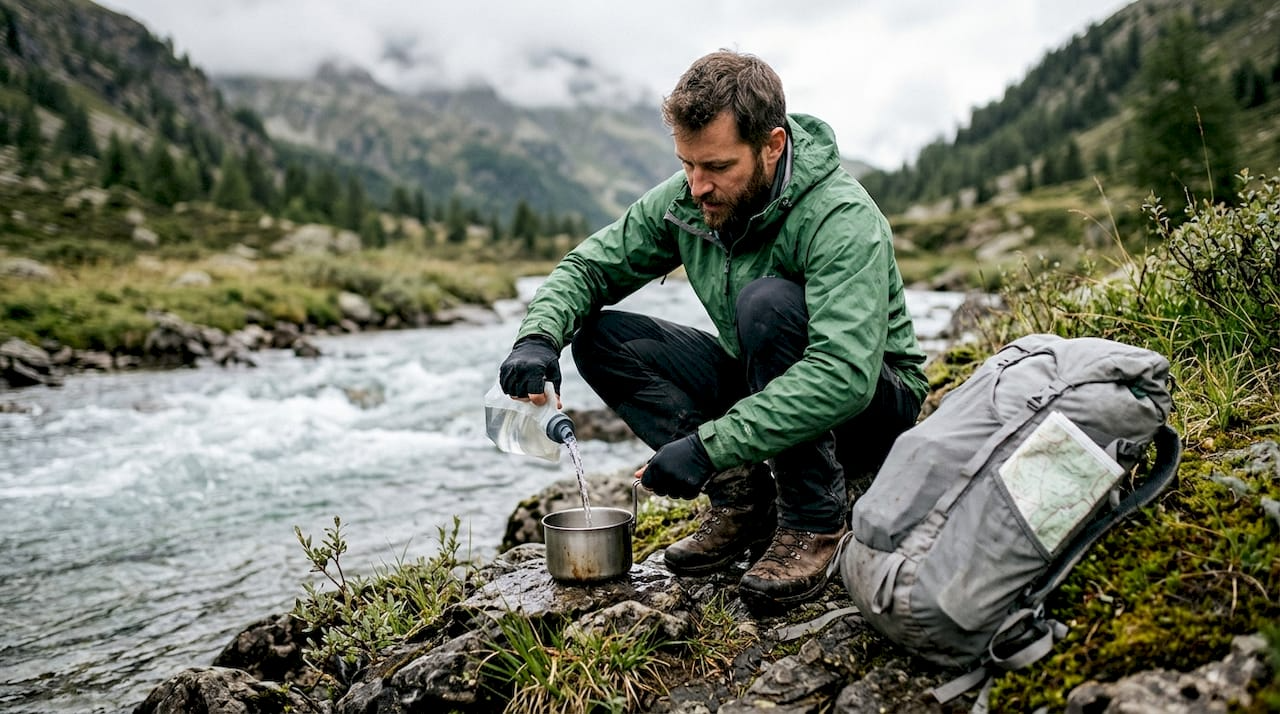
Nothing ruins a camping trip faster than getting sick from contaminated water. You might be miles from the nearest trailhead, feeling great, and then one sip from that crystal-clear stream changes everything. Waterborne illnesses are one of the most common hazards outdoor adventurers face, and the frustrating part is that most of them are completely preventable. Whether you're a weekend camper or a seasoned backpacker, knowing how to purify water outdoors is a skill that protects your health and keeps your adventure on track. This guide walks you through every proven method, the gear you need, and how to verify your water is truly safe.
Key Takeaways
| Point | Details |
|---|---|
| Never drink untreated water | Even clear streams can contain harmful microbes, so always purify before drinking. |
| Choose the right method | Pick your purification method based on available resources, group size, and known contaminants. |
| Back up your plan | Always carry a secondary purification method such as tablets for emergencies. |
| Watch for special conditions | Silty or cold water needs extra steps, and filters can fail if frozen. |
Why water purification outdoors is essential
That sparkling mountain stream might look pristine, but looks are deceiving. Natural water sources carry a range of invisible threats: bacteria like E. coli and Salmonella, protozoa like Giardia and Cryptosporidium, viruses that cause gastroenteritis, and even chemical runoff from agriculture or mining. Understanding why water filtration matters is the first step toward protecting yourself on any trip.
The most common illnesses from untreated water include:
- Giardiasis: Caused by Giardia lamblia, a protozoan found in nearly all backcountry water sources
- Cryptosporidiosis: Highly resistant to chemical treatment; requires filtration or boiling
- Viral gastroenteritis: More common internationally but possible anywhere with human or animal activity nearby
- Bacterial infections: From E. coli, Salmonella, and Campylobacter, often found near grazing land
According to CDC water safety guidance, boiling kills pathogens including bacteria, viruses, and protozoa like Giardia and Cryptosporidium, making it one of the most reliable methods available. The key takeaway from outdoor survival basics is simple: never assume water is safe just because it looks clean.
With the risks established, it's time to look at what you need to treat water safely.
What you need: gear and essentials for purifying water
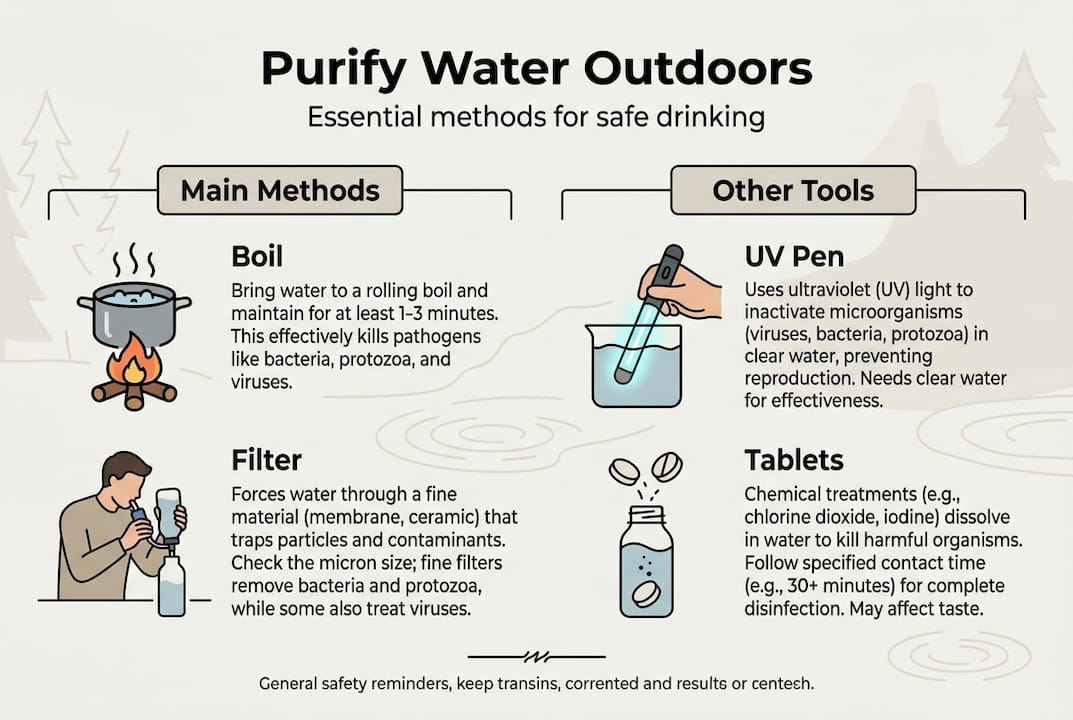
Every purification method requires different tools. Knowing your options before you hit the trail means you won't be caught off guard. Here's a quick breakdown of the five main categories:
- Boiling: Requires a heat source and a pot or metal container
- Filtration: Pump, squeeze, gravity, or straw-style filters
- Chemical disinfection: Iodine tablets, chlorine dioxide tablets, or liquid bleach
- UV treatment: A UV pen or SteriPen device and clear water
- Pre-filtration: Bandana, coffee filter, or sedimentation to remove sediment before other methods
| Method | What it removes | Tools needed | Pros | Cons |
|---|---|---|---|---|
| Boiling | Bacteria, viruses, protozoa | Stove, pot, fuel | Highly reliable | Fuel-dependent, slow |
| Filtration | Bacteria, protozoa | Filter device | Fast, no chemicals | Misses viruses |
| Chemical | Bacteria, viruses, protozoa | Tablets or drops | Lightweight | Slow, taste issues |
| UV treatment | Bacteria, viruses, protozoa | UV pen, batteries | Fast, no taste | Needs clear water |
| Pre-filtration | Sediment, debris | Cloth, bandana | Improves other methods | Not a standalone solution |
As filter buying advice from OutdoorGearLab notes, filters remove 99.9999% of bacteria and 99.9% of protozoa per EPA standards, but purifiers go further by also targeting viruses. That distinction matters a lot depending on where you're traveling.
Pro Tip: Always pack a backup method. If your filter freezes or your UV pen battery dies, chemical tablets weigh almost nothing and can save the day. Check out our guide to essential camping gear and must-have backpacking items for a full packing checklist.
Now that you know what's needed, let's break down each method step by step.
Step-by-step guide: proven water purification methods outdoors
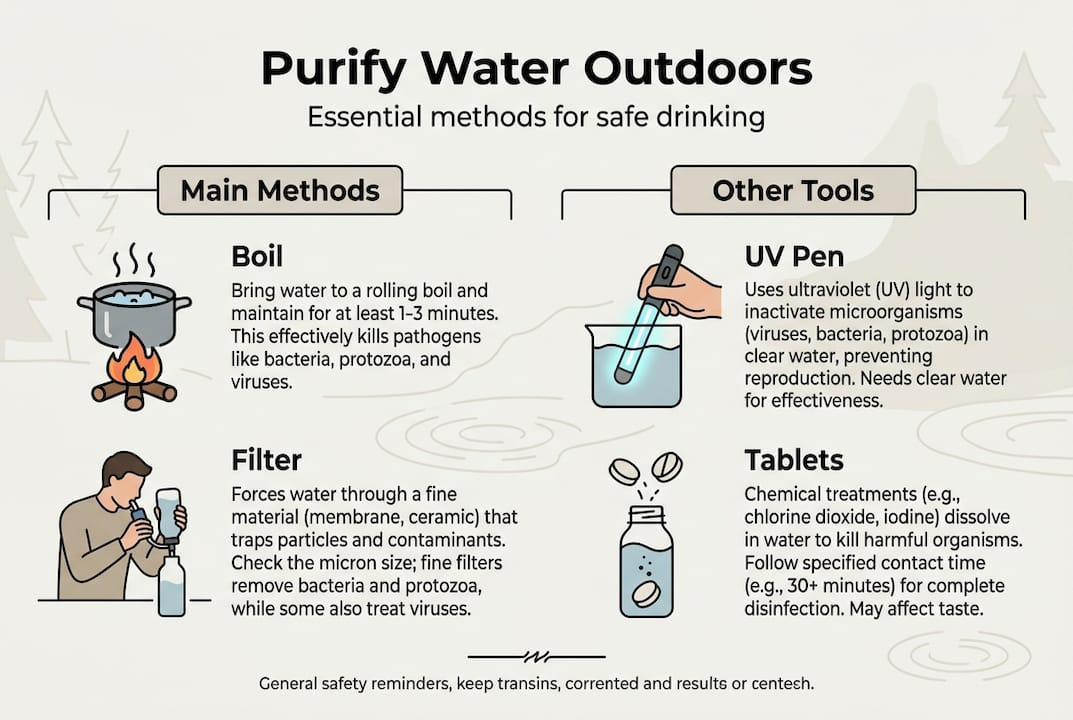
Boiling
- Collect water and pre-filter if it looks cloudy
- Bring water to a rolling boil
- Boil for 1 minute at sea level; boil for 3 minutes above 6,500 feet elevation
- Let it cool before drinking or storing
Filtration
- Pre-filter turbid water through a cloth
- Follow your filter's instructions for pump, squeeze, or gravity setup
- Collect filtered water in a clean container
- Replace filter cartridges per manufacturer guidelines
Chemical disinfection
- Pre-filter if water is cloudy
- Add the correct dose of chlorine dioxide or iodine tablets
- Wait 30 minutes for clear water; up to 4 hours for cold or turbid water
- Shake and let the treated water contact the bottle threads before drinking
UV treatment
- Use only with clear water; pre-filter if needed
- Submerge the UV pen and stir for the recommended time (usually 60 to 90 seconds)
- Drink immediately or store in a sealed container
As CDC guidance confirms, boiling and chemical methods kill bacteria, viruses, and protozoa, while filtration alone misses viruses. UV works on all pathogens but only in clear water. For solid backpacking preparation, knowing which method fits your destination is critical.
Quick comparison:
Method Speed Removes viruses Best for Boiling Slow Yes Any environment Filtration Fast No North American backcountry Chemical Moderate Yes International travel UV Fast Yes Clear water sources
Pro Tip: For international trips, combine a filter with chemical or UV treatment. Filters handle protozoa and bacteria fast; chemicals or UV cover viruses. You get the speed of filtration and the full-spectrum protection of a purifier.
While all these methods produce safe water, sometimes conditions make things harder.
Troubleshooting and real-world tips
Outdoor conditions are rarely ideal. Here's how to handle the most common challenges:
- Silty or turbid water: Always pre-filter through a bandana or coffee filter before using any method. Sediment clogs filters quickly and reduces the effectiveness of UV and chemical treatment
- Cold temperatures: Chemical tablets work much more slowly in cold water. Double the contact time or switch to boiling
- High altitude: Water boils at a lower temperature above 6,500 feet, so extend your boil time to at least 3 minutes
- Freezing conditions: Freezing damages filters and UV devices. Sleep with your filter inside your sleeping bag and rely on boiling when temps drop below freezing
Common mistakes that get people into trouble:
- Not waiting long enough for chemical tablets to work
- Forgetting to replace a filter that's past its rated capacity
- Assuming clear water is safe without treatment
- Skipping pre-filtration on murky water before using UV
"The biggest mistake backcountry travelers make is trusting their eyes. Clear water is not clean water."
For more practical strategies, our ultralight camping tips and off-grid trip planning guides cover how to build a smart, lightweight water system for any adventure.
Pro Tip: In winter camping, melt snow in a pot and bring it to a full boil. Freshly melted snow is not automatically safe since it can pick up surface contaminants as it falls.
With these practical solutions, you'll be ready. But how do you know your water is truly safe?
How to verify if your water is truly safe
Purification is only as good as your confirmation that it worked. Here's a checklist to run through after treating your water:
- Boiling: Did the water reach a full rolling boil and stay there for the required time?
- Filtration: Is the output water visibly clear? Has the filter been maintained and not exceeded its rated liters?
- Chemical: Did you wait the full contact time, including extra time for cold or turbid water?
- UV: Was the water clear before treatment? Did the device complete its full cycle without interruption?
Visual and sensory cues can help, but they are not enough on their own. Water can smell fine, look clear, and taste normal while still carrying Giardia or Cryptosporidium. Pathogen kill rates depend entirely on following the correct process, not on how the water looks afterward.
If you're unsure whether a method worked, treat the water again using a different method. Combining boiling with filtration, for example, gives you redundancy. Understanding water filtration importance means knowing that one layer of protection is good, but two layers are better when your health is on the line.
A quick sensory check after treatment: the water should be clear, odorless, and free of floating particles. If it still smells like algae or has visible debris, repeat the process.
Gear up for safe hydration outdoors
Knowing the methods is half the battle. Having the right gear makes execution fast, reliable, and stress-free on the trail. At Life Camp Adventure, we've put together resources to help you choose the best tools for your specific adventure style and destination.
Browse our best camping gear guide for 2026-tested picks across filters, UV devices, and chemical options. If you're planning meals around a camp stove, our camping cookware reviews cover pots and systems that double as water boiling setups. And if you want to build a complete safety foundation before your next trip, start with our outdoor survival steps guide. We're here to make sure you head out prepared and come back healthy.
Frequently asked questions
Is it safe to drink water from mountain streams if it looks clear?
No. Clear water can still carry bacteria, protozoa, and viruses that are completely invisible to the naked eye. Always purify before drinking, regardless of how clean the source looks.
Which water purification method is best for international travel?
Combine filtration with chemical or UV treatment when traveling internationally. Filters handle bacteria and protozoa effectively, but adding a chemical or UV step ensures viruses are also eliminated.
How do I purify silty or dirty water outdoors?
Pre-filter through a cloth or let sediment settle before applying your main purification method. Pre-filtration reduces turbidity and significantly improves the effectiveness of filters, UV devices, and chemical tablets.
Can freezing temperatures damage water filters or UV devices?
Yes. Freezing can crack filter membranes and damage UV electronics. Keep gear insulated or inside your sleeping bag overnight, and rely on boiling as your primary method in freezing conditions.
