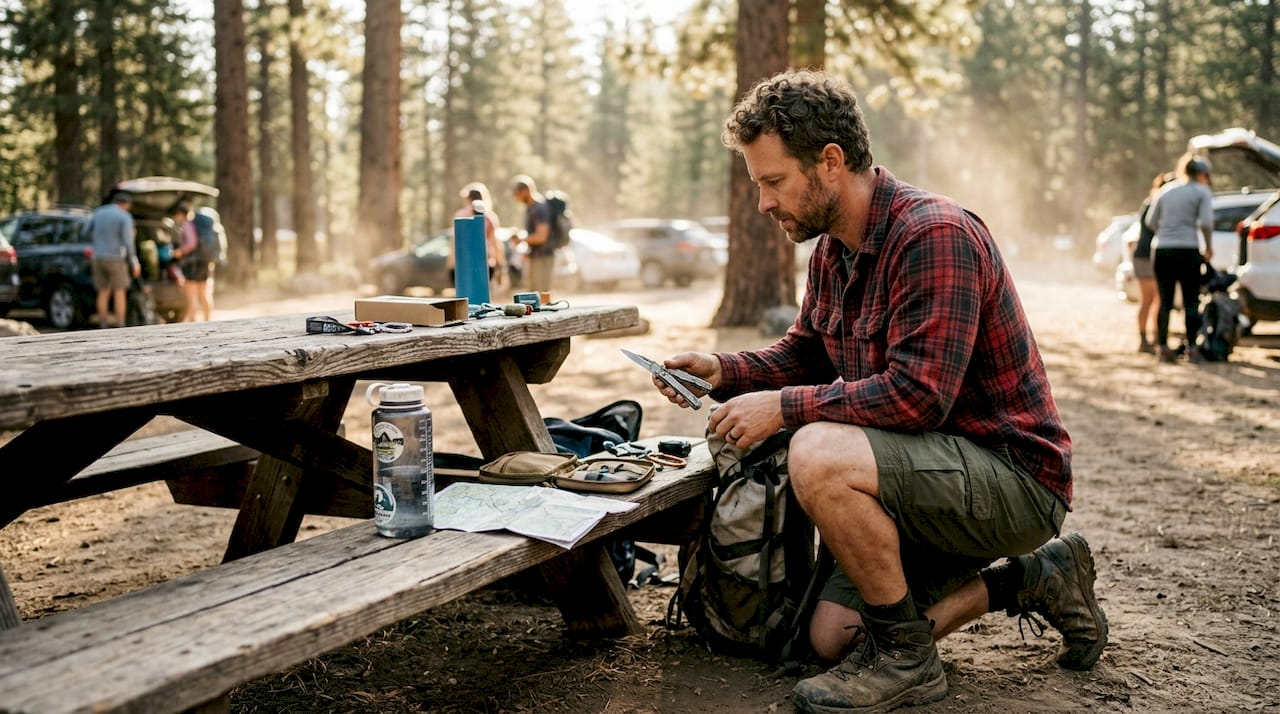
You pack your bag the night before a trip and suddenly realize it weighs more than your dog. A full knife set, a screwdriver, pliers, a saw, scissors — each tool feels essential until you're hauling all of it up a steep trail. Here's the thing most campers don't figure out until mile three: a single multitool can replace most of that pile. This guide breaks down exactly what multitools offer, where they shine, where they fall short, and how to use them smarter on your next outdoor adventure.
Key Takeaways
| Point | Details |
|---|---|
| Multitool versatility | A multitool packs multiple functions into one compact device, saving space and weight in your outdoor gear. |
| Essential multitool features | Key functions like pliers, knife, and screwdriver directly help with camping repairs, cooking, and shelter building. |
| Trade-offs vs single tools | While multitools are adaptable, they may not match the strength or handling of dedicated gear for every task. |
| Practical camping solutions | Multitools provide quick answers to common outdoor problems such as fixing gear or starting a campfire. |
What is a multitool and how does it help outdoors?
A multitool is a compact, folding device that packs several tools into one unit you can clip to your belt or drop into a pocket. Think of it as a portable workshop that weighs less than a sandwich. Most models include a knife blade, needle-nose pliers, wire cutters, a flathead and Phillips screwdriver, a small saw, and scissors — all folding neatly into a metal body roughly the size of your palm.
For outdoor use, that combination is genuinely powerful. Multitools combine pliers, knives, saws, and screwdrivers into one compact device, covering gear repairs, food prep, fire starting, and shelter building in a single carry. That means you can tighten a loose tent stake, slice vegetables for dinner, cut paracord for a tarp setup, and strip a wire from a broken camp light — all without digging through a separate tool bag.
Multitools also shine in unexpected situations. A zipper that jams, a broken buckle on a pack strap, a snapped tent pole — these are the moments when a multitool earns its place on your hiking essentials list. It's not just about convenience. It's about being ready when things go sideways.
- Pliers: Grip, bend, and pull wire or metal components
- Knife blade: Food prep, cutting rope, whittling stakes
- Saw: Cutting small branches for fire or shelter
- Screwdrivers: Tightening stove parts, adjusting pack frames
- Scissors: Trimming first aid tape, cutting fabric
- Wire cutters: Fixing broken gear frames or camp furniture
Pro Tip: Before buying, list the three most common problems you face on trips. Then choose a multitool model that directly addresses those tasks. A backpacker needs a saw and scissors more than a bottle opener. A car camper might prioritize pliers and a can opener. Match the tool to your style, not the other way around. You can also check our must-have backpacking items guide to build a smarter gear list around your multitool.
Essential multitool features and functions for campers
Not every multitool is built the same, and the difference between a frustrating tool and a reliable one often comes down to which features are included and how well they're made. Here's a breakdown of the core functions and what they actually do for you in the field.
| Feature | Primary outdoor use | Priority level |
|---|---|---|
| Knife blade | Food prep, cutting cord, carving | High |
| Needle-nose pliers | Gear repairs, fire handling | High |
| Saw | Branch cutting, shelter building | Medium-High |
| Flathead screwdriver | Stove and pack adjustments | Medium |
| Phillips screwdriver | Equipment assembly | Medium |
| Scissors | First aid, fabric trimming | Medium |
| Can/bottle opener | Camp cooking convenience | Low-Medium |
| Wire cutters | Fixing broken frames | Low-Medium |
When you're choosing a multitool, think about your activities in order of frequency. Here's a simple process to follow:
- List your top three outdoor activities (backpacking, car camping, kayaking, etc.)
- Identify the most common gear problems you've faced on past trips
- Match those problems to specific multitool functions using the table above
- Check the weight — most quality multitools range from 4 to 12 oz, and every ounce matters on long trails
- Test the locking mechanism before you buy — tools that fold back unexpectedly are a safety hazard
For food prep specifically, a sharp knife blade and a can opener are your workhorses. Pair your multitool with solid outdoor cooking tips and you'll handle most camp meals without a full kitchen kit. If you're cooking over a fire, pan selection for camping matters just as much as your cutting tool.
For repairs, pliers and screwdrivers are non-negotiable. The best camping multitools on the market lock each tool open securely, so you're not fighting the tool while you're already dealing with a broken piece of gear.
Multitool versus dedicated tools: Weighing the trade-offs
Here's where honesty matters. A multitool is not always the best tool for every job. It's a compromise — a very smart one — but still a compromise.
"A multitool is the Swiss Army knife of the backcountry: it won't do any one thing perfectly, but it'll do everything well enough to get you home."
The core tension is ergonomics and strength. Multitools are second best to dedicated tools, and some campers prefer a simple 3 to 4 oz knife for cutting over a bulkier multitool that can weigh up to 12 oz. If you're doing heavy wood processing, a dedicated hatchet wins every time. If you need precision cutting, a full-size chef's knife beats a 2-inch multitool blade.
| Scenario | Best choice | Why |
|---|---|---|
| Quick gear repair on trail | Multitool | Fast access, multiple functions |
| Heavy firewood processing | Dedicated hatchet | More power and control |
| Precision food slicing | Dedicated knife | Better blade length and grip |
| Emergency cord cutting | Multitool | Always on your belt |
| Long-term shelter building | Dedicated saw | Larger blade, less fatigue |
| Unexpected screw loose | Multitool | No one carries a screwdriver separately |
The real advantage of a multitool is availability. It's on your body. A dedicated tool is in your pack, which might be 200 yards away when you need it. For most campers, the smart move is to carry a multitool as your everyday carry and supplement with one or two dedicated tools for your primary activity. Check our backpacking tips for advice on building a balanced kit without overloading your pack.
The best camping multitools also offer a middle ground — full-size pliers, longer blades, and better grip than budget models — so the gap between multitool and dedicated tool shrinks considerably when you invest in quality.
Practical outdoor multitool applications: Real scenarios and tips
Theory is useful. Real situations are better. Here's how a multitool actually performs when you're out there and something goes wrong — or right.
Gear repairs on the trail
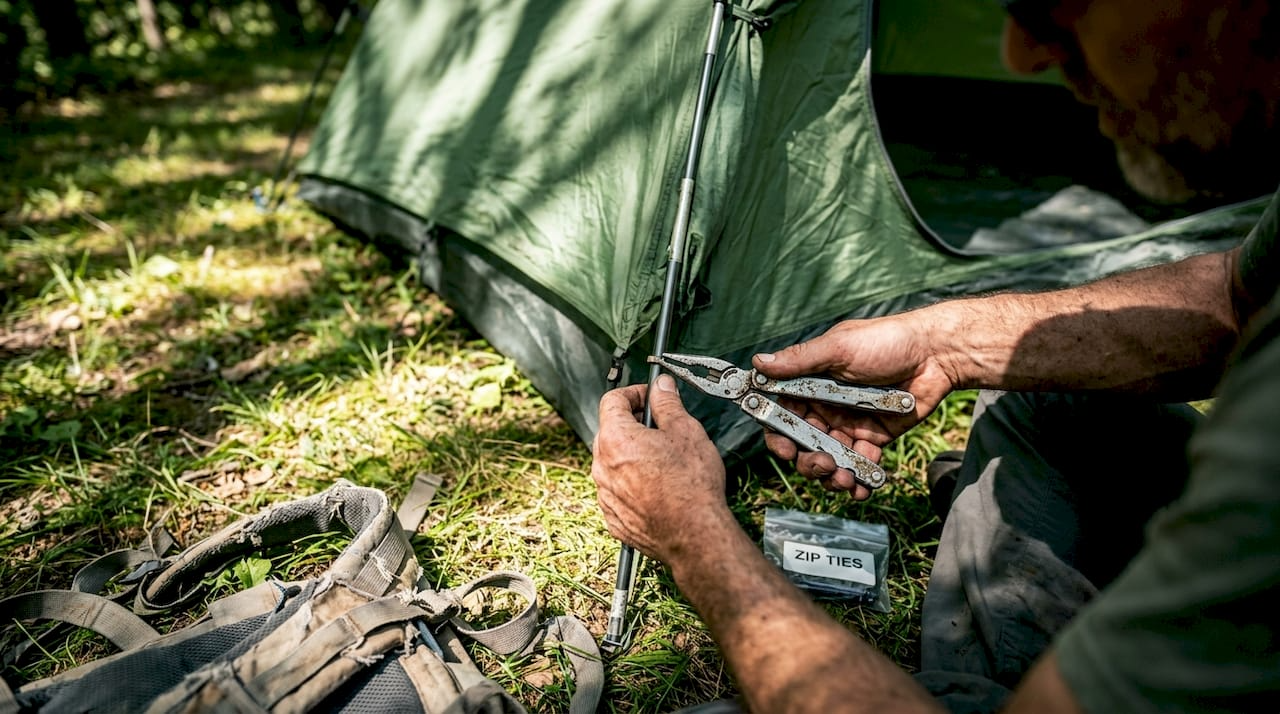
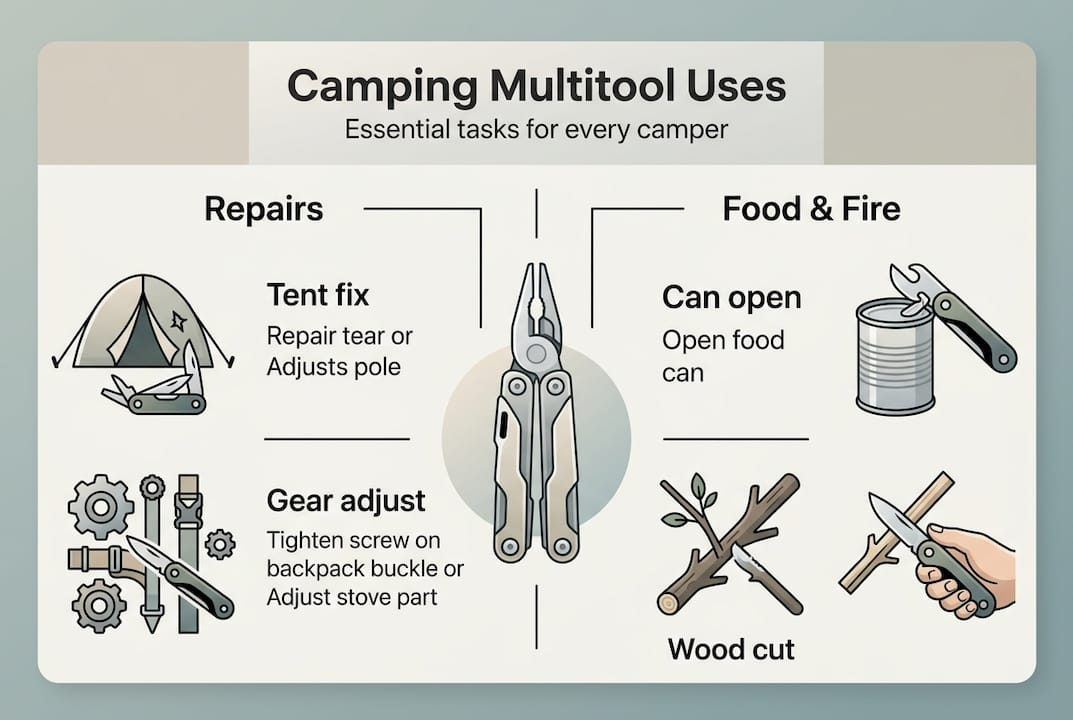
Your tent pole snaps at the connector. Without a multitool, you're improvising with sticks and hope. With pliers, you can crimp a repair sleeve around the break and get your shelter back in shape in under five minutes. Zipper pulls that separate respond well to needle-nose pliers too — a quick squeeze on the zipper slider often fixes the problem without replacing the whole zipper.
Food prep at camp
A multitool knife handles vegetable slicing, cheese cutting, and opening vacuum-sealed food bags with ease. The can opener function is slower than a dedicated opener but absolutely works when you need it. For more involved cooking, pair your multitool skills with a solid campfire cooking guide to get the most out of simple ingredients. If you're heading into remote terrain, our backcountry cooking guide covers how to prep meals with minimal gear.
Fire building
The saw blade cuts small branches and kindling quickly. Some multitools include a fire striker or awl that helps with tinder preparation. Multitools support fire starting through blade work and tinder processing, making them a genuine survival asset. If you're cooking over that fire, knowing how to season pans outdoors keeps your cookware performing well trip after trip.
Shelter setup
Cutting paracord to length, sharpening a stick into a tent stake, tightening guy-line tensioners — all of these are multitool jobs. The scissors handle cordage cleanly, and the knife makes quick work of improvised stakes.
- Always keep your multitool accessible — belt clip or hip pocket, not buried in your pack
- Clean and dry it after every trip — moisture causes rust in the hinges and blade
- Sharpen the knife blade regularly — a dull blade is slower and more dangerous than a sharp one
- Practice each function at home — fumbling with an unfamiliar tool in the dark is frustrating and avoidable
Pro Tip: Run a "gear failure drill" before your next trip. Simulate three common problems — a broken strap, a stuck zipper, a snapped cord — and solve each one using only your multitool. You'll learn its limits and build real confidence before you need it in the field.
Upgrade your outdoor experience with the right gear
You've seen how a multitool handles repairs, food prep, fire building, and shelter work without adding serious weight to your pack. The next step is finding the right one for your specific adventures and pairing it with gear that complements it.
At Life Camp Adventure, we've put together a curated guide to the best camping multitools so you can compare top models by weight, function count, and build quality. If you're building your kit from scratch, our essential camping gear guide covers every category you need to cover before heading out. And if you ever find yourself in a tough spot outdoors, our outdoor survival steps resource gives you a clear action plan. We're here to help you gear up smart and get out there with confidence.
Frequently asked questions
Can a multitool fully replace dedicated outdoor tools?
A multitool handles many tasks well but may lack the strength and ergonomic comfort of specialized gear for heavy-duty jobs like wood processing or precision cutting. Think of it as your first line of response, not your only tool.
What are the most important multitool features for camping?
Prioritize pliers, a knife blade, a saw, and a screwdriver — these four functions cover food prep, gear repairs, fire starting, and shelter building, which are the four most common outdoor needs.
How can I maximize multitool usefulness during outdoor trips?
Choose a model matched to your specific activities, and practice each function before your trip so you're not learning on the trail. A well-matched multitool used confidently outperforms a premium one you don't know how to use.
Are multitools reliable for emergency situations outdoors?
Yes. Because a multitool is compact and always accessible, it offers multiple emergency solutions when your main gear fails or isn't within reach. That immediate availability is often what matters most in a real emergency.