TL;DR:
- Proper fit and weight transfer are essential for backpack comfort and injury prevention.
- Choosing a pack with adjustable straps, padded hip belt, and ventilation improves long-term comfort.
- Effective packing and micro-adjustments during hikes help maintain balance and reduce strain.
Most hikers obsess over tent weight or trail food, but the real trip-killer is often the pack on their back. A backpack that digs into your shoulders or shifts with every step can turn a dream weekend into a grueling ordeal. Even a high-end pack can wreck an adventure if it does not fit right or distribute weight properly. This guide breaks down why comfort belongs at the top of your backpack checklist, how the biomechanics actually work, and exactly which features and packing habits will keep you moving strong from trailhead to campsite.
Key Takeaways
| Point | Details |
|---|---|
| Proper fit prevents fatigue | A backpack matched to your torso and hips reduces discomfort and fatigue on any adventure. |
| Weight transfer is critical | Keep most pack weight on your hips to avoid shoulder and back strain, especially with loads over 7kg. |
| Core features matter most | Look for adjustable straps, padded belts, and ventilation to ensure maximum comfort on the trail. |
| Smart packing boosts comfort | Efficient packing and regular adjustments help maintain comfort all day long. |
Why comfort matters in outdoor backpacks
Picture this: you are two miles in, the views are stunning, but your shoulders are burning and your lower back is already screaming. This is not a fitness problem. It is a gear problem. An ill-fitting backpack is one of the fastest ways to cut an adventure short, no matter how tough or experienced you are.
Comfort is not just about feeling good. It directly affects how much energy you burn, how your muscles recover, and whether you stay injury-free. The further you go and the heavier your load, the more small discomforts pile up into real problems. A constant pressure point on your shoulder can escalate from annoying to debilitating by mile eight.
Here is why comfort deserves more respect on your gear list:
- Energy conservation: A well-fitted backpack lets you maintain natural posture, which means your muscles work less and you last longer on the trail.
- Joint protection: Poor weight distribution forces your knees, hips, and spine to compensate, increasing injury risk on technical terrain.
- Mental stamina: Physical discomfort drains focus and morale, making every obstacle feel bigger than it is.
- Trip longevity: On multi-day trips, the cumulative effect of a bad pack can sideline you entirely by day two.
Many hikers make the mistake of prioritizing volume or brand reputation over fit. They grab the biggest pack or the most rugged-looking option without checking whether it actually suits their body or load needs. Learning how to get into packing a backpack efficiently is only half the battle. The other half is choosing a pack designed to carry that load comfortably.
"shoulder-level strain increases significantly with loads above 7kg, reinforcing why hip belt weight transfer is essential for extended trips."
This matters because most hikers are carrying more than 7kg on any trip beyond a half-day outing. Without proper hip transfer, all of that weight rides on your trapezius and shoulder muscles, which fatigue quickly and set off a chain reaction of poor posture. And poor posture on a trail means sore muscles, hot spots, blisters from shifting loads, and even long-term neck and back issues. Reading through packing tips for backpackers can help you start building better habits from the ground up.
Now that we have set the stage for why backpack comfort is crucial, let us explore the science behind how backpacks interact with your body.
The science behind backpack comfort and fit
Understanding the biomechanics of carrying a pack changes how you shop for one. Your body was not designed to carry heavy loads on the shoulders. The hips and legs, however, are built for it. That is the foundation of all modern backpack design.
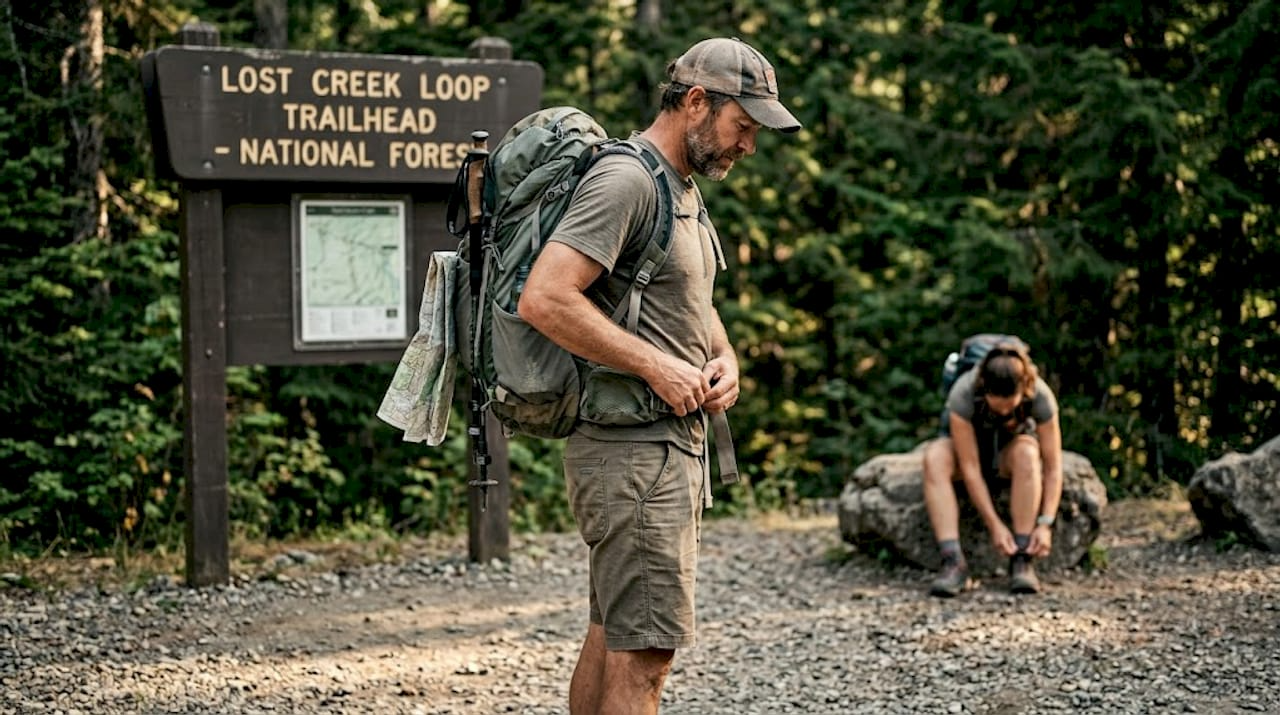
When your load exceeds roughly 15 pounds (7kg), shoulder-level strain rises sharply if your hip belt is not doing its job. A well-positioned hip belt transfers up to 80% of the pack's weight to your pelvis and legs. That is a massive shift that preserves upper body energy for balance and arm movement.
Here is a quick breakdown of the key fit metrics that determine how well a pack works for your body:
| fit metric | what it affects | how to measure/adjust | ideal target |
|---|---|---|---|
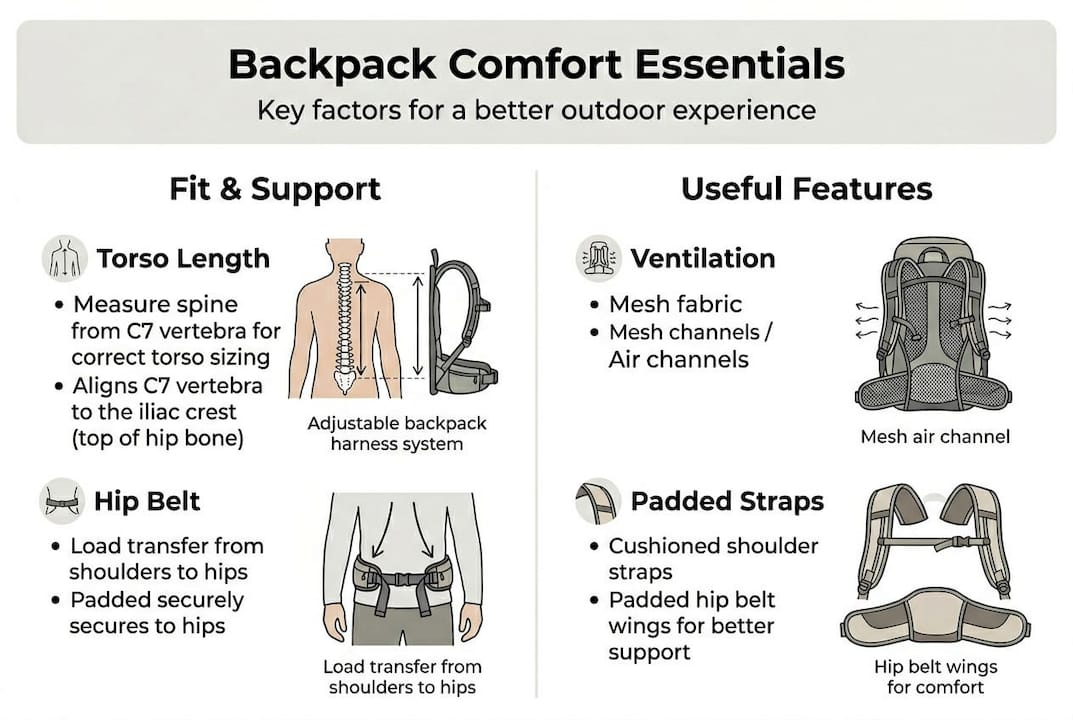
| torso length | back panel alignment | measure C7 vertebra to iliac crest | match to pack size range |
| hip belt position | weight transfer efficiency | belt should wrap top of hips | centered on iliac crest |
| shoulder straps | load stability | curve away from neck 1-2 inches | no gap at top, no pinching |
| load lifter straps | upper body control | adjust until 45-degree angle | snug but not pulling |
Strap width and padding matter just as much as position. A narrow, unpadded shoulder harness concentrates pressure onto a smaller area, which accelerates fatigue and causes numbness. Look for wide, contoured straps with foam density that compresses under load but rebounds quickly.
For more detail on building a smart, versatile pack setup, the modular backpacking guide is a great place to start. And if you are newer to the trail, check out this practical overview on preparing for backpacking before your first big trip.
Pro tip: Do not just adjust your pack at the trailhead and forget it. Every 30 to 45 minutes, make small micro-adjustments to shift pressure points. This redistributes stress across different muscle groups and prevents any single area from building up heat or losing circulation.
Understanding the science helps us recognize which backpack features truly make a difference.
Essential features for comfortable backpacks
Not all backpacks are built the same, and the gap between a comfortable pack and a punishing one often comes down to specific design choices. adjustable padded straps and a quality hip belt are the two most impactful features you can prioritize, but there is more to the picture.
Here is a comparison of the key comfort-focused features to look for:
| feature | budget pack | mid-range pack | premium pack |
|---|---|---|---|
| shoulder straps | basic foam, fixed | padded, semi-adjustable | contoured, fully adjustable |
| hip belt | thin, minimal | padded, some support | padded, load-bearing, anatomical |
| ventilation | no airflow system | mesh back panel | tensioned mesh with air channel |
| load lifters | absent | basic adjustment | full angle control |
| frame type | frameless or basic | internal frame | internal frame with stays |
Beyond the hardware, here is a numbered checklist of features to verify before you buy:
- adjustable torso length so the pack fits your specific back, not an average measurement
- padded, hip-hugging belt with enough structure to actually carry weight
- ventilated back panel to reduce sweat buildup and heat on long days
- load adjuster straps at the top of the shoulder harness for fine-tuning stability
- sternum (chest) straps to lock the shoulder straps in place and improve breathing rhythm
When shopping in-store, always load the pack with at least 20 pounds before testing. Walk around. Go up stairs. The pack should feel stable without swaying. Pay attention to what you feel in backpacking items for comfort reviews and match those comfort cues to what you feel in person. Your hiking essentials list should guide how much volume and structure you actually need.
Pro tip: Press firmly on the shoulder straps where they meet the pack. If the foam immediately flattens and does not bounce back, the padding will offer little support after an hour on the trail.
Armed with key comfort concepts, let us break down how to select and pack for the best all-day experience.
How to choose and pack for all-day comfort
Choosing a comfortable pack starts with your body, not the gear catalog. Before anything else, measure your torso length. This is the distance from the C7 vertebra at the base of your neck to the top of your hip bones (the iliac crest). Most major brands offer packs in multiple torso sizes, and matching this measurement properly is non-negotiable.
Once you have the right fit, packing strategy becomes your next lever for comfort. Here is a step-by-step approach to setting up your pack for an all-day carry:
- Place heavy items close to your back and centered. Dense gear like food, water, and shelters should ride against the back panel at mid-back height.
- Layer medium-weight items around and on top. This keeps the weight balanced side to side and front to back.
- Reserve the lid and hip belt pockets for quick-access gear like snacks, maps, and first aid, which keeps you from digging through the main compartment on trail.
- Test your balance before setting off. With the pack fully loaded, lean forward slightly. If it pulls you backward or swings to one side, something needs rebalancing.
- Fine-tune on the trail. After 10 minutes of walking, readjust the hip belt, load lifters, and shoulder straps to settle the pack for your actual movement patterns.
proper weight distribution is the single biggest comfort variable for loads over 7kg, which is most real-world hiking scenarios. Poor distribution is also one of the most common mistakes, even among experienced hikers who own great gear.
"Balance and placement matter more than the pack itself. The best backpack in the world will feel miserable if your heavy items are riding at the top or leaning to one side."
For practical strategies that make every trip easier, revisit efficient packing tips and keep the backpack packing guide bookmarked for reference before your next outing.
The overlooked truth: Why comfort is an adventure essential
Here is a hard-won lesson from years on the trail: comfort is not a preference, it is a performance factor. We see it constantly with experienced hikers who have years of miles under their boots but still make the same mistake, choosing a pack based on capacity or how it looks on a gear blog, then suffering for it at mile 15.
The outdoor culture tends to reward toughness. Push through the pain. It is just weight. But that attitude leads to preventable injuries, shorter trips, and a growing reluctance to go back out. Nobody plans a second adventure when the first one left them with bruised hips and a pinched nerve.
Investing in a well-fitted, comfortable pack is not going soft. It is smart. It means you can do more miles, carry what you actually need, and come back ready to go again. The adventure trip tips that separate great outings from miserable ones almost always come down to gear that works with your body, not against it. Small, consistent investments in comfort compound over a season of adventures.
Find your perfect adventure gear for maximum comfort
Now that you know comfort is foundational to every outdoor adventure, it is time to put these lessons into practice with gear that actually delivers.
At Life Camp Adventure, we are here to help you find equipment that matches your body, your adventures, and your goals. Whether you are gearing up for a weekend trip or a week-long expedition, our curated resources make it easy. Start with our breakdown of adventure camping equipment to understand what matters most, then browse the best camping gear comparison for top-rated options across every budget. For a fuller picture of what to bring on any trip, our guide to essential camping gear has you covered from shelter to pack.
frequently asked questions
How do I know if my backpack is comfortable enough for long hikes?
A comfortable backpack transfers most of its weight to your hips, sits flush against your back without pinching, and stays stable on uneven ground even after several miles. If shoulder-level strain builds quickly on flat terrain, your hip belt needs adjustment or replacement.
What is the optimal weight for a comfortable hiking backpack?
Keep your loaded pack under 20% of your body weight. Once the load clears 15 pounds (7kg), shoulder-level strain rises sharply, making a supportive, load-bearing hip belt essential rather than optional.
Does a more expensive backpack guarantee better comfort?
Not always. A premium price tag does not mean a perfect fit for your body. Focus on torso length match, hip belt structure, and weight transfer features rather than price alone.
Can I improve comfort on an existing backpack?
Yes. Start by rebalancing your load so heavy items sit close to your spine. You can also add aftermarket hip belt padding, adjust every single attachment point, and trim unnecessary gear weight to reduce overall strain.
Are there specific backpack types best for different adventures?
Absolutely. Day packs work best for trips under six hours with light loads. Multi-day packs offer more support for overnight gear. Full expedition packs include rigid frames and extended load-bearing systems for week-long or technical routes.
