TL;DR:
- Portable solar panels combined with quality power stations enable reliable off-grid device charging.
- They offer energy independence, eco-friendliness, and extended trip capabilities for outdoor adventurers.
- Proper setup and understanding of conditions are crucial to maximizing solar efficiency and device safety.
Most outdoor adventurers don't realize how fast their devices drain power once they leave the grid. A GPS unit, a phone running trail maps, a headlamp, and a portable water purifier can collectively demand more energy than even a large power bank can store over a multi-day trip. Portable solar panels change that equation entirely. Rather than rationing battery life or cutting trips short, you get a renewable source that keeps working as long as the sun does. This guide breaks down what portable solar actually solves, where it outperforms alternatives, and how to build a setup that genuinely supports your outdoor adventures.
Key Takeaways
| Point | Details |
|---|---|
| Solar boosts outdoor independence | Portable panels give you ongoing energy off the grid, freeing you from relying solely on pre-charged batteries. |
| Safer when paired with stations | Solar panels work best charging a separate power station, not devices directly, to protect your gear from damage. |
| Plan for actual device needs | Estimating your real-world power draw and matching panel size is key for a successful trip. |
| Avoid common solar mistakes | Watch for overestimating output, poor placement, and using solar without backup storage. |
| Mix solar with other power | Combining solar with battery packs or other sources ensures reliability even in tough conditions. |
Understanding the appeal of portable solar panels
There's a moment every camper knows. You're two days into a backcountry trip, your phone is at 8%, and your power bank is already dead. It's not a gear failure. It's a planning failure. That's exactly the gap portable solar fills.
People add solar panels to their adventure kits for a few core reasons. They want energy that doesn't run out. They want freedom from planning around battery capacity. And increasingly, they want a setup that doesn't depend on disposable batteries or noisy generators. When you're backpacking off-grid, every ounce and every watt-hour counts.
Here's what portable solar can realistically power during a trip:
- Smartphones and GPS devices
- Portable Bluetooth speakers
- LED lanterns and headlamps
- Compact water purifiers with USB charging
- Small cameras and action cameras
- Emergency satellite communicators
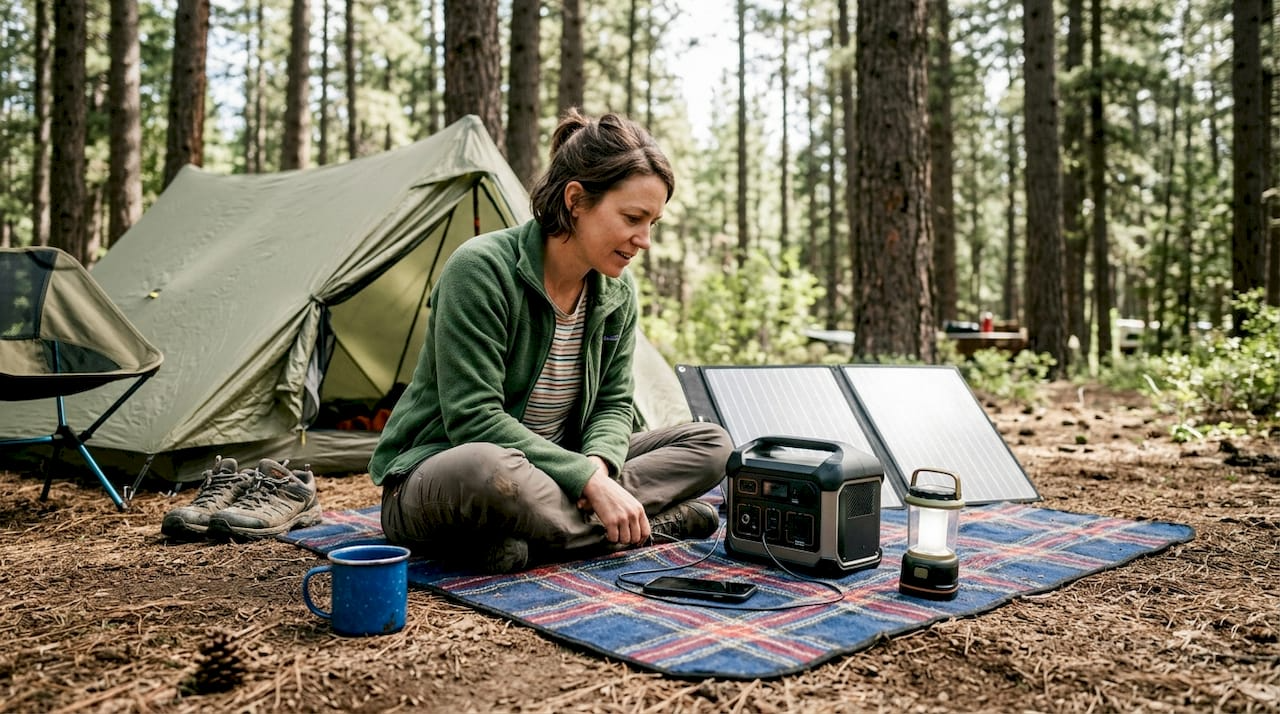
But there's a widespread myth worth addressing directly. Many people assume a solar panel with a built-in battery is a simple plug-and-play solution. In reality, panel plus power station setups are much more reliable than panels with integrated batteries for sensitive devices. The reason is output stability. A panel's power fluctuates with cloud cover, angle, and shade. Feeding that unstable current directly into a phone or GPS can cause irregular charging and even hardware damage over time.
The smartest solar setup isn't just a panel. It's a panel feeding a quality power station, which then charges your devices cleanly and safely.
This combination gives you the best of both worlds: renewable input from the sun and regulated, consistent output to your gear. The outdoor adventure benefits of this approach go beyond convenience. It changes how long and how far you can travel.
Once you understand the panel-plus-station model, portable solar stops feeling like a luxury and starts feeling like essential kit. The appeal isn't just about staying charged. It's about staying out longer, going farther, and doing it without leaving a trail of dead batteries behind.
Key benefits of portable solar panels outdoors
Portable solar isn't just a backup plan. For serious outdoor enthusiasts, it's a core part of the energy strategy. Here's why it earns its place in your pack.
- Energy independence: Solar panels produce power wherever the sun shines. No outlet needed, no generator required. This matters most on multi-day trips where power banks simply can't store enough energy for the whole journey.
- Eco-friendly power: Disposable batteries create waste. Generators burn fuel and make noise. Solar panels produce zero emissions and work silently. Pairing solar with sustainable camping tips makes your outdoor footprint significantly smaller.
- Emergency reliability: If a device fails unexpectedly or a trip runs longer than planned, solar gives you a fallback. That's not a small thing when you're relying on a GPS or emergency communicator in remote terrain.
- Multi-device compatibility: A good power station charged by solar can handle phones, GPS units, camping lanterns, and even small cooking appliances. One solar input can support your whole camp.
- Longer trip capability: When your power source renews daily, you're not counting down battery percentages. You can extend your trip without the anxiety of running out.
The key insight here is that panel plus station systems are much safer for devices and provide more usable energy storage than direct-charge panels. The station acts as a buffer, absorbing the variable solar input and delivering steady power to your gear.
Pro Tip: Always charge your power station from the solar panel rather than connecting devices directly to the panel. This protects your electronics from voltage spikes and extends both battery and device lifespan.
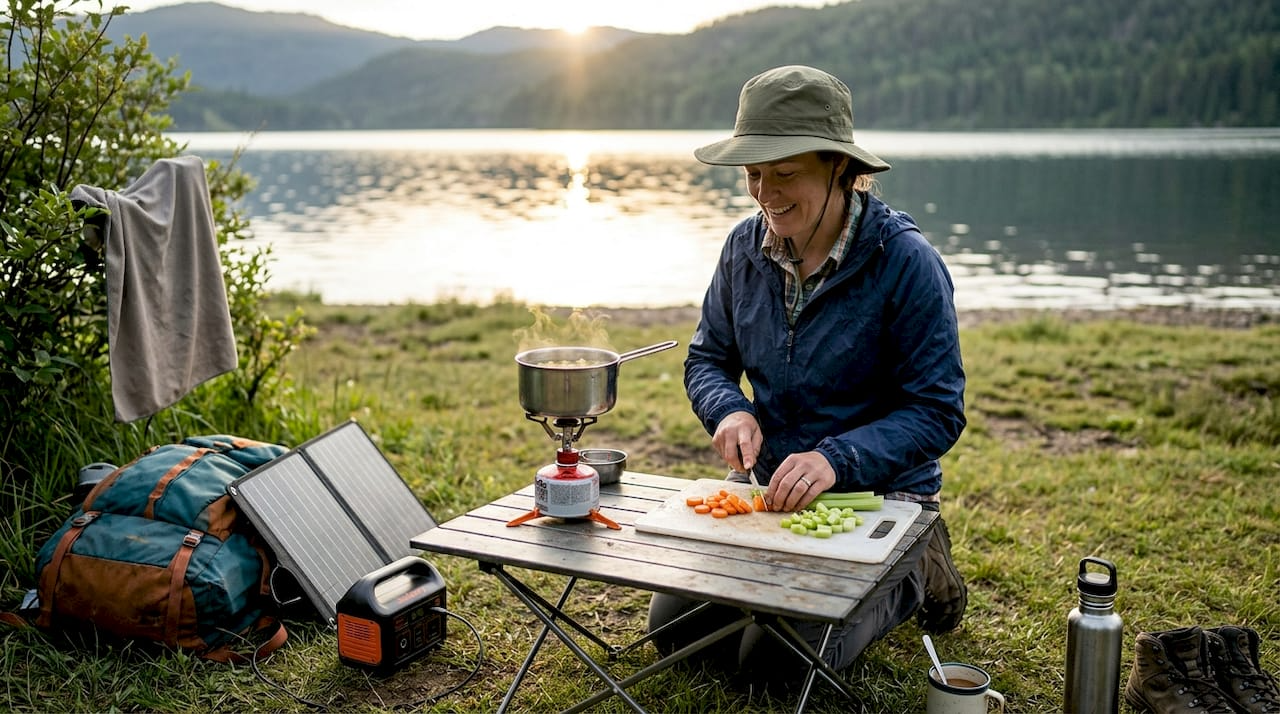
For trips where you're relying on a portable stove or other powered cooking gear, solar becomes even more valuable. The ability to recharge a power station mid-trip means you're never making hard choices between keeping your phone alive and keeping your camp lit.
Solar vs. power banks and other power sources
Choosing between solar, power banks, and generators isn't about picking the best one. It's about knowing what each does well and where each falls short.
| Power source | Renewable | Weight | Instant output | Best use case |
|---|---|---|---|---|
| Portable solar panel | Yes | Light to medium | No | Multi-day trips, sunny climates |
| Power bank | No | Light | Yes | Short trips, quick top-ups |
| Generator | No | Heavy | Yes | Base camps, high power needs |
| Disposable batteries | No | Light | Yes | Low-drain devices only |
Solar panels win on renewability. No other portable option keeps producing energy day after day without a wall outlet or fuel. That's a genuine advantage for anyone spending more than 48 hours off-grid.
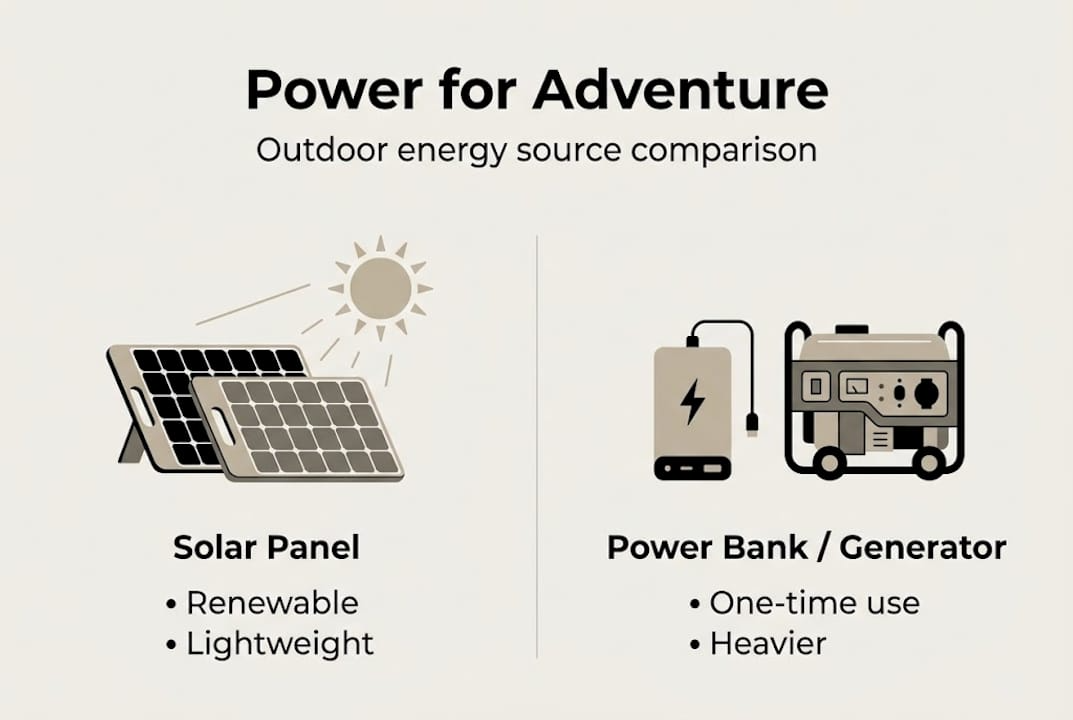
Power banks win on speed and simplicity. They deliver full, regulated output instantly. They're ideal for weekend trips where you can recharge them at home before you leave. The problem is capacity. Even a 20,000mAh bank runs dry fast when you're charging multiple devices.
Generators win on raw power but lose on everything else. They're loud, heavy, fuel-dependent, and impractical for anything beyond a fixed base camp. They also clash with the spirit of low-impact outdoor travel.
The real risk of solar panels is connecting them directly to sensitive electronics. Portable solar panels shouldn't be your only solution for sensitive electronics due to lower output stability. This is why pairing matters so much.
Pro Tip: Treat your solar panel as the input and your power station as the output. The panel feeds the station all day. The station charges your devices on demand. This setup mirrors how your home electrical system works and is far safer for your adventure gear.
For adventurers who carry multitools and prioritize versatile, lightweight kits, the solar-plus-station combo fits that philosophy well. It's modular, scalable, and adaptable to different trip lengths.
Mistakes to avoid when using portable solar panels
Even experienced campers make avoidable errors with solar. These mistakes don't just waste money. They can damage gear or leave you powerless at the worst moment.
Common mistakes to watch for:
- Overestimating panel output: A 100W panel rarely delivers 100W in real conditions. Cloud cover, angle, and shade can cut output by 30 to 70%. Plan for 50 to 60% of rated output on average days.
- Connecting devices directly: Skipping the power station to save weight is tempting but risky. Low power output and heat risk mean panels aren't designed to charge devices directly.
- Ignoring weight and packability: A rigid 200W panel is useless on a 10-mile hike. Match your panel size and weight to your adventure type.
- Poor panel placement: Flat on the ground in partial shade produces almost nothing. Angle your panel toward the sun and reposition it every few hours.
- Mismatching wattage: A 20W panel can't meaningfully charge a 100Wh power station in a single day. Know your numbers before you buy.
Here's what real-world panel output looks like under different conditions:
| Condition | Rated 60W panel actual output |
|---|---|
| Full sun, optimal angle | 50 to 55W |
| Partly cloudy | 25 to 35W |
| Overcast | 8 to 15W |
| Shade or indirect light | Under 5W |
These numbers matter when planning recharge schedules. If you're relying on solar to top up a 200Wh station, you need four to six hours of good sun on a partly cloudy day.
For lightweight backpacking, foldable panels in the 20 to 40W range hit the sweet spot between output and packability. And don't forget sun protection for yourself while your panel soaks up the rays.
How to choose and use portable solar panels effectively
Picking the right solar setup comes down to matching your gear to your actual needs. Here's a practical process to follow.
- Assess your power needs: List every device you'll bring and its battery capacity. Add them up. That's your minimum daily energy requirement in watt-hours.
- Match panel output to your needs: Choose a panel that can realistically recharge your power station in 6 to 8 hours of average sunlight. For most campers, 40 to 80W panels cover typical needs.
- Balance portability with output: Foldable, lightweight panels work for hikers. Larger rigid panels suit base camps. Don't buy more panel than you can carry comfortably.
- Pair with a quality power station: Panel plus station solutions are preferred for outdoor reliability and safety. Look for stations with MPPT (maximum power point tracking) charge controllers for better solar input efficiency.
- Plan your charging schedule: Start charging your station at sunrise. Rotate the panel every two hours to track the sun. Charge devices from the station in the evening.
- Check for weather resistance: Look for IP-rated panels that handle rain and dust. Outdoor gear needs to survive real conditions.
For a full breakdown of how to match your camping equipment to your adventure style, we've covered the key considerations in detail. The right solar setup isn't the most expensive one. It's the one that fits your trip.
A seasoned perspective: Solar panels as a game changer for self-sufficiency
Here's something most gear reviews won't tell you. The biggest upgrade portable solar delivers isn't electrical. It's psychological.
Battery anxiety is real. That low-battery dread changes how you use your devices, how freely you navigate, and how confident you feel in remote terrain. We've seen it happen on trips where experienced hikers start rationing GPS use because they're worried about their power bank dying. That's not freedom. That's managed scarcity.
Solar panels eliminate that mental load. When you know your station will be recharged by midday, you stop rationing. You use your devices the way they were meant to be used.
The common new-user mistake is believing a high-capacity power bank is enough for any trip. It works for weekends. It fails for anything longer. The math just doesn't hold up once you're on day three.
The best setups we've seen combine a mid-range solar panel with a 200 to 500Wh power station. That combination handles most adventure needs without being prohibitively heavy. Keeping your outdoor gear maintained and your solar panels clean and properly stored extends their life significantly. Solar isn't just a gear upgrade. It's a mindset shift toward genuine self-sufficiency.
Ready to upgrade your outdoor energy toolkit?
Portable solar panels work best when your entire outdoor kit is built around reliability and adaptability. The right shelter, the right storage, and the right energy system all work together to make off-grid adventures genuinely comfortable and safe.
At Life Camp Adventure, we've put together resources to help you build that complete kit with confidence. Whether you're looking to compare top camping tents for your next expedition or need guidance on selecting camping equipment that pairs well with a solar setup, we've got you covered. Explore our gear guides and find the combination that fits your adventure style, your budget, and the terrain you love most.
Frequently asked questions
Can portable solar panels charge all my devices outdoors?
They can charge most common devices if paired with a compatible power station, but panel plus power station setups are safer and more reliable than connecting devices directly to a panel.
Are portable solar panels better than power banks for camping?
Solar panels provide renewable energy that lasts across multi-day trips, while power banks offer faster, more consistent output. Using both together is the ideal setup for most outdoor needs.
What's the main risk of using portable solar panels?
The main risk is overheating or damaging sensitive devices by connecting them directly to a panel. Heat risk and low output can harm delicate electronics, so always route power through a storage station.
How do I know what size solar panel I need for a trip?
Add up the watt-hour capacity of every device you plan to charge, then choose a panel that can match solar wattage to your daily needs within a reasonable number of sunlight hours.
